
University exams feel very different from school exams. Many students enter degree programs with strong subject knowledge but still struggle with timing, structure, and academic writing. The gap is not about ability. It is about exam style, thinking method, and academic discipline.
The International Foundation Year acts as a structured route that trains students for these demands. It builds exam habits that match university standards and reduces the shock many international students face in their first year.
What the NCUK International Foundation Year is
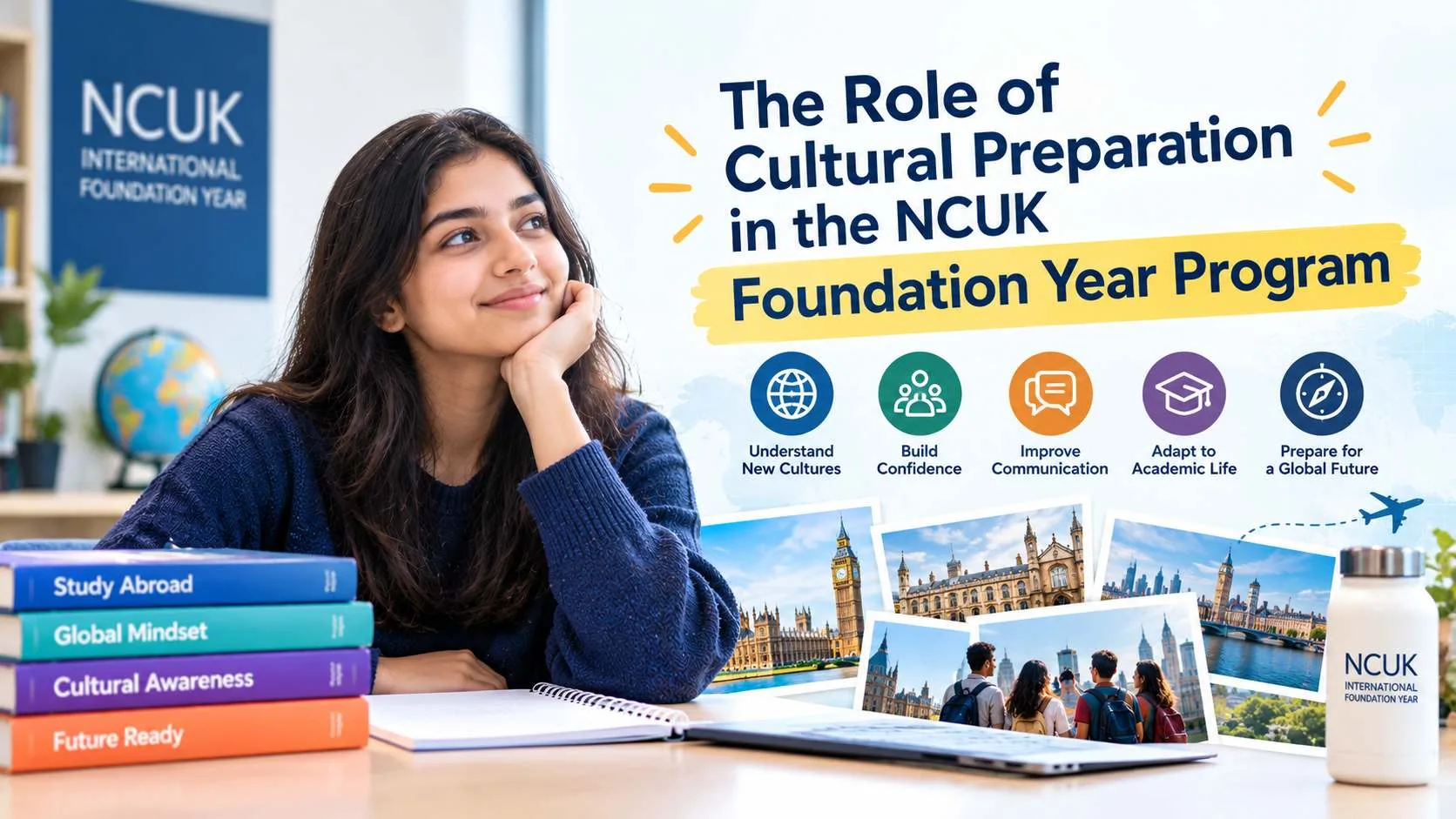
The NCUK International Foundation Year is a pre-university program designed for students who plan to study abroad. It combines subject learning with academic English and exam training. The goal is not only to help students enter university but also to prepare them for the way universities test knowledge.
Students study subject pathways such as science, business, engineering, or humanities. Along with that, they learn academic writing, reading skills, and exam techniques that match university standards in the UK, Australia, Canada, and other countries.
The program uses continuous assessment instead of relying on one final exam. This gives students regular practice and feedback. It slowly builds the skills needed for higher education exams.
Gap between school exams and university exams
School exams often reward memory. Students can score high by revising notes and repeating answers. University exams work differently. They test how well students can think, explain, and apply ideas under pressure.
In university settings, students face:
- Longer essay-based questions
- Case study analysis
- Problem-solving under time limits
- Less guidance during exams
Many first-year students struggle because they are not used to writing structured answers or handling large amounts of reading in a short time. The foundation year reduces this gap by training students in real exam formats before they reach university.
Academic skills built for exam success
The International Foundation Year builds core academic skills that directly support exam performance. Students learn how to read questions carefully and respond with clear structure. They also learn how to build arguments instead of giving short factual answers.
Key skills include:
- Writing clear introductions, body sections, and conclusions
- Breaking down exam questions into smaller parts
- Using evidence to support answers
- Reading academic texts faster and with focus
- Managing time during written exams
These skills improve performance across all subjects, not just one area of study.
Subject pathways and exam style training
Each subject pathway in the foundation year follows a different exam style, similar to university courses.
Science students solve problems using logic and application. They often work with experiments and data-based questions. Business students study real case studies and explain decisions using evidence. Engineering students focus on structured problem-solving with step-by-step answers. Humanities students build essays that compare ideas and support arguments.
This subject-based training prepares students for the exact format they will face later in university exams.
Continuous assessment and steady improvement
One strong feature of the foundation year is continuous assessment. Students do not depend on a single final exam. Instead, they complete assignments, tests, and practice exams throughout the year.
This system builds steady progress. Students receive feedback after each task. They learn what to improve before the next assessment. Over time, this reduces fear of exams because students already know what to expect.
Regular testing also improves memory. When students revise in smaller cycles, they retain information longer and recall it faster during exams.
Exam technique training that improves scores
Many students lose marks not because they lack knowledge, but because they do not understand exam technique. The foundation year trains students to read questions correctly and respond in the right format.
Students learn how to:
- Identify command words like “analyse,” “compare,” and “explain”
- Plan answers before writing
- Use time wisely during exams
- Avoid writing too much irrelevant information
- Match answers with marking criteria
These techniques often lead to higher scores even when subject knowledge stays the same.
Academic English and communication skills
Academic writing is a major part of university exams. Many international students struggle with it at first. The foundation year includes structured English training that focuses on academic use, not casual language.
Students learn how to write essays, reports, and short answers in a clear academic style. They also learn referencing and how to build formal arguments. Reading skills also improve, which helps in understanding long exam questions.
This training reduces language barriers during exams and helps students present their knowledge more clearly.
Mock exams and exam pressure training
Mock exams play a key role in preparation. Students sit full-length tests under timed conditions. These exams follow university-style patterns.
This practice helps students get used to:
- Writing under time pressure
- Managing stress during long exams
- Handling difficult questions
- Staying focused for long periods
After each mock exam, students review mistakes and adjust their study methods. This cycle builds stronger exam performance over time.
Support system for academic growth
The foundation year also includes academic support from tutors. Students receive feedback on assignments and exam practice. Tutors highlight weak areas and guide students on how to improve.
This support helps students who come from different education systems. It gives them a clear path to improve step by step. Students also learn how to study independently, which is important for university success.
Better transition into university exams
Students who complete the foundation year often adapt faster in university. They already understand exam formats, writing styles, and academic expectations. This reduces stress during the first year of their degree.
They also feel more confident in handling assignments and exams. Instead of adjusting to a new system, they continue building on skills they already practiced.
This smooth transition is one of the main reasons many students choose the foundation route.
Common mistakes students avoid after foundation study
Students who complete the foundation year usually avoid mistakes that first-year students often make. These include poor time management, weak essay structure, and overdependence on memorization.
They also learn how to use feedback properly. Instead of repeating the same errors, they adjust their methods early. This leads to better academic results in the long run.
Final view on exam readiness
The International Foundation Year builds more than subject knowledge. It trains students for real university exam conditions. It focuses on structure, timing, writing, and thinking skills that match higher education standards.
Students who complete this program often enter university with stronger confidence and better exam habits. They do not face the same level of adjustment as others, which gives them a clearer path to academic success.