Medical imaging used to mean waiting hours, sometimes overnight, for a radiologist to become available and read a scan. Today, that bottleneck is largely gone, thanks to teleradiology. Understanding how teleradiology works helps hospital administrators, urgent care operators, and imaging center managers see why so many facilities are shifting to remote diagnostic support.
What Is Teleradiology?
Teleradiology is the electronic transmission of medical images - X-rays, CT scans, MRIs, and ultrasounds - from the facility where they're captured to a radiologist working remotely, sometimes in another city, state, or time zone. The radiologist reviews the images, prepares a diagnostic report, and sends it back to the requesting physician, often within minutes.
It sounds simple on the surface, but the process involves several coordinated steps that make it both fast and clinically reliable.
How Teleradiology Works, Step by Step
1. Image Capture and Transmission
The process begins the moment a patient's scan is completed. Using PACS (Picture Archiving and Communication System) technology, the imaging facility securely uploads the scan to a cloud-based platform. Encryption protocols ensure the transfer meets HIPAA compliance standards, protecting patient data throughout transmission.
2. Radiologist Assignment
Once the images land in the system, they're routed to an available, board-certified radiologist. Depending on the case, this might be a general radiologist or a subspecialist - for example, a neuroradiologist for a head CT or a musculoskeletal specialist for an orthopedic MRI. This routing step is where teleradiology works differently from traditional in-house reading: instead of waiting for one on-site radiologist, facilities tap into a much larger, always-available pool of specialists.
3. Interpretation and Reporting
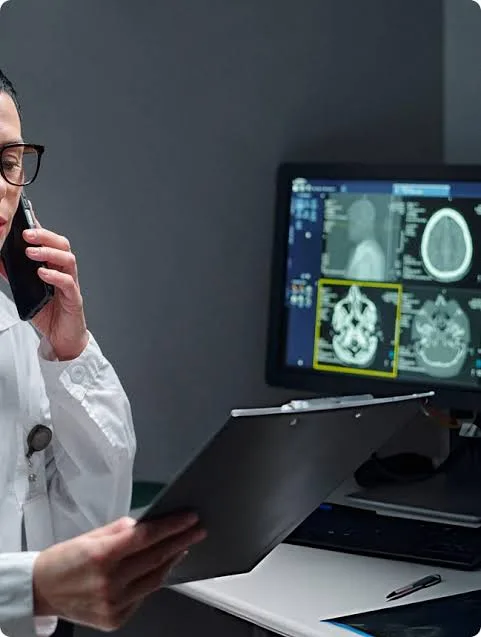
The assigned radiologist reviews the images on a high-resolution diagnostic workstation, applies clinical judgment, and dictates or types a structured report. For urgent cases - trauma, stroke, or ER admissions - this step is prioritized and often completed in under 30 minutes.
4. Report Delivery
The finalized report is transmitted back into the facility's electronic health record (EHR) or PACS, giving the treating physician immediate access to actionable findings.
Why Teleradiology Works So Fast
Speed comes from three structural advantages baked into the model:
- 24/7 coverage - Remote radiologist networks span time zones, so overnight and weekend "nighthawk" reads don't require an on-call physician to drive in.
- Load balancing - Cases are distributed across a network of radiologists rather than queued for a single on-site reader.
- Purpose-built technology - Cloud PACS and automated routing eliminate manual handoffs that used to slow reporting down.
This is precisely why teleradiology works so well for facilities facing radiologist shortages or unpredictable case volume - it decouples image interpretation from physical location without sacrificing turnaround time.
Choosing the Right Teleradiology Partner
Not all teleradiology providers offer the same reliability or radiologist quality. Facilities should look for board-certified radiologists, verifiable accuracy rates, and providers registered to work with government healthcare systems. TopRad is one example of a U.S.-based provider built around these standards, offering 24/7/365 coverage with ABR-certified radiologists for facilities that need consistent, fast turnaround without compromising on diagnostic quality.
Final Thoughts
At its core, teleradiology works by combining secure image transmission, a distributed network of specialists, and streamlined reporting technology. For hospitals and imaging centers under pressure to deliver faster diagnoses, that combination isn't just convenient - it's becoming essential to modern patient care.