
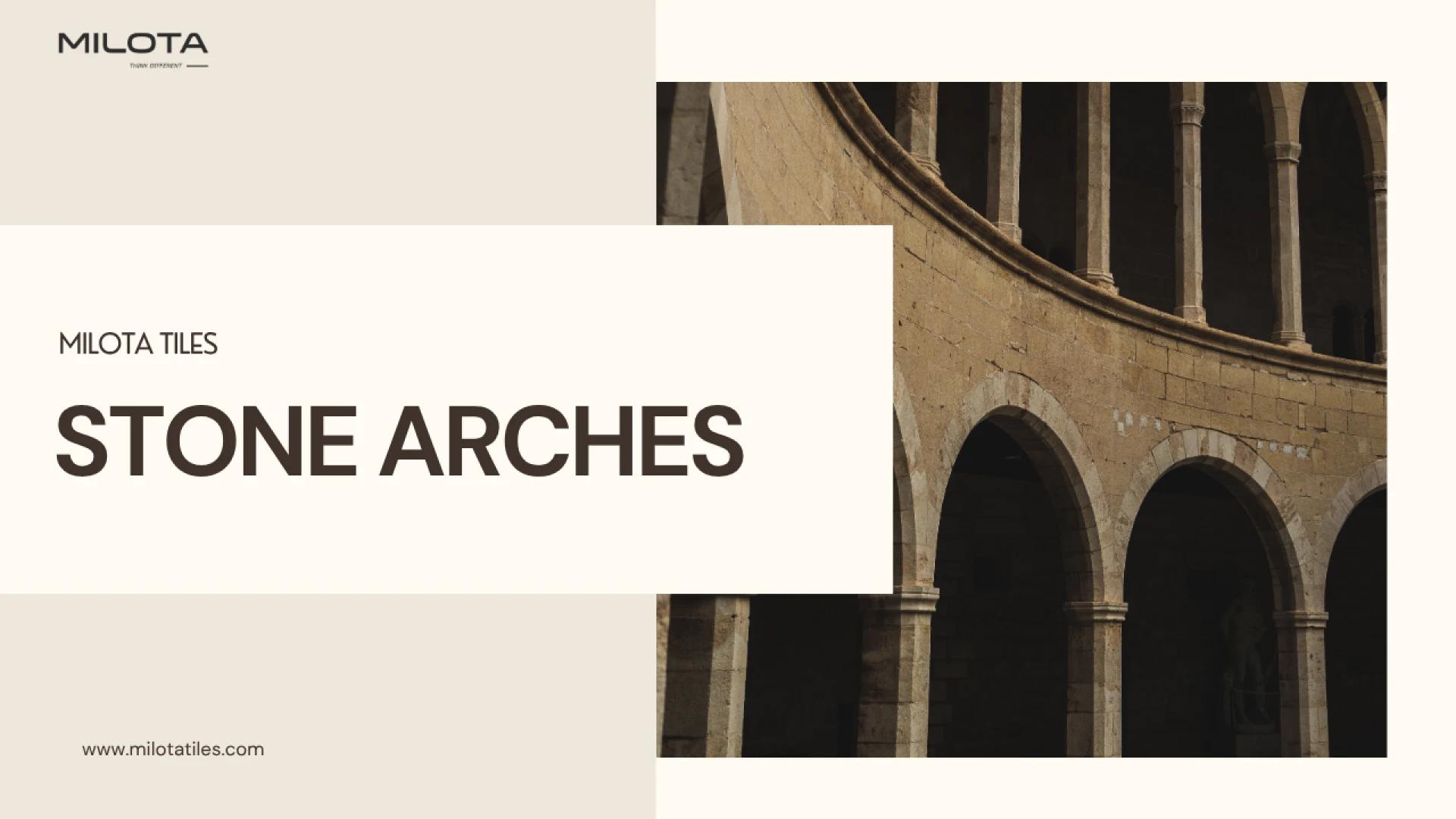
Throughout history, Stone Arches have stood as remarkable symbols of engineering, artistry, and cultural expression. From the aqueducts of Rome to the intricately carved gateways of India, these arches tell stories of civilizations, materials, and the hands that shaped them. What makes them timeless is not just their strength but their deep connection to regional craftsmanship and cultural identity.
At the heart of every Stone Arch lies a story — one sculpted in natural stone, crafted by local artisans, and inspired by the land’s geography and tradition. Today, as architecture embraces sustainability and authenticity, designers continue to rediscover the relevance of these historical forms, blending them with natural stone tiles for wall and natural stone tiles for floor to create spaces rooted in heritage and beauty.
Let’s explore how Stone Arches capture the soul of different regions and why they continue to inspire architects, builders, and artists across the world.
1. The Universal Symbolism of Stone Arches
Across continents and cultures, Stone Arches have symbolized power, passage, and permanence. Their curved geometry — transferring weight efficiently from one side to another — made them engineering marvels long before modern technology existed. Yet beyond function, they carried spiritual and cultural meaning.
In ancient civilizations, arches were seen as portals — transitions between worlds or states of being. In temples, mosques, cathedrals, and palaces, arches marked sacred spaces and celebrated craftsmanship. Their universal presence demonstrates how the Stone Arch evolved not just as architecture but as art — one that reflects the values, beliefs, and aesthetic sensibilities of each region.
The choice of natural stone, the carving patterns, and the surrounding materials like natural stone tiles are all reflections of local identity. Whether the stones are warm sandstone of Rajasthan, white marble of Italy, or grey granite of Greece, each tells a story of its origin.
2. Natural Stone: The Foundation of Cultural Architecture
At the center of every Stone Arch is the material itself — natural stone. Formed over millennia, it represents the earth’s geological heritage and defines the visual language of regional architecture. The stone chosen for an arch was never accidental; it was selected for its availability, workability, and symbolic value.
a. A Reflection of Geography
Regions with abundant limestone favored its softness and warm tones, while volcanic zones produced basalt and granite — harder materials suited for monumental structures. This link between Stone Arches and geography gave each culture its own unique architectural fingerprint.
b. Sustainability and Legacy
Natural stone is durable, recyclable, and sustainable. Unlike synthetic materials, it weathers gracefully and stands the test of time. Ancient Stone Arches, built hundreds of years ago, still stand as proof of this endurance.
Today, when designers use natural stone tiles for wall or natural stone tiles for floor, they echo the same principles — authenticity, permanence, and harmony with nature.
3. The Cultural Identity Within Stone Arches
Every culture leaves its mark on the design and detailing of its Stone Arches. The materials, motifs, and proportions used vary from one region to another, revealing traditions, beliefs, and craftsmanship techniques passed down through generations.
The Roman Arch – Power and Precision
The Romans perfected the engineering of the arch. Their use of natural stone and concrete created enduring structures like aqueducts, amphitheaters, and triumphal gates. Roman arches symbolized strength, empire, and advancement — a legacy that continues to influence modern construction.
The Islamic Arch – Spiritual Geometry
In Islamic architecture, arches are not merely structural but deeply symbolic. Horseshoe and pointed arches, often crafted from limestone and marble, represent infinity and divine order. The intricate carvings and geometric tiling patterns surrounding them — often complemented with natural stone tiles for wall — showcase the unparalleled craftsmanship of artisans from regions like Persia, Turkey, and North Africa.
The Indian Arch – Ornamentation and Heritage
From the Mughal to the Rajput era, India’s Stone Arches became canvases of cultural fusion. Crafted from red sandstone, white marble, and granite, these arches were adorned with carvings of flowers, vines, and inscriptions. The natural stone used was not only structural but symbolic — each color represented local identity and spiritual meaning.
Modern Indian interiors continue this legacy by pairing arched designs with natural stone tiles for floor, blending traditional forms with contemporary living.
The European Gothic Arch – Aspiration and Light
Gothic cathedrals in France and England introduced pointed Stone Arches that soared skyward, symbolizing the human quest for divinity. These arches, built from finely carved natural stone, created rhythmic spaces filled with light and grace.
Even today, the same aesthetic inspires architects to use natural stone tiles and arched frames in minimalist interiors, achieving a modern yet historical aesthetic.
4. Regional Craftsmanship: The Art Behind Every Arch
Behind every majestic Stone Arch lies the expertise of local artisans — masons, carvers, and sculptors who translate stone into form. Their knowledge is a fusion of geometry, engineering, and artistic intuition.
Handcrafting Techniques
Traditionally, artisans shaped stones manually using chisels, hammers, and wooden templates. Each Stone Arch was assembled with keystones and voussoirs — meticulously cut to fit perfectly without modern machinery. The precision of these craftsmen allowed arches to stand for centuries without mortar or reinforcement.
The Cultural Role of the Craftsman
In many cultures, building with natural stone was considered sacred. Artisans often infused symbolic motifs — floral carvings, religious emblems, or local patterns — turning every arch into a cultural artifact. Their work celebrated not just skill but identity, making each Stone Arch a reflection of community pride.
Modern Tools, Traditional Spirit
Today, computer-aided design and CNC machinery enhance precision, but the spirit of regional craftsmanship endures. At companies like Milota Tiles, artisans continue to value the organic beauty of natural stone, offering finishes that capture both heritage and innovation.
5. Integrating Natural Stone Tiles: A Modern Homage to Tradition
In modern design, natural stone tiles for wall and natural stone tiles for floor play a vital role in preserving the tactile and visual essence of ancient architecture. These tiles complement Stone Arches by creating continuity and cohesion in texture, tone, and aesthetic.
Natural Stone Tiles for Wall
Walls lined with natural stone tiles echo the timeless beauty of ancient stone masonry. Whether it’s the subtle veining of marble or the rugged texture of slate, these surfaces provide depth and authenticity. Around Stone Arches, they enhance visual framing, allowing the curve of the arch to stand out while maintaining harmony with the surroundings.
Natural Stone Tiles for Floor
Floors crafted from natural stone tiles carry the same regional character as the arches above them. For example, sandstone tiles in desert climates, limestone in Mediterranean villas, or granite in mountain regions — each reflects the local landscape. The tactile warmth underfoot complements the arch’s structural grandeur.
When paired together, Stone Arches, natural stone tiles for wall, and natural stone tiles for floor create environments that feel rooted in nature yet sophisticated in design — a signature approach at Milota Tiles, where every element is chosen for harmony and durability.
6. Stone Arches as Storytellers of Place
Each Stone Arch serves as a historical record, preserving stories of migration, trade, and cultural evolution.
- In the Middle East, arches built from desert limestone tell tales of caravans, empires, and devotion.
- In Europe, the Gothic and Romanesque arches speak of faith and artistry.
- In Asia, the ornamented arches of India and China reflect dynastic glory and architectural refinement.
- In the Americas, Spanish colonial arches combine European technique with indigenous materials, creating a hybrid identity.
This blending of influences shows that Stone Arches are not static relics — they evolve with each culture that embraces them.
7. The Modern Revival: Arches in Contemporary Architecture
Today, architects are reimagining Stone Arches in minimalist and modern settings, blending cultural motifs with sleek lines. The fusion of tradition and innovation allows spaces to feel both contemporary and timeless.
Reinterpreting Heritage
Modern homes feature Stone Arches not only in entryways but also as decorative transitions between rooms. Designers combine smooth natural stone tiles for floor with rough-textured wall tiles to achieve visual balance — echoing the duality of past and present.
Arches in Commercial Spaces
In hotels, museums, and public buildings, Stone Arches serve as grand visual anchors. Combined with accent lighting and polished natural stone tiles, they create immersive experiences that connect visitors with cultural narratives.
Outdoor Landscapes
Outdoor spaces such as courtyards, patios, and gardens use Stone Arches as frames for nature itself. When paired with natural stone tiles for floor, they form serene transitions that celebrate the local environment — a design philosophy central to eco-conscious architecture.
8. Sustainability and the Future of Natural Stone Design
As the world moves toward sustainable construction, natural stone remains one of the most eco-friendly materials available. Its extraction and processing have a lower carbon footprint compared to synthetic alternatives, and its lifespan often extends for centuries.
Local Sourcing
Using regionally available natural stone reduces transportation impact and supports local artisans — continuing a legacy of regional craftsmanship that defined ancient architecture.
Restoration and Conservation
Many historic Stone Arches are being restored using matching natural stone tiles, ensuring that repairs maintain the authenticity of the original craftsmanship.
Sustainable Luxury
At Milota Tiles, sustainability meets artistry. Their range of natural stone tiles for wall and natural stone tiles for floor emphasizes eco-friendly production and long-lasting design — proving that true luxury lies in authenticity and durability.
9. Milota Tiles: Celebrating Cultural Heritage Through Stone
Milota Tiles stands at the forefront of modern stone design, bridging ancient craftsmanship with contemporary aesthetics. The brand’s philosophy embraces Stone Arches not just as architectural elements but as cultural symbols — expressions of identity and artistry.
With a curated selection of natural stone tiles, Milota enables architects and homeowners to create cohesive spaces that honor regional materials while reflecting global sophistication. Their natural stone tiles for wall and natural stone tiles for floor collections complement arch designs perfectly, allowing modern projects to retain a sense of timeless cultural depth.
Each stone surface — whether rough-hewn or polished — is a testament to nature’s artistry and human craftsmanship. Through sustainable sourcing and precision finishing, Milota Tiles ensures that the story of Stone Arches continues to inspire generations of designers.
Conclusion: Stone Arches — A Living Legacy of Culture and Craft
Stone Arches are more than structural innovations; they are embodiments of human creativity, cultural evolution, and regional identity. From the craftsmen chiseling stone in ancient quarries to modern architects designing luxury interiors, the story of the arch is one of continuity and respect for material.
Crafted from natural stone, these arches transcend time, bridging past and present. When paired with natural stone tiles for wall and natural stone tiles for floor, they become cohesive design statements — grounded in heritage yet alive with modern spirit.
The enduring charm of Stone Arches reminds us that true artistry lies in authenticity. As brands like Milota Tiles continue to celebrate the beauty of natural stone, they also preserve a global heritage of craftsmanship — one carved, polished, and perfected through centuries of human imagination.