
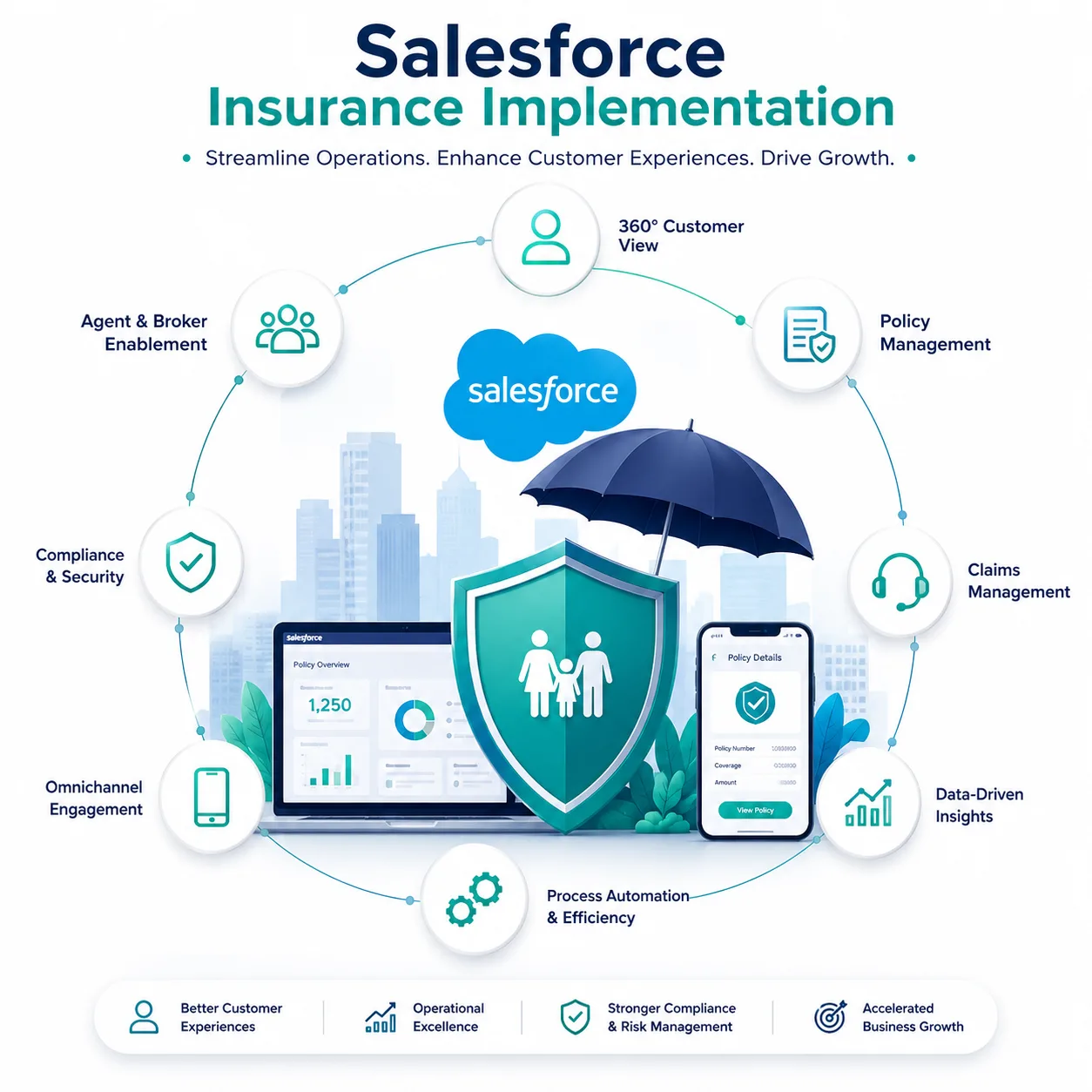
Insurance organizations are under constant pressure to improve customer service while controlling operational complexity. Policyholders want quick answers, agents need better access to information, and executives require reliable visibility into business performance. A thoughtfully designed Salesforce Insurance Implementation can provide the foundation needed to address these expectations.
However, Salesforce implementation is not simply about configuring screens and adding workflows. Insurance organizations have specialized processes that require careful planning, integration, data management, and customization. This is where SP Tech can play an important role.
Understanding Insurance-Specific Requirements
Every insurance organization has its own operating model. A carrier, brokerage, agency, or insurance service provider may have very different requirements for managing customers, leads, policies, service requests, claims-related interactions, and agent relationships.
A successful Salesforce Insurance Implementation begins by understanding these processes.
Instead of forcing existing operations into a generic CRM structure, implementation teams should identify where Salesforce can improve efficiency and where integrations or custom solutions are required. This approach helps create a platform that supports actual business operations rather than creating additional complexity.
Connecting Teams and Customer Information
One of the biggest challenges for insurers is fragmented information. Customer information may exist across CRM platforms, policy systems, spreadsheets, emails, document repositories, and other applications.
Salesforce can provide a central environment for customer-facing teams, while integrations can connect it with important enterprise systems.
SP Tech can help insurance organizations develop an implementation strategy that considers these dependencies from the beginning. This can reduce information silos and give employees better access to relevant customer data.
Automating Repetitive Insurance Processes
Insurance teams handle many repetitive activities. Follow-ups, service requests, notifications, task assignments, data updates, and internal approvals can consume considerable employee time.
Salesforce automation can help organizations streamline these activities. Instead of relying on employees to manually manage every step, predefined workflows can support consistent processes.
For example, when a customer submits a service request, Salesforce can route the request to the appropriate team, create tasks, update records, and trigger relevant notifications. This can reduce manual coordination and improve response times.
Improving Customer Service
Customer expectations continue to rise across the insurance industry. A customer contacting an insurer should not have to repeatedly explain their situation because information is scattered across different systems.
With an effective Salesforce implementation, service teams can work with more complete customer context. This can support more informed conversations and help employees resolve requests more efficiently.
For SP Tech, the objective of Salesforce Insurance Implementation should be to connect technology with measurable business improvements.
Preparing for the Next Stage of Digital Transformation
A Salesforce implementation should not be treated as a one-time technology project. Insurance organizations need platforms that can evolve as their business changes.
A strong Salesforce architecture can provide a foundation for analytics, integrations, automation, and emerging AI capabilities.
With SP Tech, insurance organizations can approach Salesforce implementation as a strategic transformation initiative rather than simply a CRM deployment. The result can be a more connected, efficient, and adaptable insurance operation prepared for future growth.