Small businesses today operate in a fast-moving environment where managing daily tasks efficiently is important. Activities such as billing customers, tracking inventory, and maintaining sales records are part of regular operations. When these tasks are handled manually or through multiple systems, it can sometimes lead to delays, errors, and additional workload.
To simplify these processes, many businesses are now using Point of Sale (POS) systems. A POS system is a software-based solution that helps manage sales transactions while also supporting basic business operations like inventory tracking and reporting.
What a POS System Does
At its core, a POS system records customer transactions at the time of sale. However, modern POS systems go beyond simple billing. They often include features that help businesses manage stock levels, generate invoices, and review sales performance.
Many POS systems today are cloud-based, which means business data can be accessed from different devices with an internet connection. This helps business owners stay updated even when they are not physically present at the store.
Why Businesses Use POS Systems
The main reason small businesses adopt POS systems is to reduce manual effort and improve accuracy. Instead of maintaining separate registers or spreadsheets, all essential data is managed within a single system.
Some common benefits include:
- Faster and more organized billing
- Reduced chances of human error in records
- Automatic updates to inventory after each sale
- Easier tracking of daily transactions
- Simple reporting for business review
These advantages help business owners save time and focus more on growth rather than manual record-keeping.
Features Commonly Found in POS Systems
Most POS systems designed for small and medium businesses include several practical features:
- GST-compliant billing support
- Inventory management linked with sales
- Cloud-based data storage
- Basic reporting and analytics tools
- User-friendly interface for daily use
These features are generally focused on improving efficiency in routine business operations rather than adding unnecessary complexity.
Use in Retail and Small Shops
Retail businesses, grocery stores, and small shops often benefit the most from POS systems. Since these businesses handle frequent transactions and inventory changes, having a single system that manages both billing and stock can reduce confusion.
It also helps ensure that sales and inventory records remain consistent throughout the day.
Example of a POS Solution
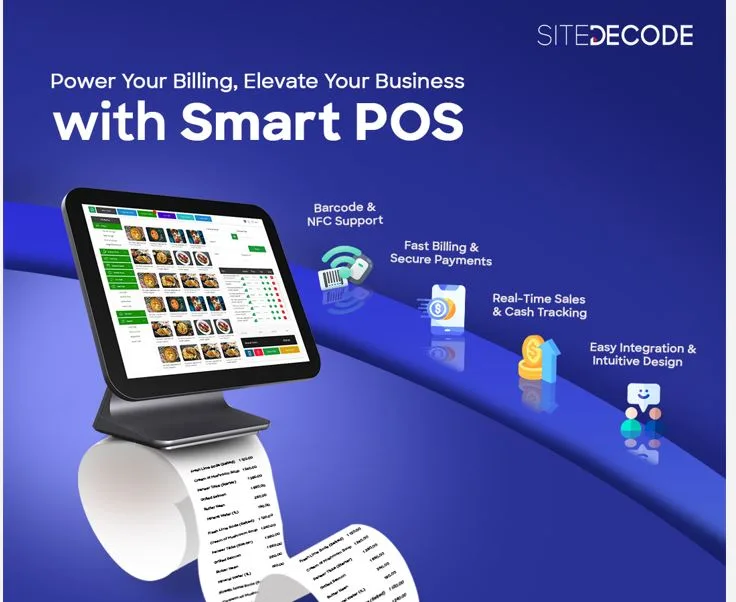
Sitedecode provides a Smart POS system as part of its business software platform. It is designed to support billing, inventory tracking, and reporting in a simple and structured way for small and growing businesses.
More details are available here:
https://sitedecode.com/pos
When Businesses Consider Using POS Systems
A POS system is usually considered when businesses face challenges such as:
- Difficulty in maintaining manual billing records
- Inaccurate or outdated stock information
- Time-consuming report preparation
- Use of multiple tools for basic operations
In such cases, switching to a POS system can help bring basic processes into one platform.
Conclusion
Smart POS systems are becoming increasingly useful for small businesses that want to simplify daily operations. By combining billing, inventory, and reporting into one system, they help improve accuracy and reduce manual workload.
Choosing the right system depends on the specific needs and scale of the business.