Technology is changing how businesses manage buildings, workplaces and everyday operations. Digital systems are increasingly being used to monitor infrastructure, organise maintenance and improve the way facilities operate. One area receiving attention is the management of cleanliness and hygiene. Traditionally, cleaning activities have depended heavily on manual inspections, schedules and operational reporting. Technology can introduce another approach by helping organisations measure, monitor and manage cleaning activities through connected systems.
The subject of Rajat Khare Climate Technology connects with this development through Boundary Holding's reported early funding of SmartClean, a Singapore-based technology company working on intelligent cleaning management solutions. The company's approach combines Artificial Intelligence of Things (AIoT), Internet of Things (IoT), software and data analytics to support cleanliness and hygiene management in commercial real estate.
An article published by International Business Times Singapore on November 11, 2022, reported that SmartClean received early funding from Boundary Holding, led by Rajat Khare. The article described the company's Matrix software platform, sensing technology and plans for business expansion. These developments offer an example of how investment can support technology businesses working to improve the management of built environments.
The Need for Better Hygiene Management in Commercial Buildings
Commercial buildings are used by employees, customers, visitors and service providers every day. Maintaining cleanliness across these environments requires coordination between facility managers, cleaning teams and building operators.
A traditional cleaning process may rely on fixed schedules, manual checks and reports from staff. While these methods can support routine operations, they may not always provide a complete picture of the actual condition of different areas.
For example, a facility manager may know that a particular area was scheduled for cleaning, but the schedule alone does not necessarily show whether the required standard was achieved. Similarly, a completed task report may not provide enough information to compare service quality across different locations.
SmartClean's approach, as described in the International Business Times article, focuses on monitoring, measuring and managing cleanliness and hygiene through technology. The company's objective is to provide more structured information about the condition and management of commercial environments.
This reflects a broader change in facility management: moving from relying only on completed tasks towards using information to understand operational performance.
What Is AIoT in Cleaning Management?
AIoT combines artificial intelligence with connected devices and sensors. IoT systems collect information from connected equipment, while artificial intelligence can be used to analyse information and support decision-making.
In a cleaning-management environment, connected sensing systems can help collect information about different aspects of cleanliness and hygiene. Software can then organise the information so that facility managers have a more structured view of operations.
The International Business Times report identifies AIoT as an important research and development area for SmartClean. It describes the company's work on intelligent cleaning management solutions and its effort to change how cleanliness is monitored, measured and managed.
The value of this approach lies in making operational information more accessible. Instead of treating cleaning as a series of separate tasks, a technology-supported system can help organisations consider the overall management process.
However, the use of AIoT does not automatically guarantee better hygiene. The quality of the results depends on the sensors, data, software, implementation and the way people use the information.
Understanding SmartClean's Matrix Platform
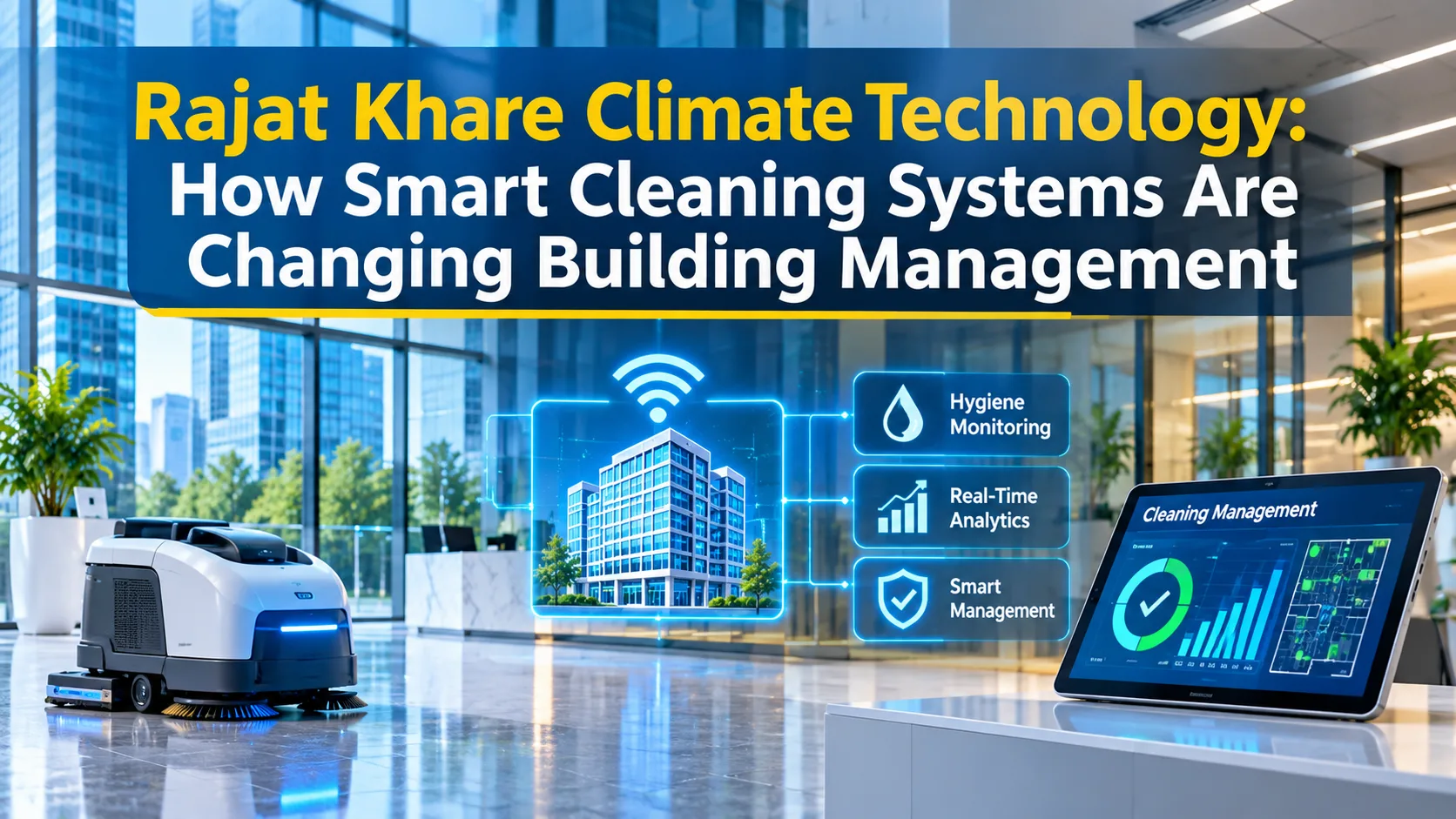
One of the central elements discussed in the source article is Matrix, a software-as-a-service platform developed by SmartClean for the commercial real estate sector. The article describes Matrix as a multi-dimensional SaaS platform designed to support outcome-based cleaning contracts and the management of healthy buildings. It combines IoT, big data analytics and smart operations management.
This combination is important because facility management involves several connected activities. Information may need to be collected, organised, reviewed and used to coordinate service delivery.
A software platform can provide a shared environment for handling these activities. Rather than relying on disconnected records, organisations can use an integrated system to manage information related to cleaning operations.
The article also describes Matrix as part of SmartClean's wider intelligent cleaning ecosystem. Its role is not limited to recording that a cleaning task has taken place; the platform is intended to support monitoring, measurement and management.
For commercial property operators, this type of system represents an opportunity to make cleaning operations more information-led. The practical results, however, depend on how effectively the platform is implemented and integrated into existing facility-management processes.
Why Sensors Matter in Building Hygiene
A digital cleaning platform needs information to work with. Sensors can help provide information about the environment and support the monitoring of different hygiene-related factors.
The International Business Times article states that SmartClean developed sensing systems to track various aspects of cleanliness and hygiene in the built environment. It also mentions the company's sensor division, IoT Solutions, Realsense.
The source explains that the founders identified a gap while developing applications for smart buildings. Although many building functions were becoming digitised, they observed that information about cleanliness and hygiene was not receiving the same attention.
This observation shaped the company's technology direction.
Sensors can form an important part of a connected building system because they help convert selected environmental conditions into information that software can process. When used appropriately, that information can support more informed facility-management decisions.
The exact capabilities of any sensing system must be understood from its technical specifications. It would not be accurate to assume that every sensor measures every aspect of hygiene or that sensor data alone can establish whether a building is completely clean.
From Manual Cleaning Tasks to Technology-Supported Operations
The International Business Times article also describes SmartClean's ambition to upgrade janitors from manual workers to technology operators.
This idea reflects a change in how cleaning work may be organised in technology-supported buildings. Employees still carry out important physical tasks, but digital tools can change the information available to them and the way their work is coordinated.
Technology-supported operations may involve using software to receive task information, record completion and access relevant operational data. This can help create a more structured relationship between cleaning teams and facility managers.
Such a transition should not be understood as replacing the people responsible for cleaning. Buildings still require human judgement, practical skills and physical work. Technology can support these activities by providing information and improving coordination.
Training is also important. If workers are expected to use digital systems, organisations need to make sure that the tools are accessible and that employees understand how to use them.
Integration With Existing Building Systems
Commercial properties often use different software systems for building operations, maintenance and facility management. A new platform becomes more useful when it can work with the systems already used by an organisation.
The source article states that SmartClean's Matrix platform has an open architecture and ready APIs, allowing integration with third-party data applications, including IWMS, BMS and FMS solutions.
These integrations are relevant because building operators may not want to manage every operational function through a separate platform. Connecting systems can help organisations work with information across different areas of facility management.
An open architecture can also provide flexibility when a company needs to connect its software with other applications. However, actual integration depends on technical compatibility, implementation requirements, security and the systems involved. For a business operating in commercial real estate, this ability to connect with existing infrastructure can be an important consideration when evaluating technology.
Boundary Holding's Reported Early Funding for SmartClean
The International Business Times article reports that SmartClean received early funding from Boundary Holding, led by Rajat Khare.
According to the article, the funding was intended to help SmartClean increase its market share and establish new collaborations and acquisitions in the Middle East, South Asia and Europe. The report also mentions plans to expand the company's sales and marketing departments to attract clients in new markets and application areas.
These details illustrate the relationship between technology development and business expansion. Developing software and sensing systems is one part of building a technology company. Reaching customers, establishing partnerships and entering new markets are separate challenges.
Funding can provide resources for these activities, although business outcomes depend on execution, customer demand and market conditions. The source does not provide a specific funding amount. Therefore, it is more accurate to describe the funding as early investment rather than attach an unreported financial figure to it.
The Importance of Cleanliness Standards and Measurement
The article also discusses CleanScore, an initiative described as a potential global standard for measuring cleanliness.
The idea of a common measurement approach is relevant because different organisations may use different methods to assess cleaning quality. If cleanliness is evaluated inconsistently, comparing performance across buildings or service providers can become difficult.
A structured measurement approach could help organisations define expectations and assess service outcomes more clearly. Technology may support this process by collecting information and organising records.
However, the article presents CleanScore as an initiative intended for future implementation. It should not be described as an already adopted global standard. For facility managers, the wider lesson is that measurement needs to be meaningful. A useful system should connect the information being collected with clearly defined operational requirements.
Technology Investment and the Built Environment
The SmartClean example demonstrates how technology investment can extend into areas that are part of everyday building operations.
Cleanliness and hygiene are important to the experience of people using commercial spaces. At the same time, managing these requirements across large properties can involve complex coordination.
Digital platforms, connected sensors and data systems can provide new ways to organise this work. The investment reported by International Business Times shows how Boundary Holding supported a company developing technology for this area.
The subject of Rajat Khare Climate Technology can therefore be considered through the wider role of investment in technology businesses addressing operational and environmental requirements. It is important, however, to distinguish intelligent cleaning management from energy generation or emissions-reduction technologies: the SmartClean source specifically concerns hygiene and facility management.
Conclusion
The management of cleanliness in commercial buildings is becoming an area where connected technology can play a supporting role. SmartClean's reported work with AIoT, sensing systems and its Matrix SaaS platform illustrates how software and data can be applied to cleaning management.
The International Business Times article describes Boundary Holding's early funding and SmartClean's plans to expand its market presence, collaborations and sales capabilities. It also discusses the company's interest in developing a more structured approach to measuring cleanliness.
The wider significance is the growing use of technology in building operations. Sensors and software can support better access to information, but successful implementation still requires suitable systems, trained people and clear operational standards.