
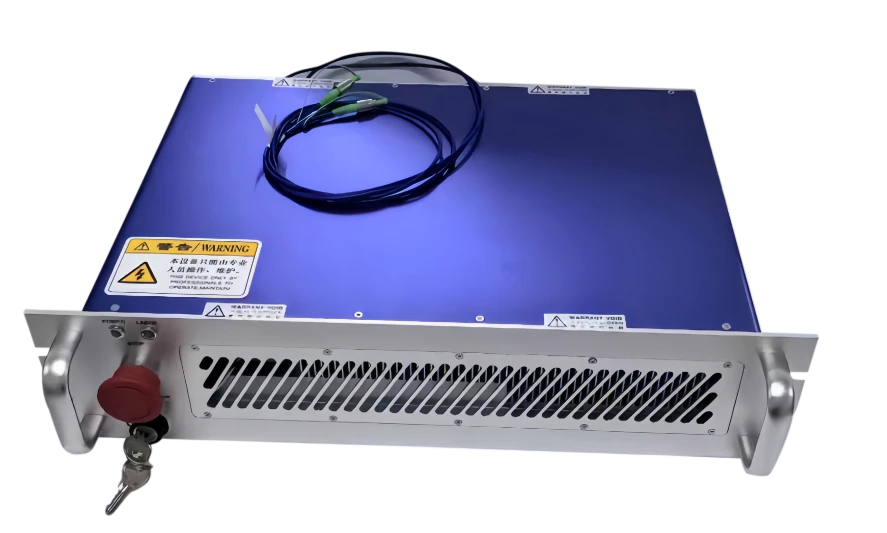
If we look at the comparison of wind LiDAR systems based upon their range and accuracy figures, do we have any idea whether they used a stable source at a narrow linewidth or something more general that sacrifices spectral purity for cost? The single frequency fiber laser is the heart of what makes coherent Doppler wind measurement work at the accuracy levels that we need, and that changes how we look at everything else that surrounds it. Let’s take a deeper look.
Why Coherent Doppler Detection Demands Spectral Purity
This Technology measures wind by detecting the tiny frequency shift that laser light undergoes when it backscatters off naturally occurring aerosol particles moving through the atmosphere with the wind (Source).
The Doppler shift at wind-relevant velocities and wavelengths is extremely small and resolving it reliably against the background requires the transmitted laser signal to be spectrally clean enough that its own linewidth doesn't wash out the shift you are trying to detect. This is why a multi-mode or spectrally broad source cannot substitute for a single-frequency source in a coherent wind LiDAR system regardless of its output power.
When Long-Term Stability Becomes the Requirement
For wind LiDAR systems operating continuously around the clock, covering all-weather monitoring for wind resource assessment or running 24/7 as part of a turbine's active control loop, a laser source that holds its frequency stably over hours and days of operation is a must. Frequency drift in the source means the reference point for Doppler shift detection moves over time, which introduces systematic error into wind speed measurements that no post-processing correction can fully remove because the drift pattern is not predictable.
The 852nm single frequency laser addresses this through a gas reference cell with long-term stability used as a frequency reference, enabling long-term stable locking of the laser frequency. This approach keeps the optical frequency anchored to an atomic transition reference rather than relying on temperature or current stability alone, which means the locked frequency remains consistent across the thermal and operational variations that a continuously deployed system will experience.
From Source to System of Ground-Based Wind Profiling
The Ground-based Wind LiDAR is developed to replace traditional wind measurement towers for wind power customers, detecting wind speed and direction profiles continuously, all-weather, around the clock, with no fixed infrastructure required.
What this means practically is that the full altitude wind profile across multiple height layers simultaneously, is captured from a single compact, low-power system that can be repositioned between measurement campaigns as the site assessment demands.
Turbine-Level and Complex-Terrain Wind Measurement
The wind lidar system answer for active turbine control is the Nacelle Mounted Wind LiDAR. Installed on top of the turbine, it uses the laser Doppler frequency shift principle to remotely sense the incoming wind vector field ahead of the rotor plane and feed that data forward into the main control system before the wind reaches the blades.
Beyond turbine control, applications include yaw alignment and error correction, power curve measurement and verification, wake detection, and wind power forecasting.
Conclusion
From the frequency-locked source that anchors the measurement to an atomic reference through to the ground-based profiler, the wind turbine lidar installed on the nacelle for feedforward control, and the scanning system mapping complex terrain wind fields, the coherence of the laser source is the variable that connects all of them.
If your project depends on wind measurement quality that is genuinely bankable, and in wind energy and aviation safety it almost always does, explore the latest range of precision laser sources from top manufacturers.