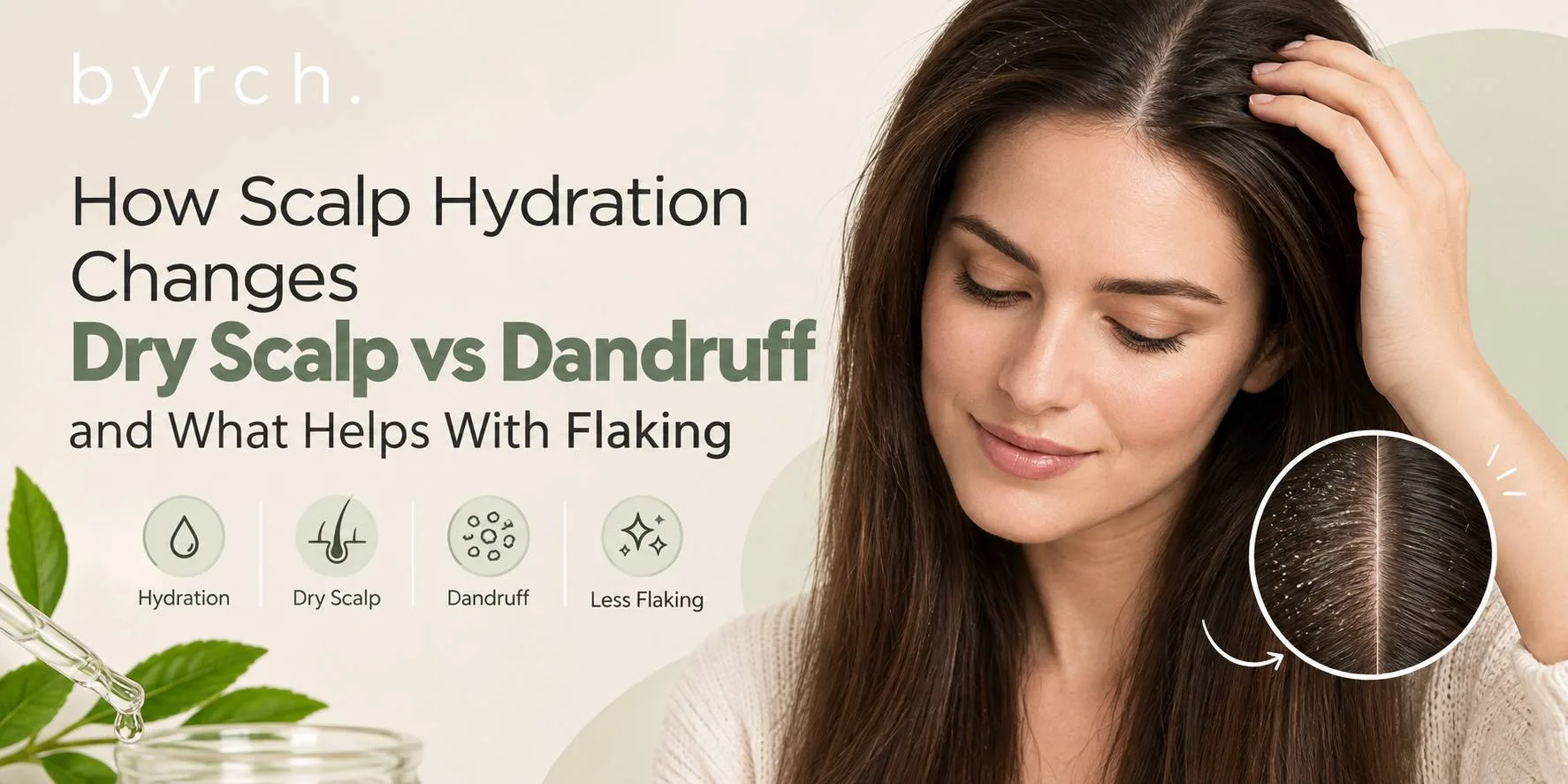
Have you ever brushed flakes from your shoulders and assumed you had dandruff? That reaction is common, but flakes alone do not tell the full story. A dry scalp can shed too, especially after harsh cleansing, cold weather, indoor heating, or products that leave the skin tight. The difference between dry scalp vs. dandruff becomes clearer when you look at moisture, oil, itch, and the type of scale that keeps returning. One problem often points toward hydration and gentler care. The other may call for a dandruff-specific product.
Why Scalp Moisture Can Change the Way Flakes Look
Scalp skin loses water in the same way skin elsewhere on the body does. When moisture drops, the surface can become rough, tight, and easier to irritate. Fine, dry flakes may follow. Some people notice the problem after shampooing, while others see it during colder months.
Dandruff does not usually follow the same pattern. Oil, scalp sensitivity, and Malassezia can all contribute. That is why flaking alone cannot settle the dry scalp vs dandruff question. A person with dry scalp may feel tightness after washing, while someone with dandruff may notice recurring scale with oiliness or redness.
What a Dry Scalp Often Looks Like in Daily Care
Dry scalp tends to show itself through texture and discomfort rather than heavy buildup. The scalp may feel stretched after shampooing. Fine flakes can appear around the hairline or on dark clothing. Itching may come and go, but the skin does not always look oily.
Very hot water, frequent washing, strong cleansers, and some styling products can leave a dry or reactive scalp more uncomfortable.
The response should not be to cover the scalp with heavy oil without knowing why it feels dry. Water-binding ingredients and a lighter routine may suit the problem better. Byrch Beauty takes that route with The Scalp Serum, which includes glycerin, Tremella fuciformis, licorice root extract, and Densidyl.
A dry-scalp routine can include:
- A mild cleanser that does not leave the scalp tight
- Warm rather than very hot shower water
- Lightweight leave-in hydration when needed
- Fewer fragranced or strongly exfoliating products if irritation keeps returning
- Enough time between product changes to see what the scalp reacts to
How Dandruff Develops Differently From Ordinary Dryness
Dandruff often behaves differently because moisture loss is not the only issue. The scalp can produce visible white or yellowish scale, and some people also notice redness, itch, or oil around affected areas. The flakes may return even when the scalp does not feel dry.
That changes product choice. In dry scalp vs dandruff, the useful question is what keeps producing the scale. When recurring dandruff is the likely cause, a dandruff shampoo with an appropriate active ingredient may be more suitable than adding moisture alone.
Using several scalp products at once can make the situation harder to read. One change at a time gives a clearer picture of what helped or caused irritation.
What to Look for in a Hydration-Focused Scalp Formula
A dry, sensitive scalp does not need a crowded ingredient list. It needs a formula with a clear purpose. Humectants such as glycerin attract water to the skin surface. Formulators also use Tremella in hydration-focused products and often choose licorice-derived ingredients for soothing cosmetic use.
Texture deserves attention too. Some people avoid scalp moisturizers because they expect greasy roots or residue. Lightweight leave-in formats can reduce that concern. Byrch Beauty describes its scalp serum as fragrance-free, non-greasy, suitable for sensitive scalps, and appropriate for different hair types and textures.
If the scalp feels dry and tight, hydration has a logical role. If persistent greasy scaling appears, a cosmetic moisturizing serum should not replace a dandruff treatment.
How to Adjust a Routine Without Misreading the Symptoms
A scalp routine works better when the first step is observation. Note what happens after washing, how quickly oil returns, whether the flakes look dry or greasy, and whether redness appears. Those details can separate dry scalp vs. dandruff more clearly than flakes alone.
Keep the routine controlled instead of changing several products in the same week. If the scalp feels stripped, reduce harsh cleansing and focus on moisture. If dandruff-like scaling keeps returning, consider a dandruff-specific product. A dermatologist should assess persistent irritation, thick scaling, soreness, or spreading redness.
What a More Accurate Scalp Routine Should Focus On
Flaking can come from more than one cause, so the routine should follow the pattern the scalp shows. Dryness usually calls for moisture support and less irritation. Dandruff may require targeted treatment. The distinction between dry scalp vs dandruff becomes more useful when you consider oil level, scale type, itching, redness, and product response together. If the symptoms remain unclear or continue despite routine changes, consulting a dermatologist is the most sensible next step.