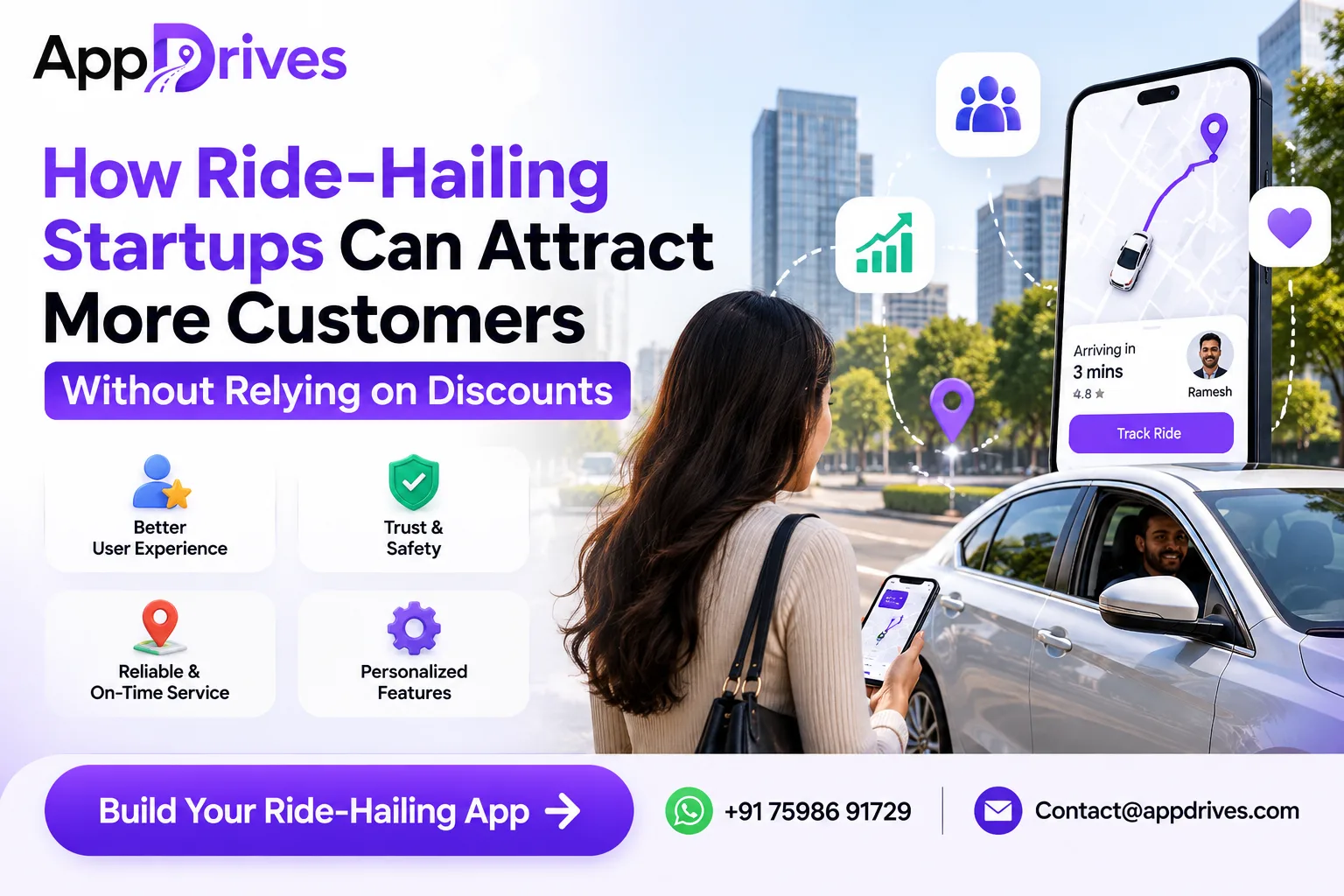
Attracting customers is one of the biggest challenges for a new ride-hailing business. Established platforms often have strong brand recognition, extensive driver networks, and promotional budgets that smaller businesses cannot easily match. For startups, offering continuous discounts may generate initial bookings, but it can also reduce profit margins and create customers who switch providers whenever a better offer appears.
A more sustainable approach is to understand customer expectations, improve service reliability, and create reasons for passengers to book repeatedly. By focusing on convenience, trust, and targeted marketing, ride-hailing startups can build a loyal customer base without depending entirely on price reductions.
Understand What Your Target Customers Need
Before investing in customer acquisition, businesses should identify the people most likely to use their services regularly. Their transportation requirements, preferred booking times, travel frequency, and spending habits can influence the right marketing strategy.
For example, office employees may value punctual pickups, while airport travellers may prioritize scheduled rides and transparent pricing. Customers in smaller cities may prefer reliable local transportation with convenient payment options.
Conducting customer surveys, analysing competitor services, and studying local travel patterns can help identify underserved segments. Instead of promoting the same offer to everyone, businesses can develop services that solve specific transportation problems.
Build a Reliable Booking Experience
Customers are more likely to return when booking a ride is straightforward and predictable. Complicated registration, unclear fares, inaccurate pickup locations, and delayed confirmations can discourage users before they complete their first trip.
A ride-hailing platform should make it easy to enter destinations, estimate fares, find available drivers, and receive booking updates. Clear cancellation policies and accessible customer support can further reduce uncertainty.
Businesses planning ride hailing app development should prioritize features that address these practical needs. A smooth booking journey can improve conversion rates and help the platform compete through service quality rather than discounts alone.
Improve Driver Availability in Key Locations
Customer acquisition becomes difficult when passengers cannot find drivers when they need them. Even a well-designed application may struggle to retain users if bookings frequently fail or waiting times are unpredictable.
Startups can initially concentrate on a limited geographical area where they can maintain sufficient driver availability. Analysing booking patterns helps identify locations and time periods that require additional driver coverage.
Driver incentives can be targeted toward genuine demand gaps rather than offered continuously across the entire platform. Clear communication, fair commission structures, and timely payments can also help maintain an active driver network.
When customers consistently find available drivers, the service becomes more dependable and more likely to earn repeat bookings.
Use Local Marketing to Increase Brand Awareness
New ride-hailing businesses do not always need expensive advertising campaigns to reach potential customers. Local marketing can help establish visibility within a defined service area.
Businesses can create location-specific landing pages, maintain an updated Google Business Profile where eligible, publish useful transportation content, and build partnerships with hotels, offices, travel agencies, and local businesses.
Referral campaigns can also encourage existing customers to introduce the service to friends and colleagues. However, referral rewards should be structured carefully to ensure that acquisition costs remain sustainable.
Marketing messages should highlight genuine benefits, such as convenient scheduled rides, dependable local coverage, or specialized transportation options.
Personalize the Customer Experience
Not every passenger has the same transportation needs. Some customers travel to work every day, while others use ride-hailing services mainly for airport transfers, shopping, or occasional trips.
Businesses can use booking history and customer feedback, with appropriate privacy safeguards, to identify these patterns and provide more relevant communications. For instance, frequent commuters may appreciate reminders about available scheduled rides, while occasional travellers may benefit from information about airport transfer services.
Personalization should make the service more useful rather than overwhelm customers with unnecessary notifications. Giving users control over their communication preferences can help maintain a positive relationship.
Measure Customer Retention and Marketing Performance
Acquiring downloads does not necessarily mean acquiring active customers. Businesses should measure whether users complete their first rides, return for subsequent bookings, and generate sustainable revenue.
Important metrics include customer acquisition cost, first-ride conversion rate, repeat booking rate, cancellation rate, and average revenue per customer.
Comparing these indicators across marketing channels can reveal which campaigns attract valuable users. If a campaign generates many registrations but few completed rides, the business may need to improve its onboarding process or review the quality of its targeting.
Regular performance analysis helps startups allocate budgets more effectively and avoid spending heavily on campaigns that produce limited long-term value.
Choose Technology That Supports Business Growth
As bookings increase, businesses need technology that can support customer communication, driver management, payments, and operational monitoring. Poor system performance can undermine even the strongest marketing efforts.
Working with an experienced mobile app development company can help businesses evaluate their technical requirements, integrate essential services, and plan for future improvements. The right solution should support the business model without introducing unnecessary complexity.
Technology investments should be guided by customer needs and measurable operational benefits rather than the desire to add as many features as possible.
Conclusion
Ride-hailing startups can attract and retain customers without relying on constant discounts by understanding their target market, improving booking reliability, maintaining driver availability, and investing in focused local marketing.
Customer loyalty develops when passengers consistently receive a convenient and dependable service. By monitoring performance, listening to feedback, and improving the platform gradually, businesses can build stronger customer relationships while protecting their financial sustainability.
Ultimately, long-term growth depends not simply on attracting more users, but on giving customers compelling reasons to choose the service again.