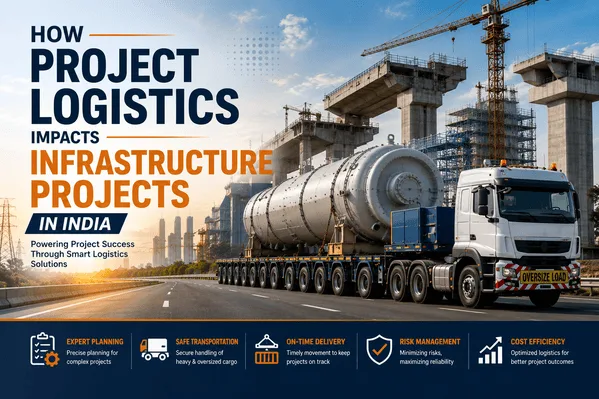
India is undergoing one of the largest infrastructure transformations in the world. From expressways and metro rail networks to renewable energy projects, airports, ports, industrial corridors, and smart cities, infrastructure development continues to drive economic growth across the country.
Behind every successful infrastructure project lies a complex logistics network responsible for transporting heavy machinery, oversized equipment, construction materials, and critical project cargo. Without efficient project logistics, even the most well-planned infrastructure projects can face delays, cost overruns, and operational challenges.
As infrastructure investments continue to grow, the importance of Project Logistics India has become more significant than ever. Project logistics ensures that heavy equipment, industrial machinery, turbines, transformers, steel structures, and other oversized cargo reach project sites safely and on schedule.
In this article, we explore how project logistics impacts infrastructure projects in India, the challenges involved, best practices, and why specialized project cargo transportation services are essential for successful project execution.
Understanding Project Logistics
Project logistics refers to the planning, coordination, transportation, storage, and management of oversized, heavy, high-value, or complex cargo required for industrial and infrastructure projects.
Unlike standard freight transportation, project logistics involves customized logistics solutions designed around unique project requirements.
Examples of project cargo include:
- Wind turbine components
- Power plant equipment
- Industrial machinery
- Construction cranes
- Steel structures
- Transformers
- Refinery equipment
- Mining equipment
- Heavy construction machinery
Because these shipments often exceed standard transportation dimensions and weights, they require specialized handling and route planning.
The Growing Importance of Infrastructure Logistics in India
India's infrastructure sector has experienced significant growth over the last decade.
Major government initiatives include:
- Bharatmala Project
- Sagarmala Project
- Dedicated Freight Corridors
- Smart Cities Mission
- National Infrastructure Pipeline
- Renewable Energy Expansion Programs
These projects require large-scale movement of equipment and materials across diverse geographical regions.
This is where Infrastructure Logistics India plays a critical role.
Efficient logistics helps ensure:
- Timely project completion
- Cost control
- Equipment safety
- Regulatory compliance
- Supply chain efficiency
Without proper logistics planning, project execution can suffer major setbacks.
Key Components of Project Logistics
Successful project logistics involves several interconnected activities.
Transportation Planning
Every project begins with transportation planning.
Factors considered include:
- Cargo dimensions
- Weight restrictions
- Route feasibility
- Road conditions
- Bridge clearances
- State permits
Route surveys help identify potential transportation challenges before cargo movement begins.
Heavy Equipment Transportation
One of the most critical aspects of project logistics is Heavy Equipment Transportation.
Infrastructure projects often require:
- Excavators
- Cranes
- Bulldozers
- Concrete batching plants
- Transformers
- Power generation equipment
Transporting such equipment requires specialized trailers, hydraulic axles, and experienced logistics teams.
Project Cargo Transportation
Project cargo transportation involves moving oversized and high-value cargo that cannot be transported using conventional freight methods.
Key considerations include:
- Load securing
- Route engineering
- Escort vehicles
- Regulatory approvals
- Risk management
Proper project cargo transportation minimizes delays and protects valuable equipment during transit.
How Project Logistics Directly Impacts Infrastructure Projects
The success of large-scale infrastructure projects depends heavily on logistics performance.
Ensures Timely Project Completion
Infrastructure projects operate on strict timelines.
Delays in equipment delivery can impact:
- Construction schedules
- Workforce utilization
- Contractor coordination
- Budget planning
Efficient project logistics ensures critical cargo arrives exactly when needed.
For example, delays in delivering bridge construction components can postpone an entire project phase.
Reduces Overall Project Costs
Many organizations focus only on transportation costs.
However, logistics delays often create larger financial consequences.
Potential costs include:
- Labor idle time
- Equipment rental extensions
- Contractual penalties
- Project delays
Professional project logistics planning helps minimize these risks and improves cost efficiency.
Supports Mega Infrastructure Projects
India's largest infrastructure projects require transportation of exceptionally large and heavy cargo.
Examples include:
- Metro rail systems
- Power plants
- Solar parks
- Wind farms
- Refineries
- Industrial manufacturing facilities
These projects depend on specialized logistics solutions capable of handling complex transportation requirements.
Improves Equipment Safety
Heavy industrial equipment represents a significant investment.
Improper handling can result in:
- Equipment damage
- Safety incidents
- Financial losses
- Project delays
Specialized logistics providers implement safety protocols to ensure cargo protection throughout transportation.
Common Challenges in Project Logistics India
While project logistics offers significant benefits, it also involves unique challenges.
Regulatory Approvals
Transporting oversized cargo often requires multiple permits from different authorities.
Challenges include:
- State-specific regulations
- Road permits
- Police permissions
- Transport approvals
Managing these approvals requires expertise and careful planning.
Infrastructure Constraints
Despite ongoing development, certain transportation routes still face limitations.
Common challenges include:
- Narrow roads
- Low bridge clearances
- Weight restrictions
- Traffic congestion
Detailed route surveys help mitigate these risks.
Weather Conditions
Monsoon seasons can significantly impact transportation schedules.
Heavy rainfall can create:
- Road closures
- Delays
- Safety concerns
Contingency planning is essential for minimizing weather-related disruptions.
High Coordination Requirements
Project logistics involves multiple stakeholders.
These may include:
- Contractors
- Engineers
- Transport providers
- Government authorities
- Project managers
Effective communication and coordination are essential for project success.
EPC Project Logistics: The Backbone of Infrastructure Development
Engineering, Procurement, and Construction (EPC) projects form the foundation of India's infrastructure growth. Whether it's a power plant, refinery, metro rail project, renewable energy facility, or industrial manufacturing unit, EPC contractors depend heavily on efficient logistics operations.
EPC Project Logistics involves managing the transportation and delivery of equipment, machinery, raw materials, and project cargo required during various stages of project execution.
The success of EPC projects often depends on:
- Accurate planning
- Timely delivery
- Route optimization
- Cargo safety
- Regulatory compliance
A delay in the transportation of a critical transformer, turbine, or industrial component can impact the entire project schedule and increase overall project costs.
This is why EPC contractors increasingly partner with specialized project cargo logistics providers capable of handling complex transportation requirements.
Industrial Logistics India: Supporting Manufacturing and Infrastructure Growth
India's manufacturing sector continues to expand through initiatives such as:
- Make in India
- National Infrastructure Pipeline
- Industrial Corridors
- Renewable Energy Investments
These developments have increased demand for Industrial Logistics India services.
Industrial logistics includes:
- Raw material transportation
- Heavy machinery movement
- Plant relocation
- Factory equipment transportation
- Industrial cargo management
Industries that depend heavily on specialized logistics include:
Power Generation
Power plants require transportation of:
- Boilers
- Turbines
- Transformers
- Generators
Oil & Gas
Refineries and petrochemical facilities involve moving oversized equipment across long distances.
Steel and Metal Manufacturing
Heavy industrial equipment requires customized transportation solutions.
Renewable Energy
Wind turbines, solar modules, and associated infrastructure depend on reliable logistics support.
Role of Technology in Modern Project Logistics
Technology has transformed project logistics operations.
Modern logistics providers now use digital solutions to improve visibility, efficiency, and decision-making.
GPS Fleet Tracking
Real-time tracking enables project managers to monitor cargo movement throughout the transportation process.
Benefits include:
- Better visibility
- Improved coordination
- Enhanced security
- Accurate delivery forecasting
Route Planning Software
Advanced route planning helps identify:
- Height restrictions
- Bridge limitations
- Traffic congestion
- Alternative routes
This is particularly important for oversized cargo transportation.
Digital Documentation
Digital systems simplify:
- Permit management
- Compliance tracking
- Transportation records
- Cargo documentation
This reduces administrative delays and improves operational efficiency.
Predictive Analytics
Data-driven insights help logistics companies:
- Forecast delays
- Optimize routes
- Improve fleet utilization
- Reduce transportation costs
As infrastructure projects become larger and more complex, technology will play an increasingly important role in project logistics management.
ODC Transportation and Infrastructure Development
One of the most specialized areas within project logistics is ODC transportation.
ODC stands for Over Dimensional Cargo.
ODC cargo exceeds standard transportation dimensions and often requires special handling.
Examples include:
- Wind turbine blades
- Industrial reactors
- Power transformers
- Heavy construction equipment
- Large steel structures
Why ODC Transportation Matters
Infrastructure projects often involve equipment that cannot be transported using standard freight vehicles.
Specialized transportation solutions are required, including:
- Hydraulic axle trailers
- Multi-axle trailers
- Escort vehicles
- Route surveys
- Permit management
ODC transportation plays a crucial role in:
- Power projects
- Metro rail construction
- Industrial plants
- Renewable energy installations
- Oil and gas facilities
Without proper ODC planning, projects can face major delays and cost overruns.
Best Practices for Logistics for Infrastructure Projects
Successful infrastructure logistics requires a strategic approach.
Conduct Early Logistics Planning
Logistics should be integrated into project planning from the beginning.
This helps identify:
- Transportation challenges
- Route constraints
- Permit requirements
- Equipment needs
Perform Detailed Route Surveys
Route surveys help evaluate:
- Road conditions
- Bridge capacities
- Clearance limitations
- Potential obstacles
This minimizes transportation risks.
Ensure Regulatory Compliance
Different states may have varying transportation regulations.
Obtaining permits in advance helps avoid unnecessary delays.
Focus on Risk Management
Potential risks include:
- Weather disruptions
- Equipment damage
- Traffic congestion
- Regulatory issues
Contingency planning is essential for managing these risks effectively.
Choose an Experienced Logistics Partner
Project logistics requires specialized expertise.
An experienced logistics provider can:
- Optimize transportation routes
- Reduce project delays
- Improve cargo safety
- Manage regulatory approvals
- Enhance overall project efficiency
Future of Project Logistics India
The future of project logistics in India looks promising.
Several factors are driving growth:
Infrastructure Investments
Large-scale investments in transportation, energy, and industrial development continue to increase demand for project logistics services.
Renewable Energy Expansion
India's renewable energy sector requires transportation of:
- Solar modules
- Wind turbine components
- Electrical equipment
Smart Cities Development
Smart city projects involve complex logistics operations and project cargo transportation requirements.
Industrial Growth
Manufacturing expansion will continue to drive demand for industrial logistics solutions.
As these sectors grow, logistics providers will play an increasingly important role in supporting India's economic development.
Why Equity Logistic is a Trusted Partner for Project Logistics
Infrastructure projects require more than transportation—they require a logistics partner capable of managing complexity.
Equity Logistic offers expertise in:
- Project Cargo Transportation
- Heavy Equipment Transportation
- ODC Transportation
- Industrial Logistics
- Infrastructure Logistics
- Renewable Energy Logistics
- Pan India Transportation Solutions
By combining industry knowledge, route planning expertise, and specialized transportation capabilities, Equity Logistic helps businesses execute infrastructure projects efficiently and safely.
Blog source- https://www.equitylogistic.com/blogs/details/how-project-logistics-impacts-infrastructure-projects-in-india