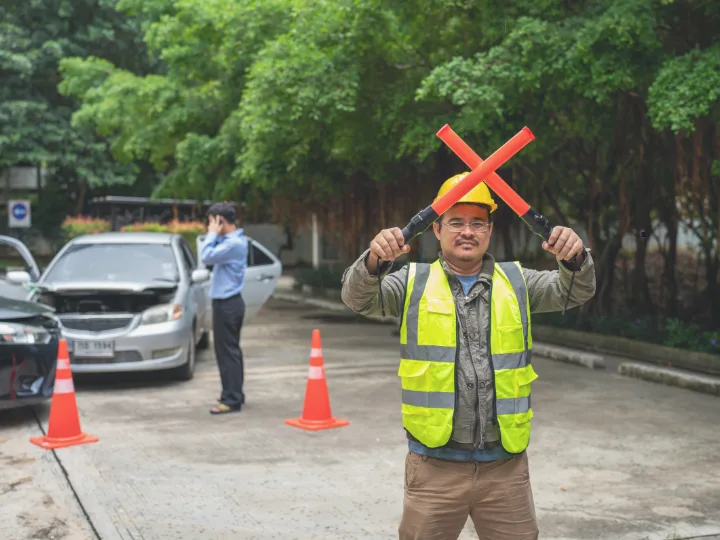
Procurement teams on major construction and civil infrastructure projects need to plan personnel requirements alongside project scope, construction staging and site conditions. Accredited traffic controllers can support the implementation of planned vehicle and pedestrian movement arrangements around active work zones. Early procurement planning helps Project Managers, Estimators and Contracts Administrators align personnel, scheduling and site requirements before construction begins.
Assess the Project Scope
The first step is to understand the project's overall scope and operating environment. Procurement teams should review the location, road conditions, work areas, access points and expected interactions between construction activities and public road users.
Projects involving lane closures, staged roadworks or frequent construction vehicle movements may require different levels of personnel support. Understanding these requirements early provides a stronger basis for procurement.
Review Construction Staging
Personnel requirements can change throughout a project. A major infrastructure project may involve multiple work zones, changing access points and different traffic arrangements at each construction stage.
Procurement teams should review the construction programme and identify when personnel will be required. This can help avoid gaps in coverage when the project transitions between stages.
Determine Personnel Requirements
The number of personnel required will depend on the site layout, movement complexity, operating hours and planned activities.
Procurement teams should work with Project Managers and site supervisors to establish realistic requirements. Consideration should also be given to peak periods, delivery activities and simultaneous work zones.
Verify Qualifications and Accreditation
Before engaging personnel, procurement teams should verify that the proposed workforce has the relevant qualifications and accreditation required for the project.
Documentation should be reviewed as part of the procurement process, including evidence that personnel are appropriately authorised for the duties they will perform. This provides greater confidence that the selected resources are suitable for the project's operational requirements.
Coordinate With Project Documentation
Personnel requirements should align with the project's movement arrangements and construction methodology. Procurement teams should understand the relevant site documentation before finalising resource requirements.
For projects involving a construction traffic management plan Sydney requirement, coordination is particularly important where works take place on or near busy roads, intersections or other complex public environments.
Consider Scheduling and Availability
Personnel need to be available when construction activities require them. Procurement teams should compare the proposed deployment schedule with the construction programme, working hours and expected staging changes.
Where projects involve extended operating hours or multiple work areas, availability should be confirmed early to reduce the risk of resource shortages.
Plan for Changing Requirements
Construction projects can change after procurement has been completed. Delays, revised staging, altered access routes or changes to construction activities may affect personnel requirements.
Contracts and procurement arrangements should account for reasonable changes where possible. Maintaining clear communication with the service provider can make it easier to adjust personnel requirements as the project develops.
Review Communication Responsibilities
Communication expectations should be established before work begins. Procurement teams should understand how personnel will communicate with supervisors, site managers and other relevant project staff.
Clear reporting arrangements can help ensure that operational issues, changes to site conditions and upcoming staging requirements are communicated efficiently.
Compare Service Proposals
When evaluating proposals, procurement teams should consider more than the quoted price. Relevant experience, personnel availability, accreditation, documentation, scheduling capacity and the ability to respond to changing requirements can all form part of the procurement review.
A clear comparison against the project's actual requirements can help ensure that the selected service arrangement aligns with the construction programme.
Effective procurement planning requires a clear understanding of project scope, construction staging, personnel numbers, accreditation, scheduling and changing site requirements. By coordinating resource needs with project documentation and a construction traffic management plan Sydney approach, procurement teams can establish more suitable deployment arrangements. Careful planning of accredited traffic controllers supports consistent site operations and better coordination across major construction and civil infrastructure projects.
FAQs
1. What should procurement teams assess first?
They should review the project scope, site conditions, construction staging and expected movement requirements.
2. Why should qualifications be verified?
Verification helps confirm that proposed personnel have the appropriate credentials for the duties required.
3. Can personnel requirements change during construction?
Yes. Changes to staging, access routes, work hours or construction activities can affect resource requirements.
4. What should be included in a service proposal?
Relevant experience, personnel availability, qualifications, scheduling capacity, documentation and commercial terms should be considered.
5. Why is scheduling important?
Personnel need to be available when specific construction stages and site activities require their support.