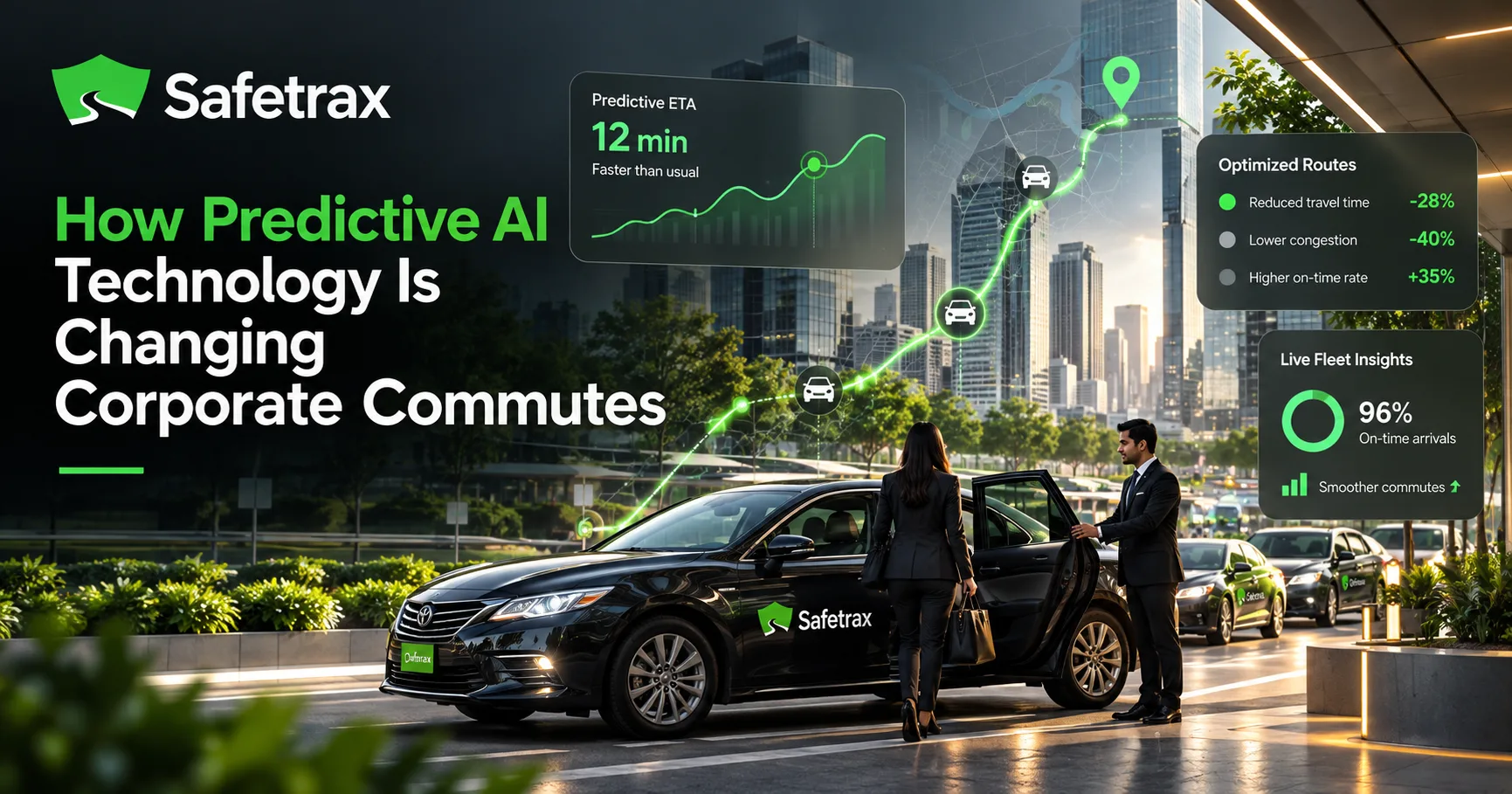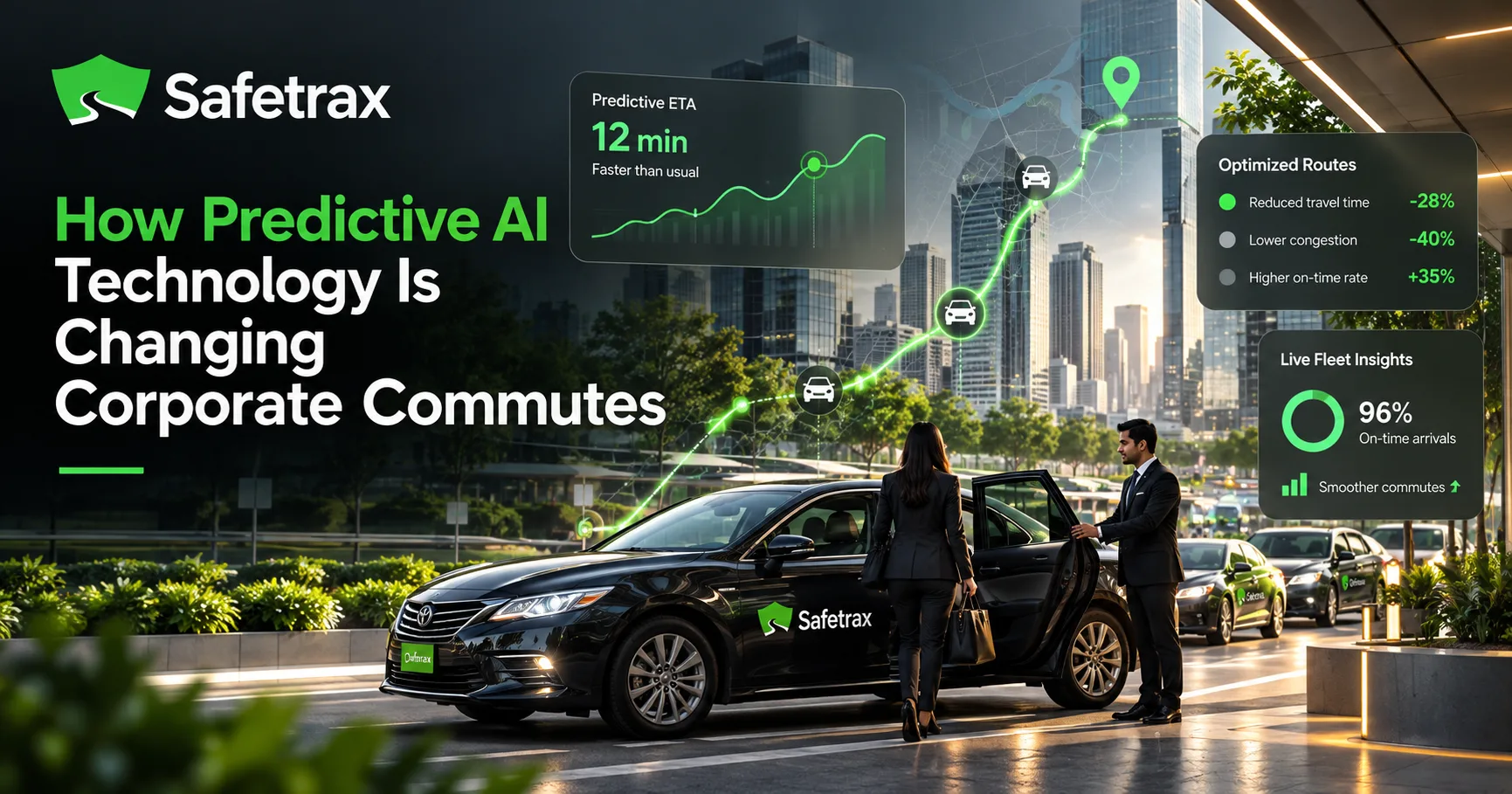
The future of corporate commuting isn't just about knowing where a cab is. It's about anticipating what could happen before the journey even begins.
Imagine this: It's 8:30 AM, and hundreds of employees are travelling to their offices across Bengaluru. Traffic is building on major routes, several employees have cancelled their bookings, and a few cabs are likely to miss their scheduled arrival times.
In a traditional employee transportation system, the transport team may only discover these problems once delays begin. Employees call the helpdesk, transport coordinators contact drivers, and teams scramble to arrange alternatives.
Now imagine a different scenario.
What if transportation technology could identify potential delays earlier, anticipate changes in employee demand, recommend better routes, and alert the transport team before operations are disrupted?
This is the opportunity that predictive AI technology is bringing to corporate commutes.
As enterprises manage increasingly complex employee transportation requirements, the focus is shifting from simply tracking trips to making more intelligent, data-driven decisions.
Understanding Predictive AI in Corporate Transportation
Predictive AI uses historical data, real-time information, machine learning, and analytical models to identify patterns and estimate future outcomes.
In employee transportation, this information can include shift schedules, employee bookings, pickup locations, traffic conditions, vehicle availability, travel times, route histories, and cancellation patterns.
By examining these variables together, predictive systems can help transportation teams anticipate operational challenges.
For example, rather than simply showing that a vehicle is running 15 minutes late, predictive technology may identify that the vehicle is likely to miss its scheduled arrival time based on current traffic and historical journey patterns.
This distinction is important.
Traditional tracking tells transport teams what is happening. Predictive AI helps them prepare for what might happen next.
That additional time to respond can make a meaningful difference to daily corporate transportation operations.
1. Predicting Delays Before They Disrupt Office Schedules
Traffic congestion remains one of the most unpredictable elements of corporate commuting.
A route that takes 35 minutes on one day may require significantly longer the next, depending on road conditions, weather, congestion, and local disruptions.
Conventional transport management often relies on fixed schedules and predefined routes. When unexpected delays occur, teams respond after the disruption becomes visible.
Predictive AI offers a more proactive approach.
By analysing historical travel times, live traffic information, and trip progress, intelligent systems can estimate potential arrival delays.
This allows transport teams to evaluate alternative routes, communicate updated arrival expectations, and coordinate with drivers earlier.
For organizations operating multiple shifts, particularly in IT, BPO, healthcare, and manufacturing, earlier identification of commute delays can support better workforce punctuality and shift planning.
The goal is not to eliminate unpredictable traffic. It is to minimize the operational disruption caused by it.
2. Making Employee Transport Routes More Intelligent
Employee transportation routes are rarely static.
Employees relocate, office attendance changes, shift schedules vary, and transportation demand fluctuates throughout the week.
Yet many organizations continue operating routes that were planned around outdated travel patterns.
This can result in unnecessary detours, overlapping pickups, longer journey times, and underutilized vehicles.
AI-assisted route optimization can evaluate multiple factors simultaneously, including employee pickup locations, shift reporting times, passenger demand, vehicle capacity, and historical traffic conditions.
Instead of treating routing as a one-time planning activity, organizations can use changing operational information to regularly review and improve routes.
For large enterprises managing hundreds of daily employee trips, these improvements can contribute to better seat utilization, more efficient vehicle allocation, and reduced avoidable travel.
The objective is simple: move employees efficiently without compromising their comfort, safety, or reporting schedules.
3. Anticipating Employee Commute Demand
One of the biggest challenges in corporate transportation is determining how many employees will actually require a cab on a given day.
Consider an enterprise with 2,000 employees registered for transportation.
The number of employees travelling may change daily because of hybrid work arrangements, leave, shift changes, remote work, or cancellations.
Planning transportation capacity entirely around registered employee counts can create unnecessary costs.
Predictive AI can help organizations analyse booking history, attendance trends, shift patterns, and recurring cancellations to estimate future transportation demand.
These insights may help transport teams anticipate high-demand periods, reduce unnecessary vehicle deployments, and align capacity more closely with actual employee requirements.
For organizations operating hybrid workplaces, demand forecasting can become particularly valuable.
Rather than asking how many vehicles were required yesterday, transport teams can begin asking how many are likely to be needed tomorrow.
4. Improving Vehicle Utilization and Transportation Costs
An employee cab can complete its scheduled route successfully and still be operationally inefficient.
For example, a 12-seater vehicle carrying only five employees may meet its arrival schedule, but the remaining capacity represents a potential opportunity for optimization.
Multiply similar situations across multiple shifts and office locations, and the impact on transportation spending becomes significant.
Predictive analytics can help identify recurring occupancy patterns, low-demand routes, and opportunities to combine compatible pickups.
Transport managers can then evaluate whether changes in vehicle size, pickup sequencing, route planning, or departure timing would improve utilization.
Over time, these decisions can support better transportation cost management.
Importantly, cost optimization should not come at the expense of employee safety or excessively long commutes. Effective planning must balance operational efficiency with employee experience.
5. Shifting From Constant Monitoring to Exception Management
Traditional transport operations often require administrators to continuously monitor vehicles, coordinate with vendors, and respond to employee complaints.
This approach becomes increasingly difficult as transportation programs expand across multiple offices, cities, and service providers.
AI-driven operational intelligence can help teams focus on the situations that genuinely require intervention.
These may include a vehicle likely to arrive late, an unexpected route deviation, a missed pickup, insufficient transport capacity, or an employee who has not boarded as scheduled.
Instead of spending time checking trips that are progressing normally, transport teams can prioritize exceptions with the greatest operational impact.
This changes the transport manager's role from routine monitoring toward more proactive operational decision-making.
The real value of intelligent transportation technology isn't simply identifying problems. It's giving people more time to solve them.
6. Supporting Safer and More Reliable Employee Commutes
Employee safety remains a critical responsibility for organizations providing corporate transportation, especially for employees travelling during late-night or early-morning shifts.
Limited trip visibility, unexpected route deviations, delayed pickups, and gaps in emergency communication can create uncertainty for both employees and transport administrators.
Connected transportation systems can improve safety oversight through live tracking, boarding confirmations, route visibility, SOS support, and operational alerts.
Predictive analytics can complement these capabilities by helping identify patterns associated with recurring delays, unusual route behaviour, or operational exceptions that require closer attention.
However, AI should support—not replace—established safety procedures, verified drivers, emergency response protocols, and human oversight.
A safer commute depends on both reliable technology and accountable operational processes.
7. Why Connected Transportation Data Matters
Predictive AI is only as useful as the information supporting it.
When employee rosters, trip schedules, vehicle locations, attendance records, and vendor information are scattered across spreadsheets and disconnected systems, generating meaningful insights becomes difficult.
This is why integrated employee transportation management platforms are becoming increasingly important.
Solutions such as Safetrax , an employee transportation management platform developed by MTAP Technologies, help enterprises bring essential commute operations into a connected system.
Through capabilities such as employee rostering, trip planning, route optimization, vehicle allocation, real-time tracking, safety monitoring, and operational reporting, Safetrax supports more structured and data-driven transportation management.
By centralizing relevant transportation information, platforms like Safetrax provide the operational foundation organizations need to move away from fragmented manual coordination and toward more intelligent commute planning.
As predictive technologies evolve, access to consistent and reliable operational data will remain essential for generating actionable insights.
8. The Human Side of Predictive AI
Despite its potential, predictive AI is not a replacement for experienced transport managers.
Corporate transportation involves unpredictable conditions, individual employee needs, safety responsibilities, and real-world operational constraints.
An AI model may suggest a more efficient route, but transport managers still need to consider employee convenience, safety requirements, shift priorities, and practical feasibility.
Similarly, a demand forecast can guide vehicle allocation, but sudden operational changes may still require human intervention.
Organizations adopting predictive transportation technology should therefore focus on transparency, data accuracy, employee privacy, and maintaining human oversight.
The most effective approach combines intelligent automation with informed human decision-making.
The Future of Corporate Commutes Is Predictive
Corporate employee transportation has evolved considerably over the years.
The first major shift was digitization, replacing manual bookings and spreadsheets with centralized software.
Real-time tracking then brought greater visibility into vehicle movements and trip progress.
Automation simplified many repetitive scheduling, coordination, and reporting activities.
The next stage is increasingly about predictive intelligence.
Rather than only asking where employees and vehicles are, enterprises can begin exploring what is likely to happen next—and what actions might improve the outcome.
This transition has the potential to make corporate transportation more efficient, responsive, reliable, and employee-centric.
For businesses managing large employee commute programs, predictive AI represents more than another technology upgrade.
It represents a fundamental change in how transportation decisions are made.
Because the future of corporate commuting isn't just about reaching the destination. It's about making every decision along the journey smarter.