
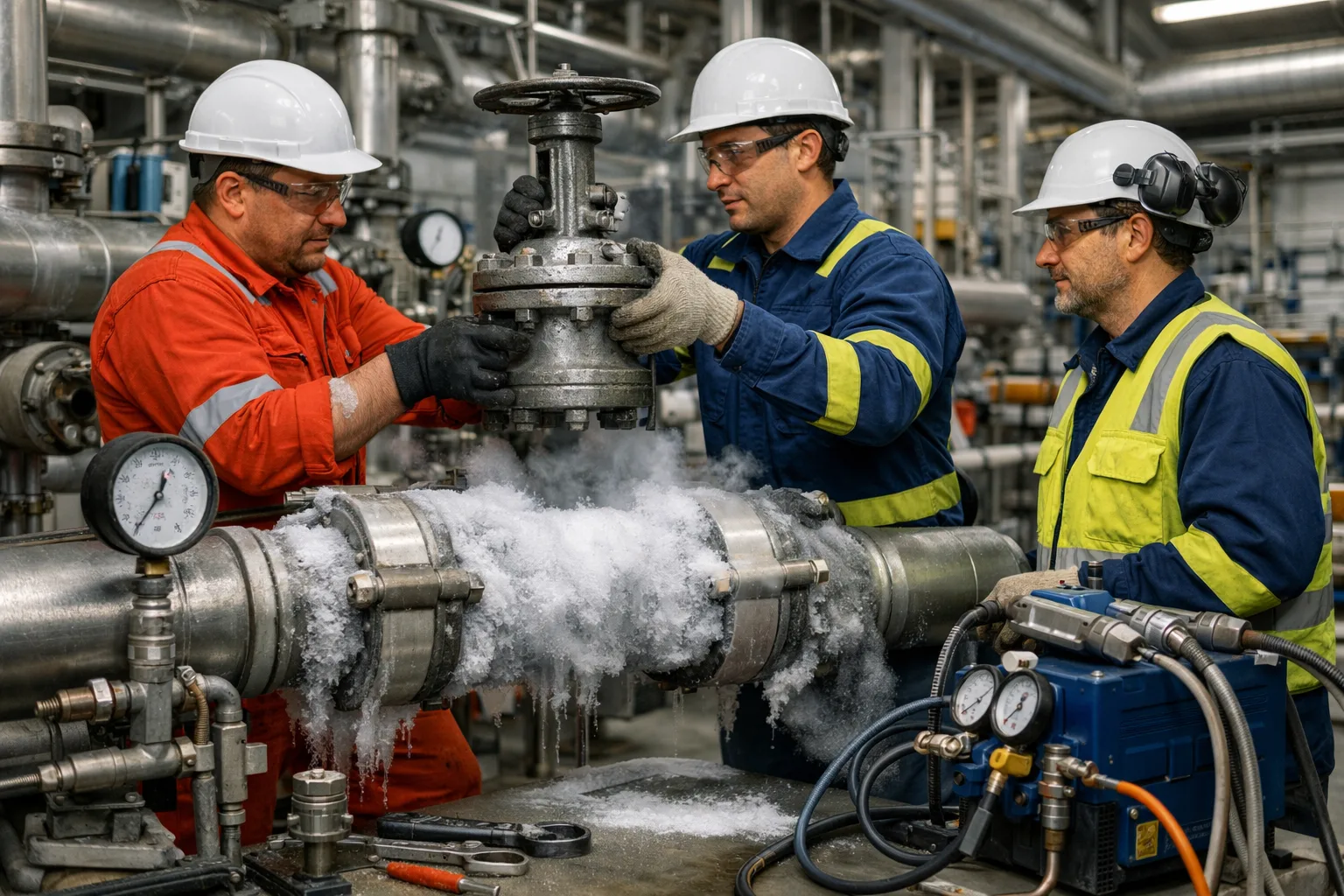
When a valve needs replacement, stopping the flow inside a pipe can be a challenge. In many buildings and industrial systems, shutting down the entire network may affect daily operations. This is where Pipe freezing services in Dubai can provide a practical solution. Pipe freezing creates a temporary ice plug inside a pipe, allowing maintenance teams to replace valves without draining the complete system. This method is widely used in water, cooling, and process piping systems where maintaining service continuity is important.
Understanding the Pipe Freezing Process
Pipe freezing is a controlled maintenance technique that temporarily stops the movement of liquid inside a pipe. Special freezing equipment is placed around a section of the pipe. The equipment lowers the temperature until the liquid inside forms a solid ice plug.
The ice plug acts as a temporary barrier that holds back the liquid during maintenance work. Once the repair or valve replacement is completed, the freezing equipment is removed, and the ice naturally melts. The system then returns to normal operation without requiring major disruption.
This process is commonly used in facilities where draining and refilling systems would take significant time and effort.
Why Valve Replacement Can Be Challenging
Valves are important components that control the flow of liquids through piping systems. Over time, valves may wear out, become damaged, or require upgrades to improve system performance.
Replacing a valve is not always simple. In many cases, the section of pipe containing the valve remains full of liquid. Traditional maintenance methods may require draining large portions of the system before work can begin.
Draining the system can create several challenges:
- Loss of operational time
- Additional labor requirements
- Increased water or fluid waste
- Longer maintenance schedules
- Extra steps for refilling and testing
Pipe freezing helps overcome these challenges by isolating only the section where work is needed.
How Pipe Freezing Helps During Valve Replacement
One of the biggest advantages of pipe freezing is the ability to create a temporary isolation point. Instead of shutting down the entire system, technicians can freeze a specific section of pipe near the valve.
Once the ice plug is formed, the valve can be removed and replaced while the rest of the system remains largely unaffected. This targeted approach helps maintenance teams perform work more efficiently.
The process can reduce the amount of preparation required before valve replacement. Since there is often no need to drain large sections of the system, maintenance activities can be completed in a shorter time frame.
Reducing System Downtime
Many facilities rely on continuous operation of their piping systems. Commercial buildings, hotels, hospitals, factories, and cooling systems often cannot tolerate extended shutdown periods.
Pipe freezing helps reduce downtime because maintenance can focus only on the required area. Instead of shutting down an entire network, technicians isolate a small section using the temporary ice plug.
This approach allows facility managers to schedule maintenance more effectively and minimize interruptions to building operations.
Suitable Applications for Pipe Freezing
Pipe freezing is commonly used in a variety of environments where valve replacement is necessary. Some examples include:
Commercial Buildings
Large office buildings often have complex water and cooling systems. Pipe freezing allows maintenance work without affecting the entire building network.
Industrial Facilities
Manufacturing plants use extensive piping systems for different processes. Temporary isolation through freezing can support valve replacement activities while reducing operational impact.
HVAC Systems
Heating, ventilation, and air conditioning systems contain numerous valves that may require maintenance. Pipe freezing can simplify repair work in chilled water and cooling systems.
Hospitals and Critical Facilities
Certain facilities require continuous service and cannot easily shut down important systems. Pipe freezing offers an alternative method for isolating sections of pipe during maintenance.
Benefits of Using Pipe Freezing for Maintenance Work
Pipe freezing provides several practical advantages during valve replacement projects.
Less Fluid Loss
Because large sections of the system do not need to be drained, fluid loss is often reduced.
Faster Maintenance Activities
Creating a temporary isolation point allows technicians to focus directly on the repair area.
Reduced Operational Disruption
Only a small section of the pipe is isolated, helping other parts of the system continue functioning normally.
Simplified Project Planning
Maintenance teams may avoid the additional work associated with draining, refilling, and balancing the system.
These benefits make pipe freezing a useful option for many maintenance projects.
Important Planning Considerations
Although pipe freezing is a valuable technique, proper planning remains important. Technicians must evaluate pipe material, liquid type, temperature conditions, and system pressure before beginning the process.
A detailed assessment helps determine whether pipe freezing is suitable for the specific application. Following established procedures also helps ensure that maintenance activities are carried out effectively.
During valve replacement projects, selecting the right isolation method can improve efficiency and reduce unnecessary disruption. For many facilities, Pipe freezing services in Dubai provide a practical way to create temporary isolation points, allowing valve replacements to be completed while minimizing the impact on normal system operations.