Pain, stiffness, weakness, or difficulty moving can make everyday activities much harder. Simple tasks such as walking, climbing stairs, lifting groceries, working at a desk, exercising, or getting out of a chair may become uncomfortable. While some injuries improve with time, others can continue to affect movement and quality of life without appropriate rehabilitation.
What Does Physiotherapy Actually Do?
Physiotherapy focuses on improving how the body moves and functions. A physiotherapist evaluates factors such as strength, flexibility, joint movement, balance, coordination, posture, and movement patterns.
Treatment is then developed according to the person’s condition, goals, lifestyle, and stage of recovery.
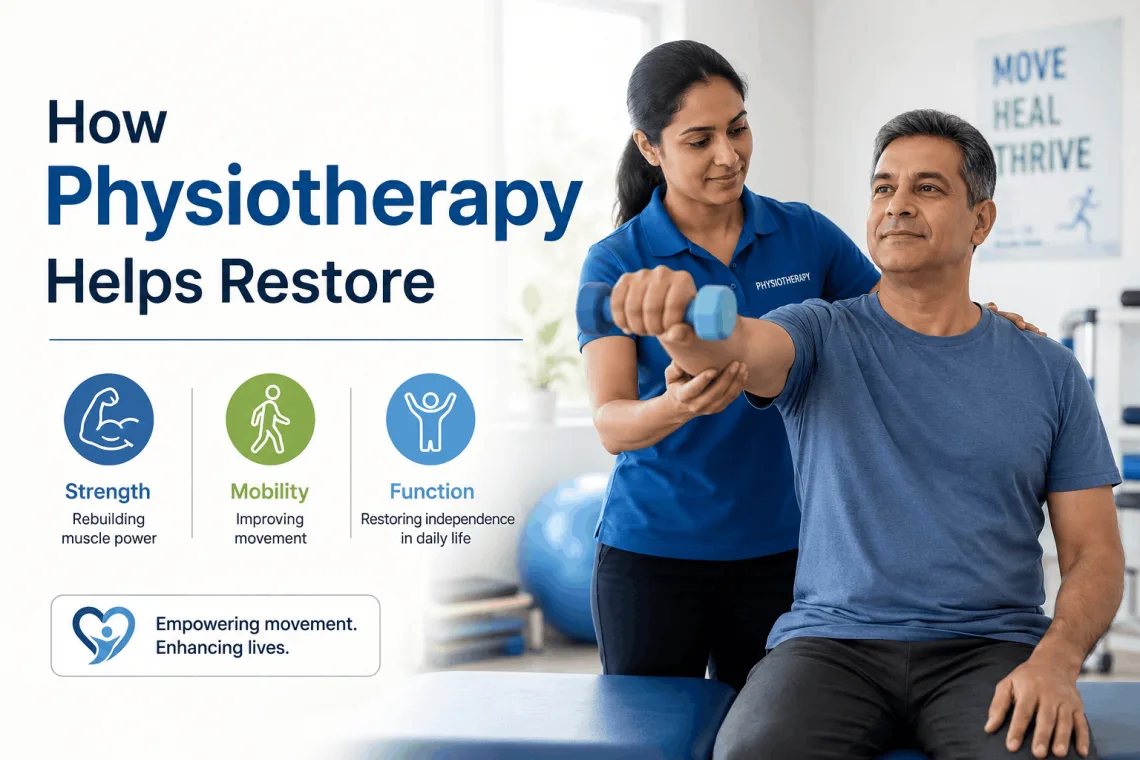
How Physiotherapy Helps Restore Strength
Muscle weakness can occur for many reasons. It may develop after an injury, surgery, prolonged inactivity, illness, or a period of avoiding movement because of pain.
Weak muscles can make everyday activities more difficult and may affect balance and movement. Physiotherapy uses progressive strengthening exercises to gradually rebuild muscle capacity.
A physiotherapist may prescribe exercises using:
- Body-weight exercises
- Resistance bands
- Free weights
For example, rehabilitation after a knee injury may involve strengthening the quadriceps and hip muscles to improve walking, stair climbing, and other functional movements.
Improving Mobility and Flexibility
Limited mobility can result from joint stiffness, muscle tightness, injury, surgery, inflammation, or prolonged inactivity.
Reduced mobility can cause people to compensate by moving differently. Over time, these compensations may place additional stress on other parts of the body.
Physiotherapy may use stretching, mobility exercises, manual therapy, and active movement to improve flexibility and joint range of motion when appropriate.
Restoring Function for Everyday Activities
The ultimate goal of rehabilitation is often functional improvement.
Being able to move without difficulty can affect nearly every part of daily life. Physiotherapy can help people work toward activities such as:
- Walking comfortably
- Climbing stairs
- Getting in and out of a chair
- Returning to work
- Lifting and carrying objects
Physiotherapy for Sports and Active Lifestyles
People who participate in running, cycling, recreational sports, fitness training, or other physical activities may experience injuries from overuse, sudden movements, poor training progression, or inadequate recovery.
Physiotherapy can help identify factors that may contribute to an injury and develop a structured plan for returning to activity.
The Importance of Personalized Treatment
There is no single physiotherapy program that works for everyone.
Two people can have similar symptoms but completely different causes, physical limitations, lifestyles, and recovery goals.
When Should You Consider Physiotherapy?
You may benefit from a physiotherapy assessment if pain, weakness, stiffness, or reduced mobility is interfering with your normal activities.
Common reasons people seek physiotherapy include:
- Back or neck pain
- Shoulder problems
- Knee or hip pain
- Sports injuries
- Muscle strains and joint injuries
- Recovery after surgery
Final Thoughts
Physiotherapy is about more than temporarily reducing pain. Its broader purpose is to help restore strength, mobility, confidence, and function so people can return to the activities that matter to them.
Whether you are recovering from an injury, dealing with persistent pain, preparing to return to sport, or experiencing difficulty with everyday movement, an individualized rehabilitation program can help you work toward better physical function.
For people looking for port credit physiotherapy, the most important consideration is finding care that begins with a proper assessment and creates a treatment plan around your specific condition, lifestyle, and recovery goals.
Original Source: https://talvixo.com/how-physiotherapy-helps-restore-strength-mobility-and-function/