
Stickman Hook is a simple-looking arcade game, but much of its gameplay is built around basic physics principles. The way the character swings, accelerates, and launches through the air follows rules that resemble real-world motion. Understanding these mechanics can help players move more smoothly through levels and avoid common mistakes. While the controls are simple—usually just tapping to hook or release—the underlying physics system gives the game depth and challenge.
The Basic Idea Behind the Swing
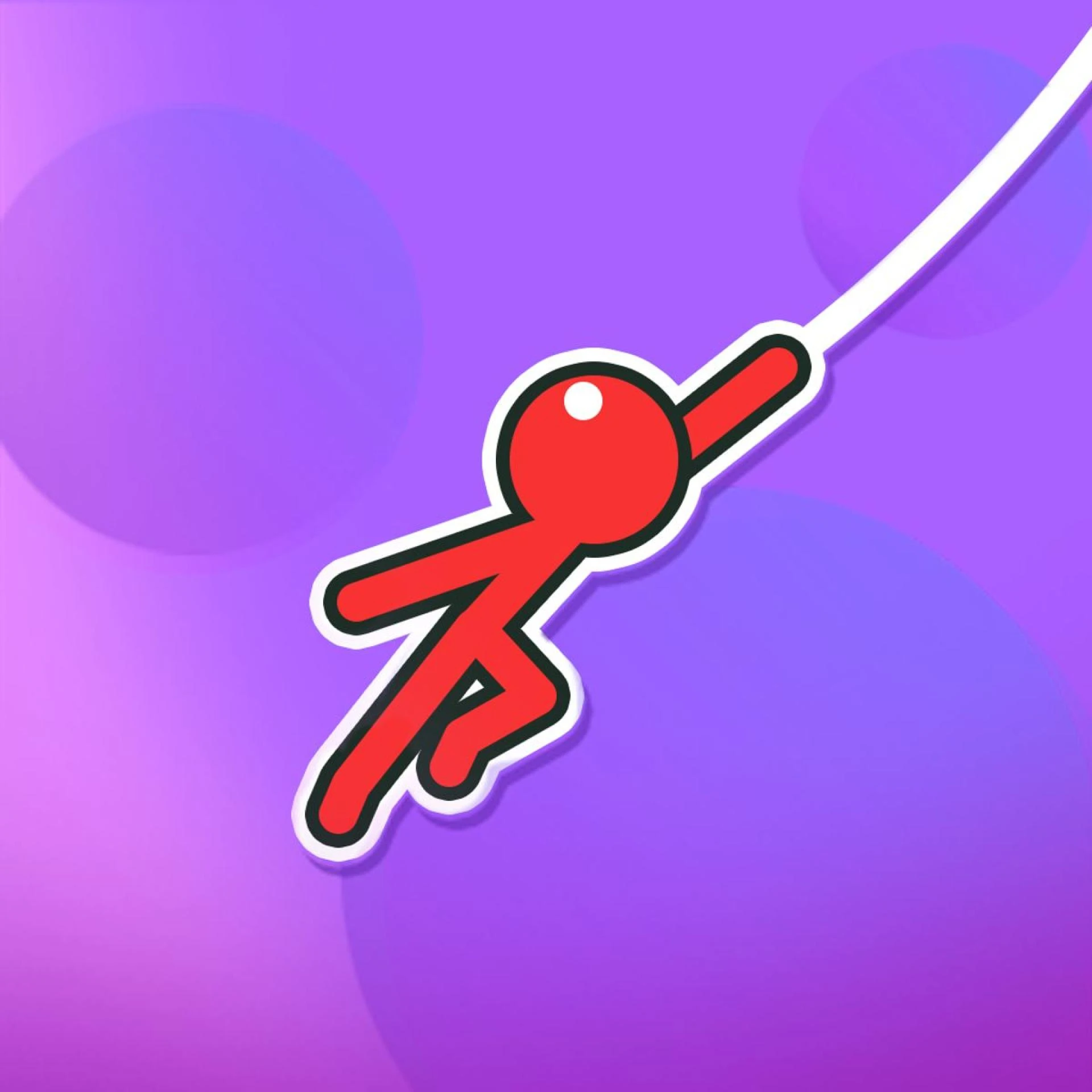
At the center of Stickman Hook gameplay is the swinging mechanic. When the stickman attaches to a hook point, the rope acts like a pivot, allowing the character to swing in an arc. This movement is similar to how a pendulum works. The character moves back and forth around the anchor point, gaining speed as gravity pulls the character downward and slowing slightly as the character moves upward.
This pendulum-like motion creates a natural rhythm. The lowest point of the swing is usually where the character moves the fastest because gravity has accelerated the motion. As the character swings upward on either side of the arc, speed decreases until reaching the highest point. Recognizing this pattern helps players decide the best moment to release the hook.
Gravity and Acceleration
Gravity plays a major role in how movement feels in the game. When the stickman is released from a hook, the character begins falling immediately due to gravity. At the same time, any momentum gained from the previous swing continues to push the character forward.
This combination of downward force and forward motion creates the curved trajectory players see when launching from one hook to another. If the player releases at the right moment, the character can travel far enough to reach the next anchor point or platform. If the timing is off, the character may fall too early or miss the next hook entirely.
Because gravity constantly pulls the character downward, players must think about height and angle when planning their movements.
Momentum and Speed
Momentum is another important factor in Stickman Hook. When the character swings back and forth, each movement builds up speed. If the player releases at the right moment—usually when the swing is moving forward—the stored momentum pushes the character ahead.
This momentum allows the stickman to travel across large gaps and reach distant hooks. However, losing momentum can slow the character down and make certain sections harder to complete. For example, releasing too early may reduce speed, while grabbing hooks at awkward angles can interrupt the flow of motion.
Experienced players try to maintain momentum throughout the level by choosing smooth, continuous swings instead of stopping frequently.
Rope Length and Swing Radius
Another interesting part of the game’s physics is the length of the rope. When the stickman connects to a hook point, the rope creates a fixed distance between the character and the anchor. This distance determines the size of the arc the character swings through.
A longer arc means the character travels a wider path, which can help generate more momentum. However, a wider swing can also make the character harder to control, especially near obstacles. Shorter arcs offer better control but may reduce overall speed.
Players often learn to release early to shorten the swing when precision is needed.
Launch Angles and Release Timing
Release timing directly affects the direction of the stickman’s movement. If the player releases the hook while the character is moving forward and upward, the launch angle sends the character higher into the air. Releasing while moving downward creates a flatter trajectory that focuses more on forward distance.
These angles are essential for navigating different level layouts. Some sections require height to reach the next hook, while others require horizontal speed to clear long gaps.
Because of this, mastering the release timing becomes one of the most important skills in the game.
Environmental Interactions
Some levels introduce environmental elements that interact with the physics system. Bounce pads, ramps, and moving platforms can change the stickman’s motion. For example, landing on a bounce pad adds extra upward force, launching the character into the air.
These features expand the physics system beyond simple swinging and encourage players to experiment with different approaches to movement.
Why Physics Makes the Game Addictive
The physics in Stickman Hook creates a satisfying sense of motion. Instead of feeling random, each movement follows a consistent set of rules. When players understand these rules, they gain more control over the character and can move through levels more efficiently.
This balance between simple controls and physics-based movement is part of what makes the game engaging. Players feel rewarded when they successfully chain together smooth swings and perfectly timed releases.
In the end, the physics system transforms Stickman Hook from a basic tapping game into a skill-based challenge. By understanding gravity, momentum, swing arcs, and release angles, players can improve their performance and enjoy the game on a deeper level.