
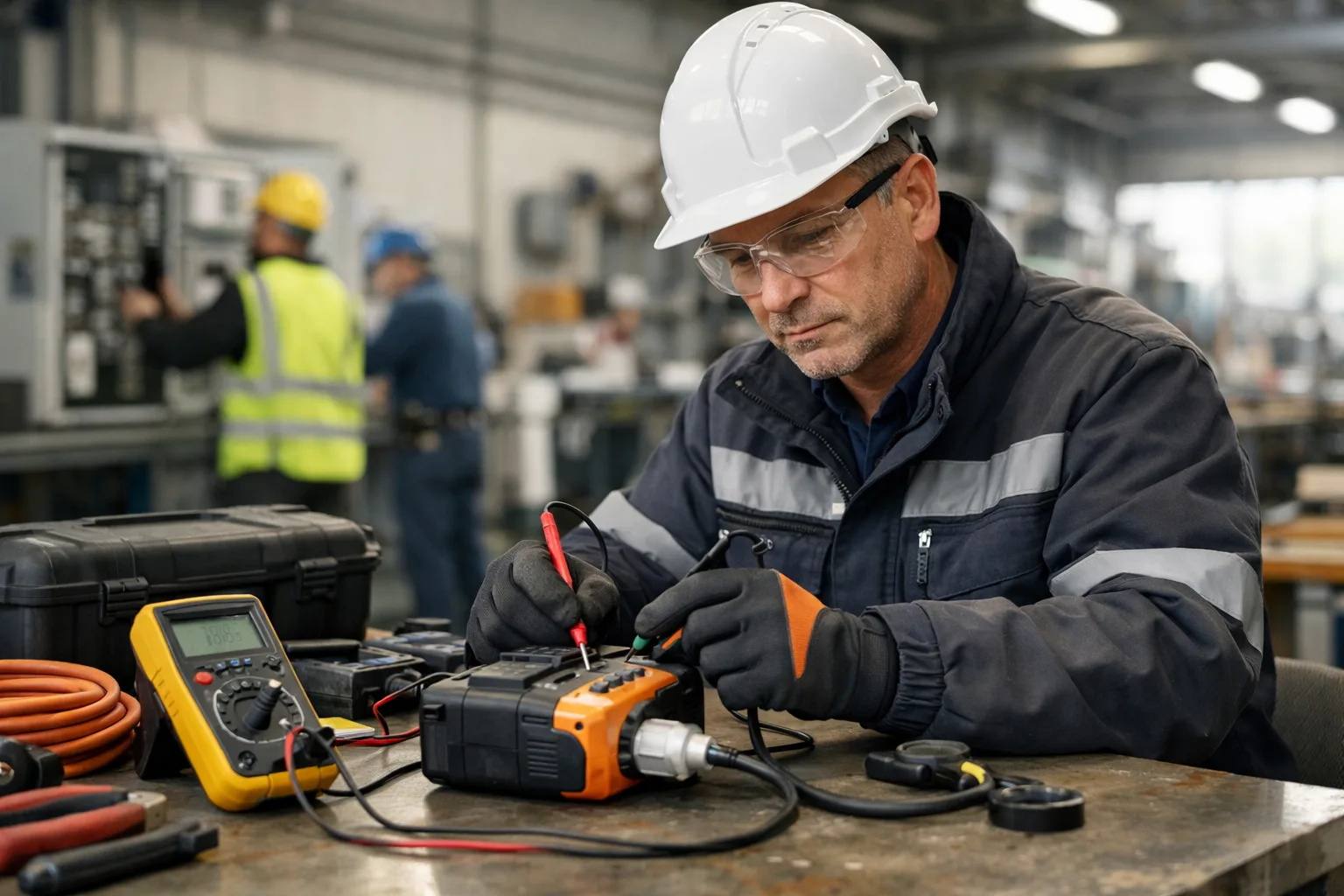
Electrical equipment is used every day in offices, warehouses, factories, schools, shops, and many other workplaces. Regular inspection and testing help businesses identify damaged or faulty equipment before it creates safety risks. Many organizations work with PAT Testing Companies in Ras Al Khaimah to understand the proper testing schedule for different types of electrical equipment.
Understanding PAT Testing
Portable Appliance Testing (PAT) is a process used to inspect and test electrical appliances to check that they are safe to use. PAT testing includes both a visual inspection and electrical testing.
Many electrical faults can be found through a simple visual check. Cracked plugs, damaged cables, loose connections, and signs of overheating are common issues that can affect equipment safety.
PAT testing can be applied to many workplace items, including:
- Computers and monitors
- Printers and scanners
- Extension leads
- Kitchen appliances
- Power tools
- Chargers and adapters
- Portable heaters
- Audio and visual equipment
Regular inspections help ensure that equipment remains in good working condition.
Is PAT Testing Required on a Fixed Schedule?
There is no single testing interval that applies to every workplace. The correct testing frequency depends on several factors, including the type of equipment, how often it is used, and the environment where it operates.
Some equipment may only need testing every few years, while other items may require more frequent inspections because they are exposed to greater wear and tear.
Businesses should assess the level of risk associated with each appliance rather than applying the same schedule to every item.
Factors That Affect Testing Frequency
Several factors influence how often equipment should be inspected and tested.
Type of Equipment
Different appliances carry different levels of risk.
For example, a desktop computer that remains in one location and is rarely moved may face less physical damage than a portable drill used daily on a construction site.
Equipment that experiences regular movement is generally more likely to develop faults and may require more frequent checks.
Working Environment
The location where equipment is used plays an important role.
Office environments are usually considered low-risk because equipment is protected from harsh conditions. In contrast, construction sites, workshops, and industrial facilities expose electrical equipment to dust, moisture, vibration, and physical impact.
Equipment used in demanding environments often benefits from more frequent inspections.
Frequency of Use
Items used many times each day may wear out faster than equipment used occasionally.
For example, extension leads and power tools that are handled frequently can experience cable damage, plug wear, or connection issues over time.
Regular monitoring helps identify problems before they become serious.
User Handling
Equipment shared among multiple employees may be more likely to experience accidental damage.
Frequent transportation, plugging and unplugging, or movement between work locations can increase the chance of wear and tear.
Businesses should consider how equipment is handled when deciding inspection intervals.
Suggested Testing Intervals for Different Workplaces
Testing schedules vary depending on workplace conditions.
Office Equipment
Computers, monitors, and printers in offices generally operate in low-risk environments. Visual inspections can be carried out regularly, while formal PAT testing may be required less frequently.
Because these appliances are usually stationary, they often experience less physical damage.
Retail and Commercial Businesses
Retail stores use equipment such as tills, display screens, extension leads, and kitchen appliances in staff areas.
These items may require periodic testing based on usage levels and workplace conditions.
Regular visual inspections are especially useful in busy commercial settings.
Industrial Facilities
Factories and workshops often use machinery, portable tools, and equipment exposed to challenging conditions.
Higher-risk environments may require more frequent inspections because equipment is more likely to suffer damage through daily operations.
Construction Sites
Construction sites are among the highest-risk workplaces for portable electrical equipment.
Power tools, extension leads, and temporary electrical installations are often exposed to rough handling and changing environmental conditions.
Because of these risks, inspections are commonly performed more frequently than in office environments.
The Importance of Regular Visual Inspections
Visual inspections are one of the most effective ways to identify electrical hazards.
Employees can often spot obvious problems before formal testing takes place. Common warning signs include:
- Damaged cables
- Broken plugs
- Loose connections
- Burn marks
- Cracked casings
- Exposed wires
When damage is found, equipment should be removed from service until it has been checked and repaired if necessary.
Regular visual checks complement formal PAT testing and help maintain a safer workplace.
Creating a Practical Testing Schedule
Businesses should keep a record of their electrical equipment and assess the level of risk associated with each item.
A practical testing schedule should consider:
- Equipment type
- Frequency of use
- Workplace conditions
- Manufacturer recommendations
- Previous inspection results
Keeping accurate records helps organizations track inspection dates and identify equipment that may need closer attention in the future.
Reviewing testing schedules periodically ensures that inspection intervals remain appropriate as workplace conditions change.
Benefits of Regular PAT Testing
Regular testing offers several advantages for businesses.
It helps identify damaged equipment early, supports workplace safety programs, reduces the likelihood of unexpected equipment failures, and encourages employees to use electrical appliances responsibly.
A planned approach to inspections also makes it easier to monitor equipment condition over time and address issues before they affect daily operations.
Businesses that regularly review their electrical safety procedures often rely on guidance from PAT Testing Companies in Ras Al Khaimah when determining suitable testing intervals for different types of workplace equipment.