
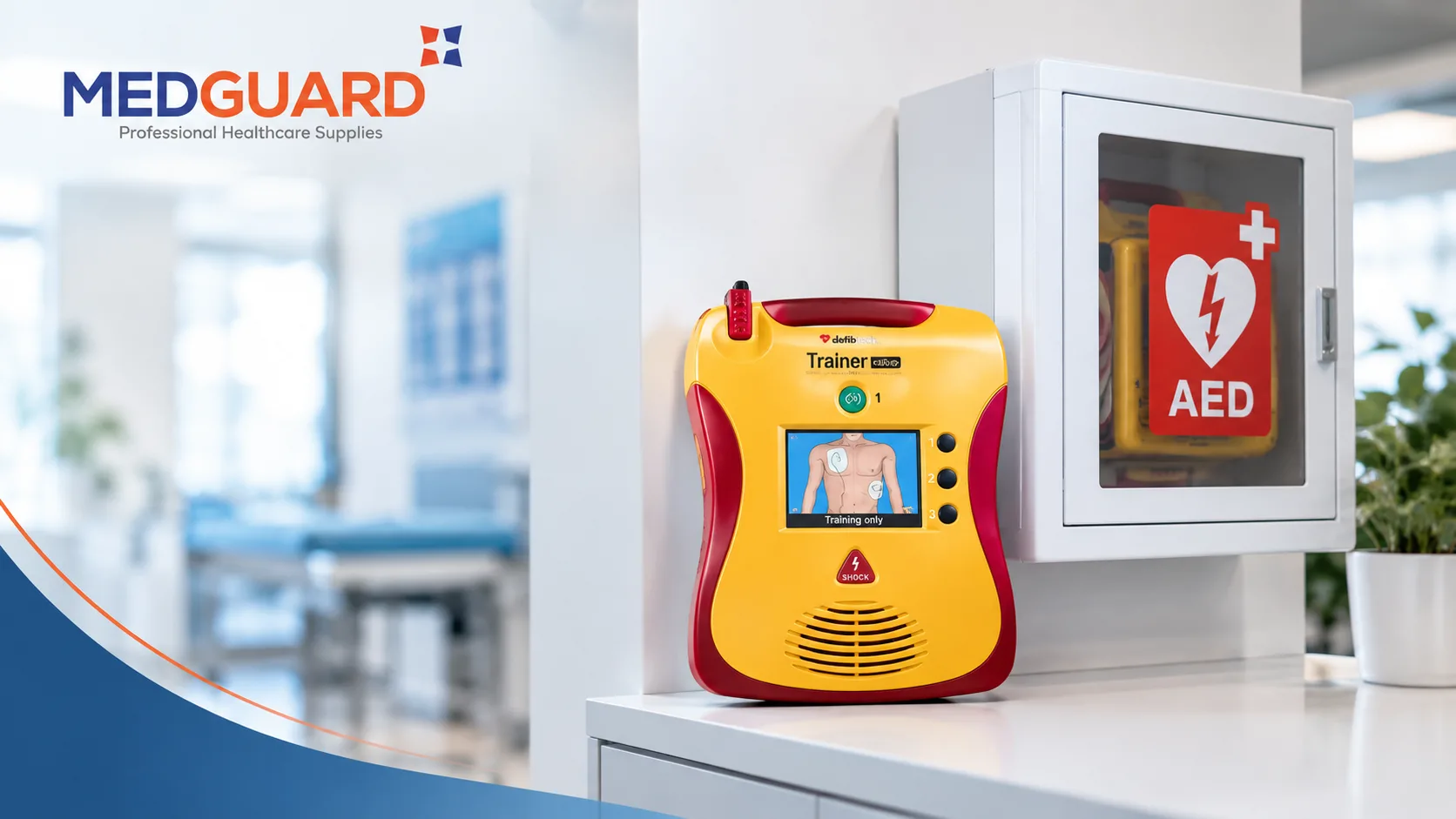
An AED is designed to be ready when a cardiac emergency happens, but that readiness should never be taken for granted. Even when a defibrillator has not been used, its battery can reach the end of its service life, electrode pads can expire and the condition of the equipment can change over time.
For healthcare facilities, nursing homes, clinics and other organisations in Ireland, regular AED checks should therefore be part of routine equipment management. The exact maintenance requirements depend on the model and manufacturer, but a simple and consistent checking routine can help identify problems before the device is needed.
How Often Should an AED Be Checked?
There is no single checking schedule that applies to every AED. The manufacturer's instructions should always be followed because battery life, electrode expiry periods, self-test functions and maintenance requirements can vary between models.
However, AEDs should be visually checked regularly rather than being left untouched for months at a time.
A routine check can confirm that:
- The AED is in its designated location
- The device is visible and accessible
- The status indicator shows that it is ready
- Electrode pads are present and within their expiry date
- The battery is installed and has sufficient life
- The casing and accessories appear undamaged
- Required cables or connectors are present
- The storage cabinet, signage and surrounding area remain suitable
These checks do not necessarily require technical expertise. They are primarily about spotting obvious issues and ensuring the AED remains available for an emergency.
Why Battery Checks Matter
The battery is one of the most important components to monitor.
AED batteries have a limited service life, even if the device has never been used. Some models continuously monitor their internal systems and may display a readiness indicator or warning when attention is required.
A battery that has expired or reached the end of its expected service life should be replaced according to the manufacturer's instructions.
Healthcare organisations should avoid waiting until the AED produces a warning before thinking about battery replacement. Recording the installation date, expected replacement date and routine checks can make ongoing management much easier.
Don't Forget the Electrode Pads
AED pads also have an expiry date. Over time, the adhesive and conductive properties of the pads can deteriorate, which is why expired pads should not simply be left attached to the device.
During routine checks, staff should confirm that the correct pads are present and that their expiry date has not passed.
It is also worth checking the packaging. If the packaging appears damaged, the pads may need to be replaced even if the printed expiry date has not yet been reached. Always follow the manufacturer's guidance for the particular AED.
Check the AED After It Has Been Used
An AED requires particular attention after an emergency, demonstration or training activity involving consumable components.
Used electrode pads should be replaced, and the battery may also require replacement depending on the device and how it was used. The AED should then be checked according to the manufacturer's instructions before being returned to its normal storage location.
This is important because an AED that has been used once may not automatically be ready for the next emergency.
What About AED Self-Tests?
Many modern AEDs perform automatic self-tests to check aspects of their readiness. Depending on the model, these tests may assess internal electronics, battery condition and other functions.
A self-test provides useful reassurance, but it does not eliminate the need for physical checks.
Someone still needs to confirm that the device is where it should be, that the pads have not expired, that accessories are present and that there is no visible damage. A green or ready indicator cannot tell you whether someone has moved the AED from its designated location or accidentally damaged its case.
Keep a Simple AED Maintenance Record
A basic record can make AED management considerably easier, particularly where an organisation has several devices.
The record might include:
- Date of each routine check
- AED location
- Battery expiry or replacement date
- Electrode pad expiry date
- Status indicator result
- Any damage or issues identified
- Corrective action taken
- Date of the next scheduled check
This creates a clear history and makes it easier for the person responsible for medical equipment to spot upcoming replacement requirements.
Who Should Be Responsible for Checking an AED?
AED responsibility should be clearly assigned rather than assumed to belong to everyone.
A nominated staff member or team can oversee routine checks, while maintenance or servicing requirements should be handled in line with the manufacturer's recommendations and any relevant organisational procedures.
For larger healthcare facilities, it can also be useful to have a backup person responsible for AED checks. This avoids a situation where routine monitoring stops because the usual person is absent.
Why Regular Checks Matter for Healthcare Facilities
An AED may spend most of its life sitting unused, but that does not mean it can simply be forgotten.
Regular checks help healthcare organisations identify expired consumables, battery issues, damage or accessibility problems before an emergency occurs. This approach is particularly important when managing a wider range of Medical supplies In ireland, where equipment may have different storage, expiry and maintenance requirements.
Medguard Healthcare supplies healthcare equipment and products for professional and care environments, including defibrillators and related emergency equipment. When purchasing an AED, organisations should consider not only the initial equipment but also how it will be monitored and maintained throughout its working life.
The Bottom Line
An AED should be checked regularly, but the exact frequency and maintenance requirements should always follow the manufacturer's instructions. Routine visual checks, monitoring battery and electrode expiry dates, reviewing self-test indicators and maintaining clear records can all help keep the equipment ready.
The key is consistency. A defibrillator that is accessible, maintained and routinely checked is far more useful than one that has simply been purchased and forgotten. For healthcare facilities in Ireland, making AED checks part of normal equipment management can help ensure the device is ready if it is ever needed.
Original Source : https://mydailyactivities.com/business/why-does-aed-accessibility-matter-as-much-as-having-a-defibrillator