
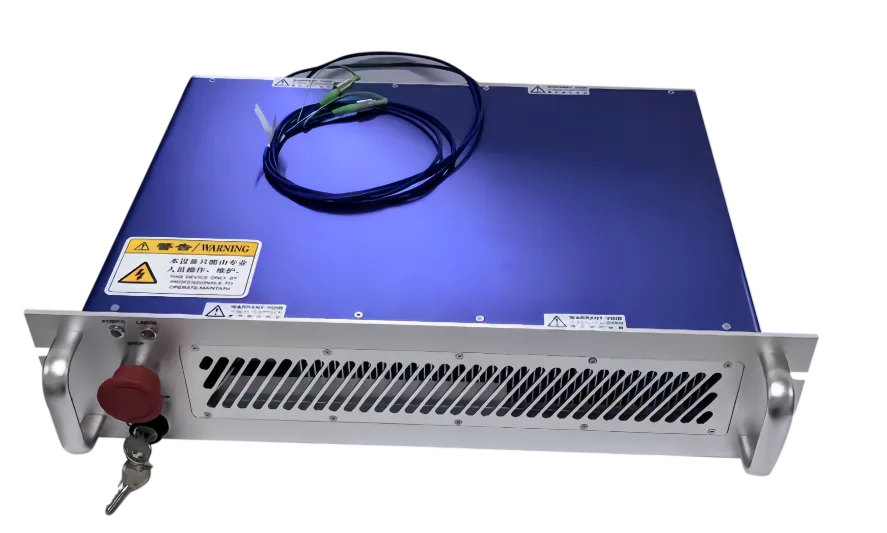
Choosing a laser platform for atomic or quantum measurements sounds simple at first. Yet one decision usually creates the biggest uncertainty. Will an 852nm single frequency laser provide enough long-term stability for frequency-sensitive experiments? And when research requirements evolve, can a tunable 795nm fiber laser support future work without forcing another equipment upgrade?
Researchers are not simply shining light onto a target. They are interacting with atomic transitions that respond only within extremely precise frequency ranges. A small deviation may look insignificant on paper, yet it can affect measurement quality, experimental repeatability, and overall confidence in the data collected. Here’s how narrow linewidth fiber laser performance becomes a practical requirement for obtaining dependable results.
The Actual Advantage of a Narrow Line Width
The topic of line width is, in essence, a frequency purity issue. When line width is smaller, it indicates that the laser energy can stay confined to an extremely narrow spectral range. There will be no unnecessary interactions and greater control of atoms' behavior. In this case, the results of the experiment will be visible much more clearly, and measurements will be more accurate. Better-quality data can also improve reproducibility because less noise will come from the laser light source.
Just as importantly, narrow linewidth operation helps maintain confidence over long experimental runs. No researcher wants to use a source that starts to drift out of its required parameters after time passes.
Supporting Rubidium-Based Quantum Research
Among the most widely studied atomic systems, rubidium continues to play a central role in quantum science. In technologies related to cooling and trapping atoms and neutral atom quantum computing, a precisely controlled light source working around rubidium transitions is used. For such experiments, frequency stability is a must. In such applications, you need exact wavelength selection control. It will be better to use optical devices specially produced for such experiments rather than using universal lasers.
And now you may ask, how fast do researchers realize the consequences of a frequency shift while they carry out important research? The effects may not appear immediately. Instead, they emerge later as inconsistent measurements, unexplained deviations, or reduced repeatability. Preventing those issues begins with selecting the right optical platform from the start.
Looking Beyond Basic Specifications
Laser selection often begins with wavelength and output power. However, experienced researchers know those figures reveal only part of the picture. Environmental stability, polarisation performance and frequency control capabilities matter equally as much.
The most successful projects typically start by matching system capabilities to measurement objectives rather than simply comparing specifications. A planned and well-equipped approach reduces future limitations and creates stronger foundations for long-term research.
Conclusion:
Whether the requirement involves rubidium manipulation, cesium frequency standards, quantum memory research, or advanced spectroscopy, narrow linewidth performance plays a central role in measurement quality. Combined with modern fiber laser technology, researchers gain the stability needed to interact with atomic systems confidently and repeatedly.
From narrow linewidth platforms to specialised solutions including the 852nm single frequency laser and tunable 795nm fiber laser, the best manufacturers provide wavelength-specific systems designed to support the demanding requirements of atomic physics and quantum research.