
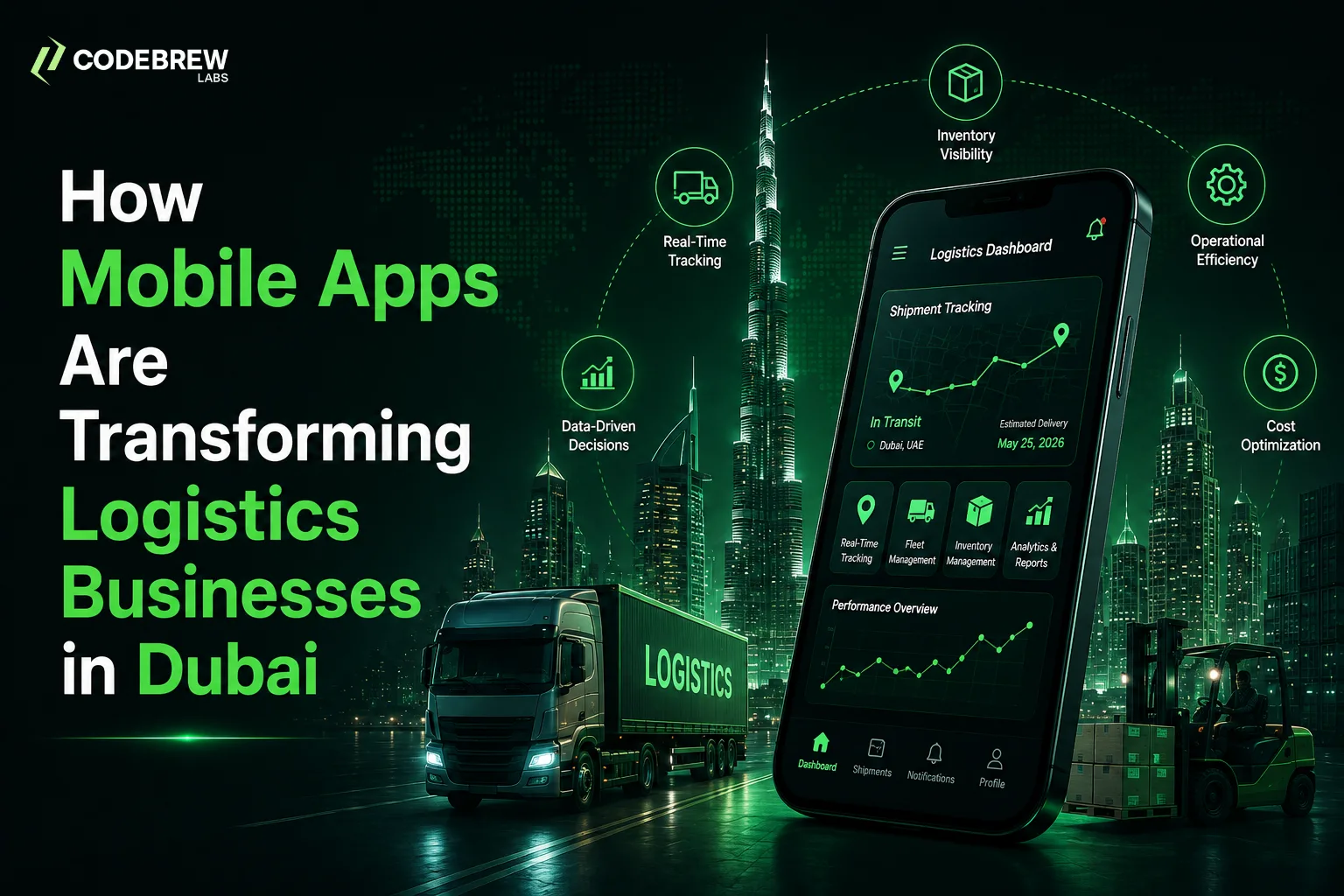
Dubai has earned its reputation as one of the world's leading logistics and trade hubs. Strategically positioned between Asia, Europe, and Africa, the city serves as a gateway for global commerce, handling millions of shipments every year through its world-class ports, airports, and transportation networks. As supply chains become increasingly complex and customer expectations continue to rise, logistics companies are embracing digital transformation to improve efficiency and remain competitive.
One of the biggest drivers of this transformation is mobile app development. Logistics businesses are investing in custom mobile applications to streamline fleet operations, improve shipment visibility, automate warehouse processes, and provide real-time communication across the supply chain.
In 2026, mobile apps have become much more than tracking tools—they are intelligent business platforms powered by Artificial Intelligence (AI), IoT, cloud computing, GPS, and predictive analytics. A trusted app development company helps logistics businesses leverage these technologies to build scalable, secure, and feature-rich mobile applications that reduce operational costs, improve delivery accuracy, streamline supply chain operations, and deliver exceptional customer experiences.
Why Dubai's Logistics Industry Is Going Digital
The rapid growth of eCommerce, international trade, and on-demand delivery services has significantly increased pressure on logistics providers. Customers now expect faster deliveries, live shipment tracking, transparent communication, and seamless service.
To meet these expectations, logistics companies in Dubai are investing in mobile applications that help them:
- Monitor shipments in real time
- Optimize delivery routes
- Improve fleet management
- Automate warehouse operations
- Enhance communication between drivers and dispatchers
- Reduce operational costs
- Increase customer satisfaction
Mobile applications have become essential for managing increasingly complex logistics networks while maintaining service quality.
Real-Time Shipment Tracking Improves Transparency
One of the most valuable features of a logistics mobile application is live shipment tracking. Customers and businesses want complete visibility into the movement of their goods.
Modern logistics apps provide:
- Live GPS tracking
- Estimated delivery times
- Shipment status updates
- Delivery confirmation
- Route visualization
- Automated notifications
Real-time tracking improves trust while reducing customer inquiries and operational delays.
AI Is Making Logistics Smarter
Artificial Intelligence is helping logistics companies make faster and more accurate operational decisions.
Some of the most impactful AI applications include:
Intelligent Route Optimization
AI evaluates traffic conditions, weather, delivery schedules, and road closures to recommend the fastest and most cost-effective delivery routes.
Predictive Demand Forecasting
Machine learning analyzes historical shipping patterns and seasonal trends to forecast demand, helping businesses allocate resources more efficiently.
Automated Customer Support
AI-powered chatbots answer shipment inquiries, provide delivery updates, resolve common issues, and improve customer service around the clock.
Predictive Vehicle Maintenance
AI monitors vehicle performance data to identify potential maintenance issues before breakdowns occur, reducing downtime and repair costs.
Fleet Management Becomes More Efficient
Managing a large fleet manually is both time-consuming and inefficient. Mobile applications simplify fleet operations by providing centralized access to vehicles, drivers, and deliveries.
Fleet management features include:
- Driver tracking
- Fuel consumption monitoring
- Vehicle diagnostics
- Delivery scheduling
- Driver performance reports
- Maintenance reminders
- Route optimization
- Digital trip logs
These capabilities improve operational efficiency while helping businesses reduce unnecessary expenses.
Warehouse Operations Are Becoming Automated
Warehouses play a crucial role in the logistics ecosystem. Mobile applications help warehouse teams manage inventory and coordinate operations more efficiently.
Key capabilities include:
- Inventory tracking
- Barcode and QR code scanning
- Order management
- Stock level monitoring
- Warehouse navigation
- Automated picking and packing
- Goods receiving
- Dispatch management
Automation reduces human error while accelerating warehouse productivity.
Mobile Apps Improve Driver Productivity
Drivers are the backbone of logistics operations, and mobile applications provide them with the tools they need to perform efficiently.
Driver applications typically include:
- Navigation assistance
- Delivery schedules
- Route optimization
- Digital proof of delivery
- Customer contact information
- Electronic signatures
- Incident reporting
- Expense management
These features reduce paperwork and allow drivers to complete deliveries more efficiently.
Better Customer Experiences Through Mobile Technology
Customers increasingly expect delivery experiences similar to those offered by leading eCommerce platforms.
Mobile applications help logistics businesses provide:
- Live order tracking
- Delivery notifications
- Flexible delivery scheduling
- Secure payment options
- Digital invoices
- Customer support
- Delivery feedback
- Easy returns management
These services improve customer satisfaction and encourage long-term business relationships.
Data Analytics Drives Smarter Decisions
Every shipment generates valuable operational data. Logistics companies use analytics dashboards to monitor performance and identify opportunities for improvement.
Businesses can analyze:
- Delivery times
- Route efficiency
- Vehicle utilization
- Fuel costs
- Warehouse performance
- Driver productivity
- Customer satisfaction
- Operational expenses
These insights support better planning, reduce inefficiencies, and improve profitability.
Technologies Powering Modern Logistics Apps
Today's logistics applications combine multiple technologies to create connected and intelligent supply chain ecosystems.
Some of the most important technologies include:
- Artificial Intelligence (AI)
- Machine Learning
- Internet of Things (IoT)
- Cloud Computing
- GPS and Geolocation
- Blockchain
- Big Data Analytics
- 5G Connectivity
- Robotic Process Automation (RPA)
- Predictive Analytics
Together, these technologies help businesses improve visibility, security, efficiency, and scalability.
Essential Features Every Logistics App Should Include
To remain competitive in 2026, logistics businesses should invest in applications with comprehensive functionality.
Key features include:
- User and driver management
- Live GPS tracking
- Route optimization
- Fleet management dashboard
- Shipment management
- Warehouse inventory tracking
- Push notifications
- Digital proof of delivery
- Invoice generation
- Payment integration
- Analytics and reporting
- Customer communication tools
- Vehicle maintenance scheduling
- Multi-language support
A well-designed logistics application improves operational efficiency while creating a better experience for customers and employees alike.
Why Custom Logistics Apps Offer Greater Value
Many logistics companies initially rely on generic software solutions. However, as operations grow, off-the-shelf platforms often struggle to meet evolving business needs.
Custom logistics applications provide:
- Tailored workflows
- Industry-specific functionality
- Seamless integration with ERP and CRM systems
- Better scalability
- Enhanced security
- Greater operational flexibility
- Improved user experience
Custom development allows businesses to build technology around their operations instead of adapting operations to fit software limitations.
The Future of Logistics App Development in Dubai
Dubai continues to invest heavily in smart infrastructure, digital trade, and supply chain innovation. As AI, autonomous vehicles, smart warehouses, drone deliveries, and connected logistics ecosystems become more common, mobile applications will play an even greater role in managing complex logistics operations.
Future logistics platforms will rely on predictive analytics, real-time automation, and intelligent decision-making to create faster, more sustainable, and highly efficient supply chains.
Businesses that embrace these innovations today will be better positioned to meet growing customer expectations and remain competitive in the global logistics market.
Conclusion
Mobile applications are transforming logistics businesses in Dubai by improving shipment visibility, optimizing fleet operations, automating warehouse management, and delivering exceptional customer experiences. Powered by AI, IoT, cloud computing, and real-time analytics, these applications enable logistics providers to operate more efficiently while reducing costs and increasing service quality.
As Dubai strengthens its position as a global logistics and trade hub, investing in custom logistics app development has become a strategic necessity for businesses aiming to scale and innovate. At Code Brew Labs, we develop intelligent, secure, and scalable logistics applications tailored to the unique needs of transportation companies, freight operators, warehouse providers, and supply chain businesses. From real-time tracking solutions to AI-powered fleet management platforms, we help organizations build future-ready digital solutions that drive operational excellence and long-term growth.