
How Small Toy Brands Are Outsmarting the Industry's Biggest Names
The Giants Still Win on Scale, Not on Every Front
Mattel, Hasbro, and LEGO have shaped the toy industry for decades through global reach, licensing power, and budgets that dwarf almost any competitor. That has not changed. What has changed is that scale no longer guarantees dominance in every corner of the market. A growing number of small, focused toy brands are outperforming these giants in specific niches, not by matching their resources, but by moving in ways large companies structurally cannot.
Speed Is the Advantage Big Companies Cannot Buy
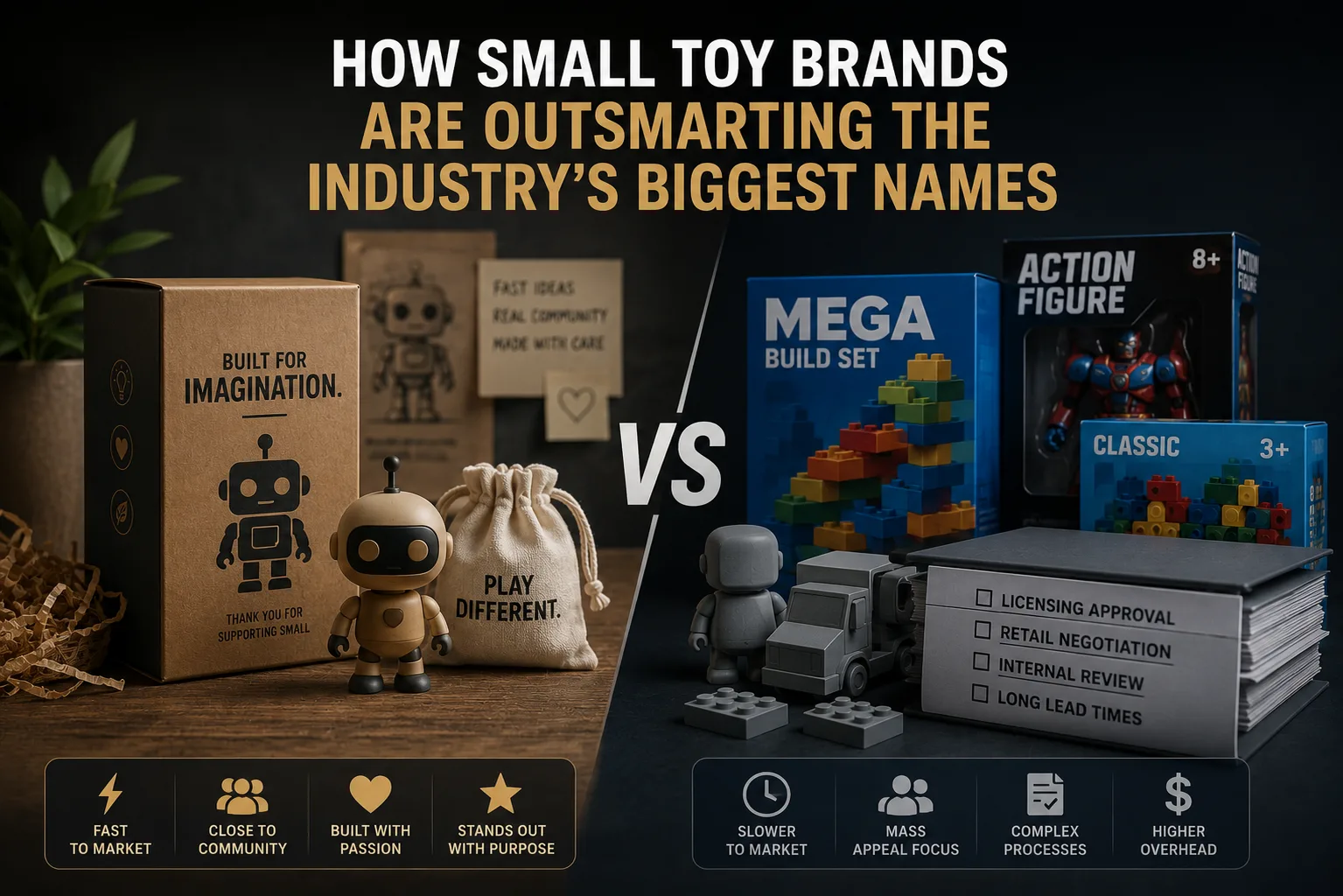
A large toy company typically moves a product from concept to shelf through layers of licensing approval, retail negotiation, and internal review. That process protects a big brand from costly mistakes, but it also means opportunities move slower than the market sometimes allows. A small brand watching a trend emerge on social media can design, test, and ship a product in a fraction of that time. By the time a giant notices the trend is real, a micro brand may already own the early audience.
Community Beats Reach in Niche Categories
Large toy companies are built to reach broad audiences, which works well for mass-market categories but leaves gaps in more specific communities, like collectors, hobbyist builders, or fandom-driven niches. Small brands that stay close to a specific audience, responding directly to what that community wants rather than testing broadly across demographics, tend to build loyalty that a bigger, more generic brand struggles to replicate. That closeness becomes a competitive advantage in categories where authenticity matters more than brand recognition.
Packaging Becomes a Bigger Lever for Smaller Brands
Without a household name to lean on, a small toy brand's packaging has to work harder to build trust and signal quality on first contact with a customer. This is one area where micro brands increasingly close the gap with larger competitors. Investing in structurally solid, well-finished custom toy packaging allows a small brand to look retail-ready and premium even without the marketing budget of an industry giant, since packaging is often the first and sometimes only signal a new customer has before deciding to trust an unfamiliar name.
Large Companies Are Starting to Notice
According to Toy Industry Journal, several major toy companies are now experimenting with internal sub-brands and dedicated fast-innovation teams specifically to capture the agility that smaller competitors have shown. That shift is itself evidence of how real the pressure has become. Giants are not losing the market, but they are increasingly borrowing tactics from the same small brands they used to overlook entirely.
Micro brands are not going to out-license or out-manufacture Mattel, Hasbro, or LEGO anytime soon. What they can do, and increasingly are doing, is move faster, stay closer to their audience, and present themselves with a level of polish that used to require a giant's budget to achieve.