In 2026, healthy living remains a major focus across the UAE. New national nutrition guidelines and healthy-eating policies are shaping how people choose their food, whether they cook at home, eat out or subscribe to a meal delivery service. As residents become more aware of healthy diets, services offering ready-to-eat meals are adapting to meet these expectations. For many people in the UAE’s cities, especially in Dubai and Abu Dhabi, this means using a meal plan in Dubai that fits the newest healthy eating standards and nutrition goals.
The UAE government, through the Ministry of Health and Prevention (MoHAP) and the National Nutrition Committee, has launched updated national nutrition guidelines. These guidelines are designed to encourage healthier food choices, reduce chronic diseases, and improve quality of life for all age groups. They draw on international best practices and World Health Organization (WHO) recommendations, encouraging a balanced diet and mindful eating habits.
Understanding these guidelines helps anyone using a meal-planning service or choosing meals for themselves and their families. In the rest of this article, we look at key elements of these healthy eating guidelines and how modern meal plan services in Dubai align with them.
What the UAE Healthy Eating Guidelines Recommend
The core of the UAE healthy eating strategy is to promote a balanced diet that supports long-term health. This includes several simple, evidence-based principles that nutrition experts worldwide support.
Eat More Fruits and Vegetables
The guidelines stress the importance of fruits and vegetables as a foundation of a balanced diet. Residents are encouraged to include multiple servings every day, aiming for a variety of colours and types to ensure a wide range of nutrients. Increasing the consumption of fruits and vegetables supports immune health, digestion and overall wellbeing.
Choose Whole Grains and Lean Proteins
Whole grains such as brown rice, whole-wheat pasta and oats deliver sustained energy and help maintain stable blood sugar levels. At the same time, lean protein sources like poultry, fish, legumes and nuts are recommended over processed meats and high-fat options. These choices support muscle health and can help with weight management.
Reduce Salt, Sugar and Unhealthy Fats
One of the biggest concerns revealed by recent national surveys is the high intake of salt, sugar and unhealthy fats among residents. According to health surveys conducted across the UAE in 2026, a large share of the population consumes too much salt, fat and sugar, which can lead to hypertension, obesity and other health problems. Reducing these should be a priority in everyday meals.
Prioritise Portion Control and Balanced Plates
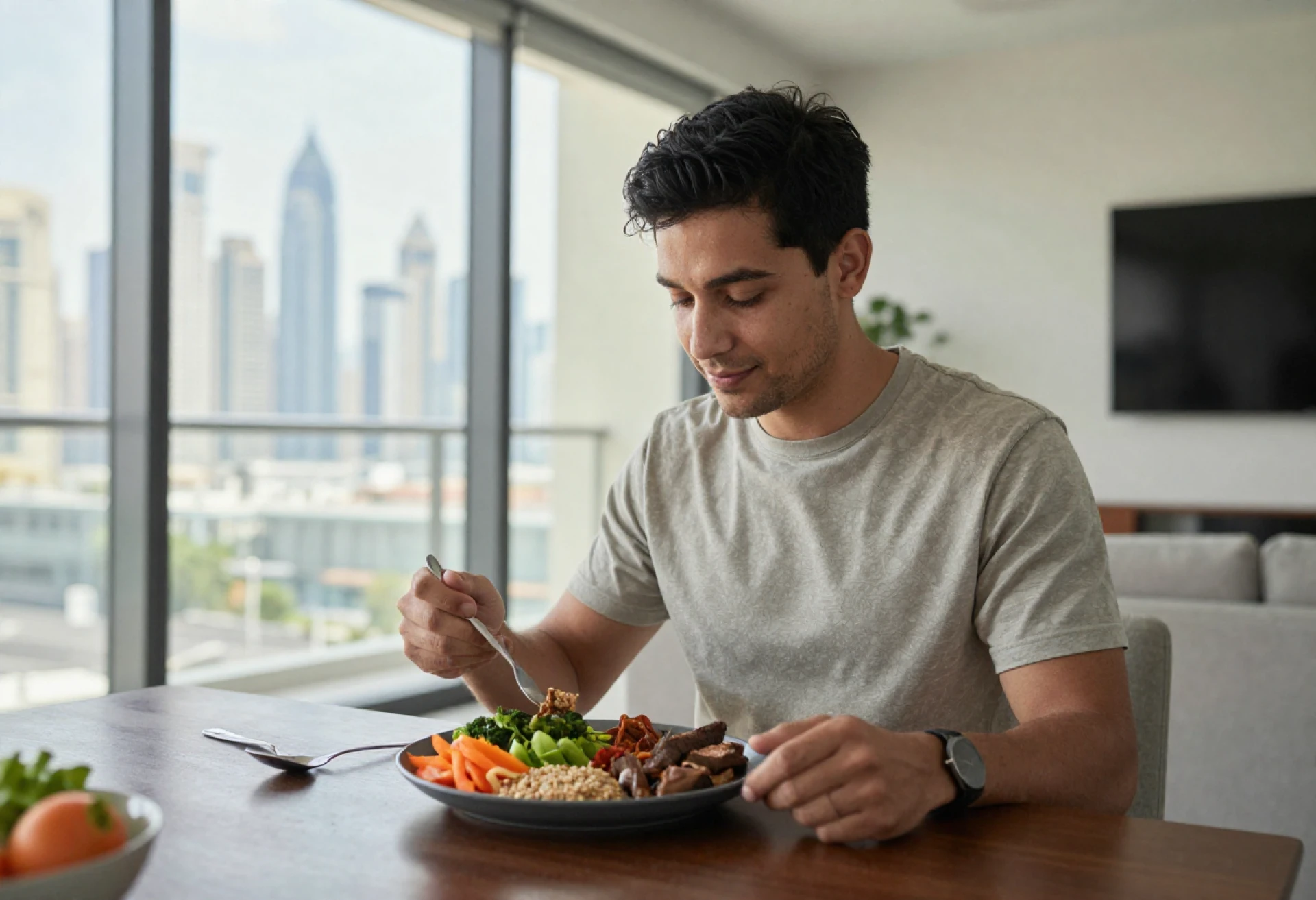
The guidelines also emphasise how meals are constructed on the plate. Meals should be balanced between vegetables, proteins, and carbohydrates, with appropriate portion sizes. Including a side of low-fat dairy or plant alternatives is also encouraged.
Be Active and Stay Hydrated
A healthy diet goes hand in hand with physical activity and proper hydration. Drinking sufficient water throughout the day and maintaining an active lifestyle are important complements to a balanced dietary pattern.
Why These Guidelines Matter in 2026
The reason these healthy eating guidelines hold such importance is the rise in diet-related health issues in the UAE. A national nutrition survey in 2026 found that most adults consume too much salt, many exceed recommended fat intake, and a significant portion do not meet exercise targets. Together, this contributes to higher rates of heart disease, diabetes and obesity.
In response, the government’s National Nutrition Guidelines and Nutrition Strategy (2022–2030) aim to educate the public and promote healthier eating habits across all age groups. These efforts extend into schools, workplaces and public campaigns to build a healthier future for the UAE’s diverse population.
This shift in public health policy has direct implications for how people approach their meals, whether at home or through meal delivery services.
How Meal Plans in Dubai Are Evolving With These Guidelines
Meal plan services in Dubai are adapting their offerings to match the UAE’s healthy eating direction. With growing awareness about nutrition and portion control, many meal planners are now focusing on menus that align with the national guidelines.
Balanced Macronutrients and Portion Sizes
Modern meal plan services use nutritionists to create meals with the ideal balance of carbohydrates, proteins and fats, following portion control guidelines similar to those recommended by MoHAP. This ensures meals help customers meet energy and nutrient needs without excess calories.
More Vegetables and Whole Foods
Meal planners are increasing the use of vegetables, fruits and whole grains, as these are key pillars of the healthy eating guidelines. Meals are now richer in fibre and micronutrients, which supports digestion and overall health.
Lower Salt and Sugar
To support healthier blood pressure and weight management, meal plans are designed with reduced amounts of added salt and sugar. Instead, herbs and spices are used to enhance flavour, making meals both tasty and nutritious.
Lean Proteins and Healthy Fats
Lean proteins such as fish, chicken and plant-based options are more common in meal-plan menus. Healthy fats from olive oil, nuts and seeds are preferred over saturated and trans fats. These choices reflect international and national nutrition recommendations.
Customisation for Individual Needs
Many services now offer customisation, so meals can be adjusted for health goals like weight control, muscle building or chronic conditions such as diabetes. This personalised approach helps people stick to the UAE’s healthy eating principles while meeting their own needs.
Tips for Choosing a Meal Plan in Dubai That Meets Healthy Eating Guidelines
If you are considering a meal plan in Dubai that fits with the latest UAE healthy eating guidelines, here are practical tips to choose the right one:
Check Nutrition Information
A good meal plan service should provide clear details about calories, macronutrients and ingredients for each meal. Look for meals where vegetables make up a significant portion of the plate and where salt, sugar and unhealthy fats are kept low.
Look for Dietitian-Approved Menus
Choose plans designed or reviewed by qualified nutritionists. These are more likely to follow evidence-based nutrition advice and support balanced eating patterns aligned with national recommendations.
Prioritise Whole Foods
Meals made from whole foods rather than processed ingredients deliver more nutrients and fit the spirit of the UAE’s healthy-eating priorities. Whole grains, fresh vegetables, fruits and lean proteins should be prominent.
Consider Your Lifestyle and Goals
Whether your aim is weight management, fitness support or better daily nutrition, select plans that match your lifestyle. Customisable meal plans let you adjust portions and ingredients to fit your personal health goals.
Plan for Variety
Healthy eating is not just about eating a single blend of foods every day. Variety ensures your body gets a range of nutrients. Look for services that offer diverse weekly menus rather than repetitive meals.
The Broader Impact of Healthy Eating in the UAE
The government’s push for healthier eating habits goes beyond meal plans. Schools across Dubai are implementing healthy-eating policies that include nutrition education and more balanced meals for students, reducing added sugars and increasing fibre.
These efforts aim to foster lifelong healthy habits from a young age. As students learn about good nutrition in school, families often follow suit, bringing these lessons into the home and influencing wider community eating habits.
Other initiatives, such as nationwide campaigns to increase fruit and vegetable consumption, further reinforce the message of balanced diets and healthy food choices.
Conclusion
In 2026, the UAE’s focus on health and nutrition continues to shape how residents approach their diets. The national healthy eating guidelines provide a clear framework for balanced meals that support overall wellbeing. When choosing a meal plan in Dubai, aligning with these guidelines ensures you are not only eating convenient and tasty meals but also making choices that support long-term health.
By prioritising whole foods, balanced portions, reduced salt and sugar, and plenty of vegetables, a well-structured meal plan becomes more than just a convenience - it becomes a tool for healthy living in line with what the UAE’s health authorities recommend. Whether you are new to meal planning or seeking to improve your current plan, understanding these healthy-eating principles will help you make informed choices for better health in 2026 and beyond.