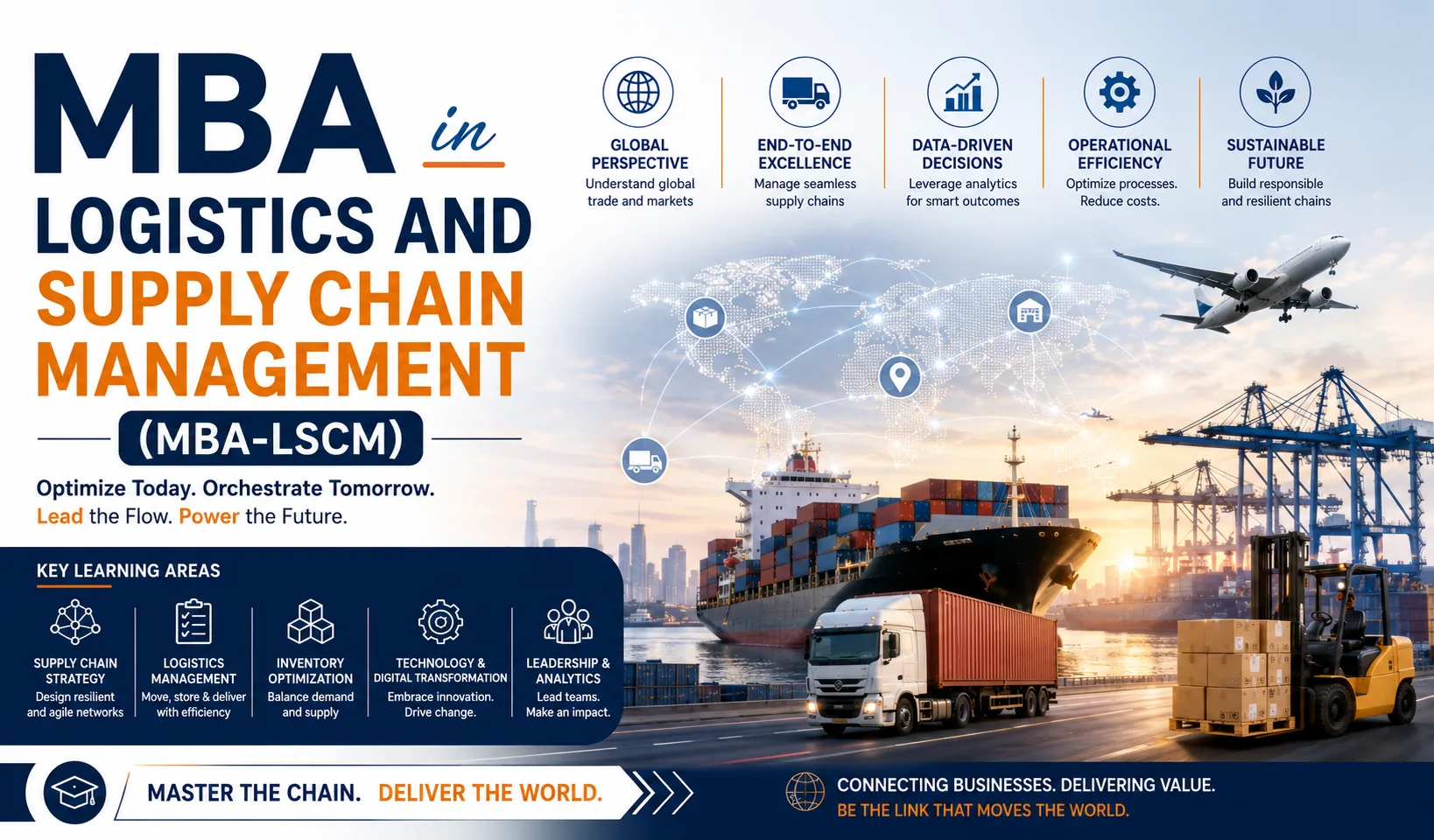
The logistics and supply chain industry is undergoing a massive transformation driven by globalization, e-commerce growth, automation, AI-powered operations, and digital supply chain technologies. Modern businesses depend heavily on efficient logistics systems to ensure smooth procurement, inventory management, warehousing, transportation, and last-mile delivery.
As industries increasingly focus on operational efficiency and global trade connectivity, the demand for skilled logistics and supply chain professionals continues to rise. This is why MBA in Logistics and Supply Chain Management (MBA-LSCM) has become one of the fastest-growing management specializations in recent years.
The MBA-LSCM program at KCT Business School, offered in collaboration with the CII Institute of Logistics, is designed to create industry-ready professionals equipped with practical logistics expertise, digital supply chain knowledge, and leadership capabilities.
The Growing Importance of Logistics and Supply Chain Management
Today’s businesses rely on highly integrated supply chain networks to manage operations efficiently. From manufacturing industries and retail businesses to e-commerce platforms and global exports, logistics plays a critical role in business success.
Several factors are driving the growth of this sector:
- Expansion of e-commerce and online retail
- Growth in global trade and exports
- Increasing demand for warehousing and distribution
- Technology-driven supply chain systems
- Smart logistics and automation
- Rising focus on sustainability and ESG practices
- Growth in international shipping and freight management
This rapid transformation has created excellent career opportunities for professionals with specialized logistics and supply chain management skills.
Industry-Ready MBA-LSCM Curriculum
The MBA-LSCM program at KCT Business School is designed with strong industry integration. The curriculum combines management fundamentals with specialized logistics and supply chain training to help students understand real-world business operations.
Students gain expertise in areas such as:
- Supply Chain Management
- Operations Management
- Procurement and Strategic Sourcing
- Inventory and Materials Management
- Warehousing and Distribution
- International Logistics
- Shipping and Port Management
- Freight Transportation
- E-Commerce Supply Chain Management
- Cold Chain Logistics
- Supply Chain Analytics
- Risk Management
This practical and industry-focused approach helps students become job-ready for modern supply chain roles.
Strong Focus on Digital Supply Chains and Automation
The logistics industry is rapidly adopting digital technologies and automation systems. MBA-LSCM students are introduced to advanced supply chain technologies that are transforming global operations.
Key technology-focused learning areas include:
- Artificial Intelligence in Supply Chains
- ERP and Supply Chain Software Tools
- Power BI and Tableau
- Python for Analytics
- Smart Logistics Systems
- Industry 5.0 Applications
- Robotic Process Automation
- Blockchain in Supply Chains
- IIoT (Industrial Internet of Things)
Students gain practical exposure to these technologies, making them highly valuable in the evolving logistics industry.
Hands-On Learning Through Industry Exposure
One of the biggest advantages of MBA-LSCM at KCT Business School is its industry-oriented learning model. The program is developed and delivered with support from industry professionals and logistics experts.
Students benefit from:
- Real-time industry exposure
- Capstone projects
- Industry workshops
- Internship opportunities
- Logistics case study analysis
- Seminars and presentations
- Professional development programs
- Mock interviews and placement preparation
This experiential learning approach helps students understand actual logistics operations and business challenges.
Preparing Students for Global Supply Chain Careers
Modern supply chains operate across international markets. MBA-LSCM prepares students to work in global logistics environments by introducing them to international trade systems, export-import operations, and global supply chain strategies.
Students learn:
- International Shipping
- Maritime Logistics
- Air Cargo Management
- Global Procurement
- Export-Import Documentation
- International Trade Regulations
- Supply Chain Cost Management
- Cross-Border Logistics Operations
These skills are highly valuable for multinational companies and global logistics providers.
Specialization in Emerging Logistics Sectors
The logistics industry now extends beyond traditional transportation and warehousing. MBA-LSCM exposes students to emerging high-growth sectors such as:
- E-Commerce Logistics
- Last-Mile Delivery Systems
- Smart Warehousing
- Green Supply Chains
- Reverse Logistics
- ESG-Based Supply Chain Management
- Cold Chain and Pharmaceutical Logistics
This helps students build expertise in future-focused logistics domains.
Career Opportunities After MBA-LSCM
Graduates of MBA-LSCM can pursue careers across multiple industries including manufacturing, retail, shipping, e-commerce, transportation, exports, and consulting.
Popular job roles include:
- Supply Chain Manager
- Logistics Manager
- Procurement Specialist
- Warehouse Operations Manager
- Inventory Analyst
- Freight Operations Executive
- Shipping and Port Operations Manager
- E-Commerce Logistics Manager
- Supply Chain Analyst
- Demand Planning Executive
- Distribution Manager
- Global Logistics Coordinator
The rapid expansion of global trade and digital commerce continues to increase demand for qualified supply chain professionals.
Professional Skill Development and Placement Support
The MBA-LSCM program also focuses heavily on professional and personality development. Students receive training in:
- Communication Skills
- Leadership Development
- Interview Preparation
- Presentation Skills
- Problem Solving
- Analytical Thinking
- Team Management
KCT Business School also provides placement-oriented training programs to improve employability and industry readiness.
Why MBA-LSCM Is a Future-Ready MBA Specialization
The logistics and supply chain sector has become one of the most technology-driven and strategically important industries globally. Companies are actively looking for professionals who can combine business management skills with logistics expertise and digital transformation capabilities.
MBA-LSCM helps students develop:
- Operational management skills
- Supply chain analytics expertise
- Technology-driven logistics knowledge
- Global business understanding
- Leadership and strategic thinking
- Industry-focused practical exposure
This combination makes MBA-LSCM graduates highly competitive in both domestic and international job markets.
Final Thoughts
The MBA-LSCM program at KCT Business School provides students with the knowledge, practical exposure, and technical skills needed to succeed in the modern logistics and supply chain industry. With its strong industry collaboration, technology-focused curriculum, and hands-on learning approach, the program prepares students for leadership roles in one of the world’s fastest-growing business sectors.
For students interested in logistics, operations, analytics, international trade, and digital supply chains, MBA-LSCM offers excellent long-term career opportunities in the future of global business operations.