How MBA-IEV at KCT Business School Helps Students Build Startups While Studying
In today’s competitive business environment, many students dream of launching their own startup instead of following traditional career paths. However, building a successful business requires more than just an idea. Students need mentorship, funding support, industry exposure, product development knowledge, and a strong entrepreneurial ecosystem. This is where the MBA-IEV program at KCT Business School stands out.
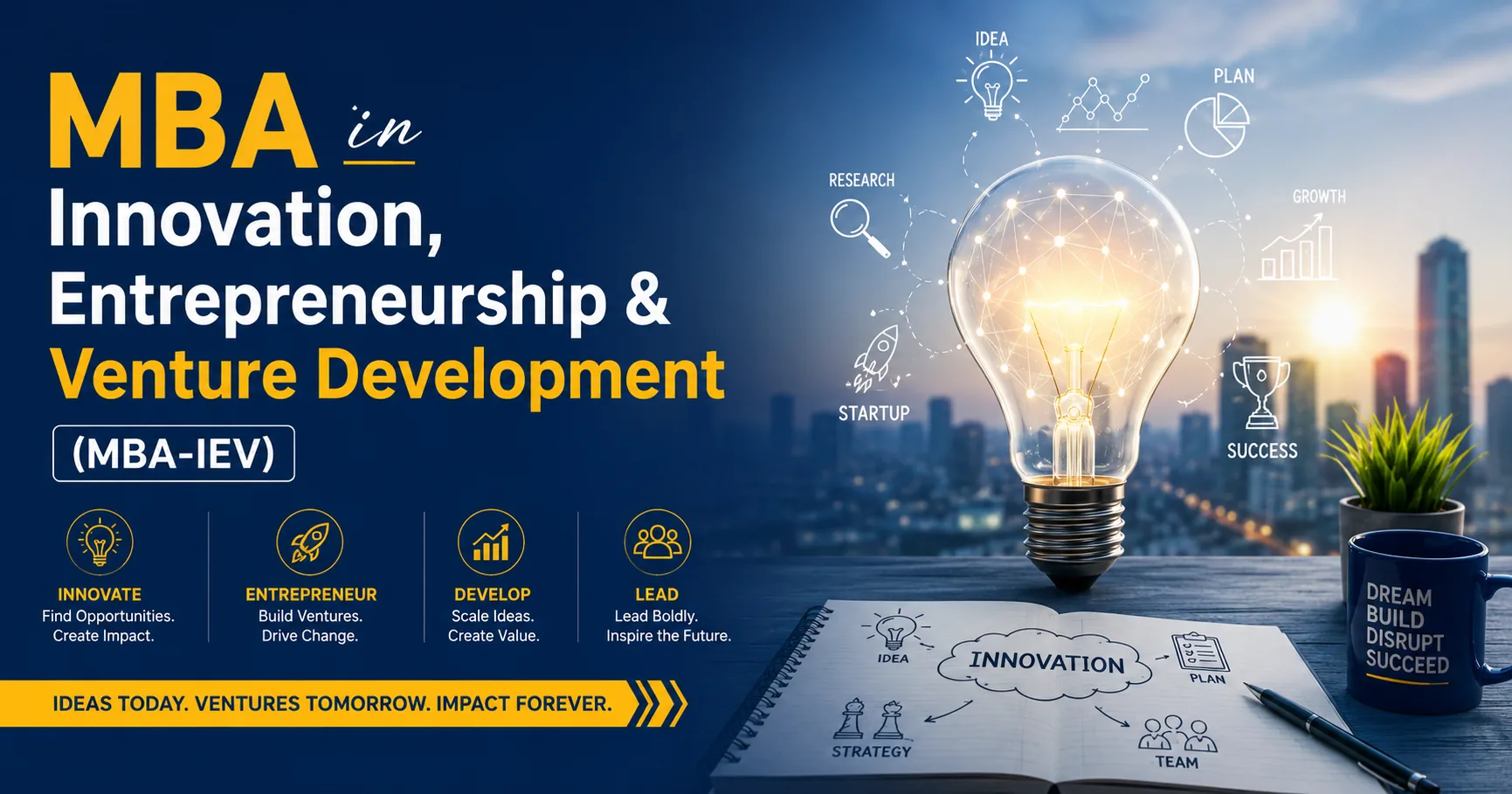
The MBA in Innovation, Entrepreneurship & Venture Development (MBA-IEV) is designed specifically for students who want to be entrepreneurs, startup founders, innovation leaders and venture creators. While traditional MBA programs concentrate on corporate management, MBA-IEV combines business education with startup incubation, innovation and real venture development.
A Startup-Focused MBA Program
The biggest advantage of MBA-IEV is that students are encouraged to start startups while studying. The curriculum is based on innovation, the creation of enterprises and entrepreneurial leadership. Students learn to identify real-world problems, develop innovative products, validate business ideas and launch scalable ventures.
The program focuses on three important pillars:
- Product Management
- Enterprise Creation
- Entrepreneurial Leadership
This approach helps students move beyond theoretical business concepts and gain practical startup-building experience.
Experiential Learning Through Incubation Support
Experiential learning in a startup ecosystem is one of the key highlights of the MBA-IEV program. Students work in incubation environments, with guidance from mentors, entrepreneurs, investors and industry experts.
The institution supports students by providing:
- Startup incubation facilities
- Mentorship from founders and product leaders
- Access to industry networks
- Product development guidance
- Innovation-driven learning methods
- Opportunities for grants and investments
The ecosystem helps students to transform their startup ideas into market ready businesses while pursuing their degree.
Learning From Real Startup Challenges
MBA-IEV students learn by solving real business problems, unlike traditional classroom learning. The curriculum includes product innovation, customer validation, business growth strategies, startup financing and venture scaling.
Students are introduced to practical areas such as:
- Business model development;
- MVP building
- Marketing for startups
- Design Thinking.
- Financial planning
- Venture fundraising
- Product-market fit
- Leadership and team management
These skills are highly valuable for both entrepreneurs and innovation-focused corporate roles.
Strong Focus on Technology and Innovation
Modern startups are increasingly driven by technology. The MBA-IEV program integrates technology-focused domains including:
- Artificial Intelligence (AI)
- Machine Learning
- IoT and Connected Devices
- Industry 4.0
- Robotics and Automation
This enables students to create technology-driven business solutions that align with future industry demands.
Access to Mentors and Investors
One of the biggest challenges for young entrepreneurs is finding the right guidance and funding opportunities. MBA-IEV bridges this gap by connecting students with experienced entrepreneurs, investors, startup mentors, and business executives.
Students receive mentoring in:
- Product innovation
- Startup strategy
- Fundraising
- Branding
- Business development
- Legal and compliance management
- Financial management
This mentorship significantly improves the chances of startup success.
Encouraging Students to Become Job Creators
Traditional MBA programs usually prepare students to become employees in large organizations. MBA-IEV follows a different approach by encouraging students to become job creators and business leaders.
The program supports aspiring founders who want to:
- Launch startups
- Modernize family businesses
- Build social enterprises
- Develop scalable technology products
- Lead innovation initiatives in companies
Even students who do not start businesses gain entrepreneurial and leadership skills that are highly valued across industries.
Industry-Relevant Entrepreneurial Ecosystem
The startup ecosystem at KCT helps students interact with:
- Entrepreneurs
- Startup founders
- Product innovators
- Investors
- Incubation experts
- Industry professionals
These interactions provide practical business insights that cannot be learned through textbooks alone. Students gain confidence in presenting ideas, pitching ventures, validating products, and scaling businesses.
Why MBA-IEV Is the Future of Business Education
The business world is rapidly changing due to digital transformation, startup culture, and innovation-driven industries. Companies today value problem-solving abilities, entrepreneurial thinking, adaptability, and innovation leadership.
MBA-IEV programs prepare students for this future by combining:
- Business management
- Innovation
- Startup incubation
- Technology exposure
- Leadership development
- Real-world venture building
This makes MBA-IEV one of the most future-ready management programs for aspiring entrepreneurs and startup enthusiasts.
Final Thoughts
The MBA-IEV program at KCT Business School offers much more than a traditional MBA degree. It creates an ecosystem where students can innovate, experiment, build products, launch startups and develop entrepreneurial leadership while studying.
For students who dream of becoming startup founders, innovation leaders or business creators, MBA-IEV provides the right combination of academic learning, industry exposure, mentorship and incubation support to turn ideas into successful ventures.