Fertility treatment, pregnancy loss, hormonal therapy, or even long periods of stress can place significant strain on the reproductive system. Many people assume the body “bounces back” quickly, but in reality, recovery is a gradual and highly individual process. Understanding how long the reproductive system needs to recover can help couples set realistic expectations and avoid unnecessary pressure.
Recovery is not just about time — it is about restoring balance.
What Does “Recovery” Mean in Reproductive Health?
Recovery does not always mean returning to a previous state overnight. In reproductive terms, it involves the normalization of hormonal signals, tissue healing, cycle regularity, and cellular health. The reproductive system works in close coordination with the brain, thyroid, adrenal glands, and metabolism, so recovery often depends on overall physiological stability.
This is why some people feel physically “fine” but still experience delayed ovulation, irregular cycles, or reduced fertility potential.
Recovery After a Natural Menstrual Cycle Disruption
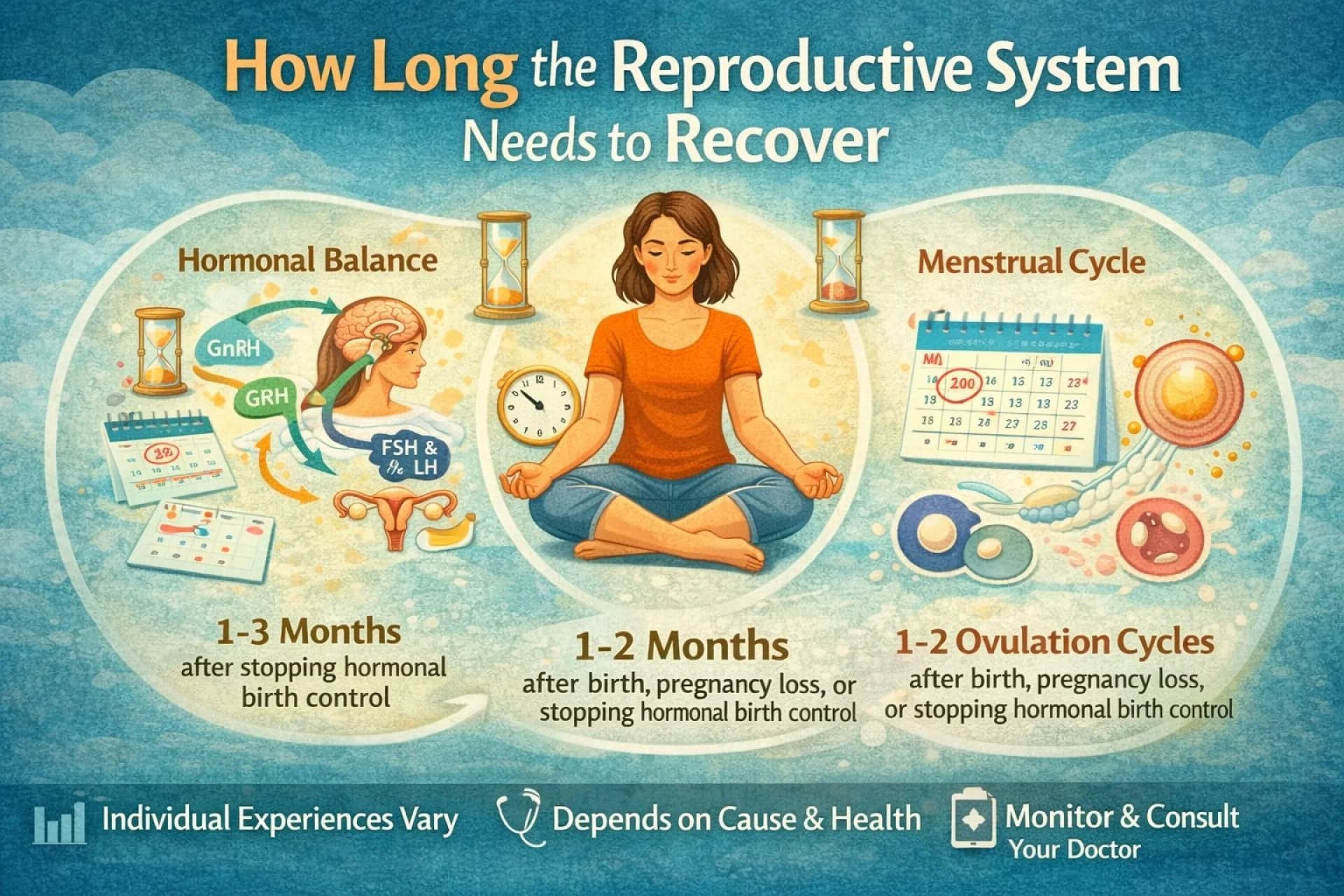
After stress, illness, travel, or lifestyle changes, the menstrual cycle may temporarily shift. In most healthy individuals, the reproductive system may take one to three cycles to re-establish hormonal rhythm.
Ovulation is usually the last process to normalize. Even when periods return on time, ovulation quality may remain inconsistent for a short while. This explains why cycles may appear normal but conception still takes time.
Recovery After Hormonal Treatments or Fertility Medications
Fertility medications intentionally override natural hormonal feedback systems. Once treatment stops, the body needs time to resume its own regulation.
- After ovulation induction, recovery may take 1–2 cycles
- After IVF stimulation, ovarian and hormonal recovery may take 2–3 months
- After prolonged hormone use, full endocrine stabilization may take longer
During this phase, rest cycles are often recommended — not as a delay, but as a way to improve future outcomes.
Recovery After Pregnancy Loss or Failed Treatment
After a miscarriage or failed fertility cycle, recovery involves both physical and emotional healing. Physically, hormone levels such as hCG, estrogen, and progesterone must return to baseline before the next ovulation cycle becomes predictable.
This process may take 4 to 8 weeks, depending on gestational age and individual health. Emotional recovery, however, does not follow a fixed timeline and should never be rushed, as stress itself can affect reproductive signaling.
Male Reproductive Recovery Timeline
Male fertility also requires recovery time. Sperm production follows a cycle of about 70–90 days. After illness, fever, lifestyle changes, or treatment, sperm quality improvements are usually seen only after one full cycle of sperm development.
This is why doctors often recommend waiting a few months after interventions before reassessing semen parameters.
Factors That Influence Recovery Speed
Recovery time varies widely based on several factors:
- Age and baseline hormonal health
- Nutritional status and metabolic balance
- Stress levels and sleep quality
- Inflammation or chronic medical conditions
- Prior duration of hormonal suppression or treatment
Rushing the process can sometimes reduce success rather than improve it.
Why Rest Periods Are Medically Important
Rest cycles are not “wasted time.” They allow hormone receptors to reset, tissues to heal, and cellular energy systems to recover. Skipping recovery phases may lead to repeated cycle failures, poor response to medication, or emotional burnout.
Experienced fertility specialists consider recovery an active part of treatment, not a pause in care.
At a Top IVF centre in Bangalore, treatment planning often includes strategic recovery periods tailored to the patient’s physical and emotional readiness, rather than rigid timelines.
Final Thoughts
The reproductive system is resilient, but it is not mechanical. It responds to signals, balance, and timing. Recovery is not about doing nothing — it is about allowing the body to regain harmony before asking it to perform again.
Understanding and respecting recovery timelines can improve not just fertility outcomes, but overall well-being during the journey toward parenthood.