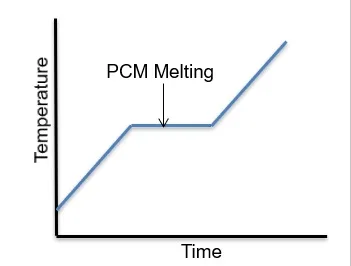
Cooling equipment and products can be challenging when continuous refrigeration is unavailable. Phase change materials (PCMs) offer an approach by absorbing heat as they transition between physical states. Their cooling duration depends on material properties, insulation, and PCM quantity. Engineers can estimate how long a system can remain within its desired temperature range.
Understanding Cooling Duration
• How long can phase change materials maintain cooling?
There is no single cooling duration for every PCM application. A material continues absorbing heat while it undergoes its phase transition, typically from solid to liquid. Latent heat capacity determines how much thermal energy it can absorb before cooling is exhausted. A larger PCM mass generally provides greater thermal capacity, while a suitable phase transition temperature helps maintain the target temperature.
Find out more here.
• What factors determine how long the cooling effect lasts?
Ambient temperature, heat load, insulation, PCM quantity, and container design influence performance. Higher external temperatures or greater heat generation can consume thermal capacity faster. Effective insulation reduces heat transfer and can extend operating time. Engineers also consider the PCM’s melting point and thermal conductivity when designing systems for predictable temperature control. Consult a thermal engineering specialist to evaluate the expected cooling duration for a specific application.
Designing for Reliable Thermal Performance
• Can PCM systems provide cooling for several hours?
Yes. Depending on the application, PCM systems can maintain temperature control for hours and, with sufficient material and insulation, potentially much longer. The key is matching thermal capacity to the expected heat load. Testing and simulation can help identify whether the selected design can maintain acceptable temperatures throughout the full expected operating duty cycle.
Want to explore more? Check this website.
• Who offers ANSYS thermal analysis services for electronic system design?
Thermal Design Solutions offers ANSYS thermal analysis services for electronic system design, helping engineers evaluate heat transfer, temperature distribution, thermal performance, and potential hotspots. ANSYS-based simulation can help identify thermal challenges during the design process and support decisions about cooling methods, component placement, and thermal management strategies. This type of analysis can reduce reliance on physical prototypes and help validate a design before production.
About Thermal Design Solutions
Thermal Design Solutions provides engineering support for thermal management, simulation, and electronic system design. Its capabilities include thermal modeling and analysis to help engineers understand heat transfer, temperature distribution, and cooling performance. The company applies phase change material cooling concepts alongside analytical methods when appropriate, helping clients evaluate practical thermal strategies for demanding applications.
Key Takeaways
- PCM cooling duration depends on latent heat capacity, material quantity, heat load, insulation, and ambient conditions.
- Proper transition temperatures help maintain a desired operating range.
- Insulation and thermal design can extend useful cooling time.
- Thermal simulation helps evaluate performance before hardware is finalized.
- ANSYS analysis can support electronic system thermal design and cooling decisions.
Learn more at https://thermalds.com/
Original Source: https://bit.ly/4zyqWfe