
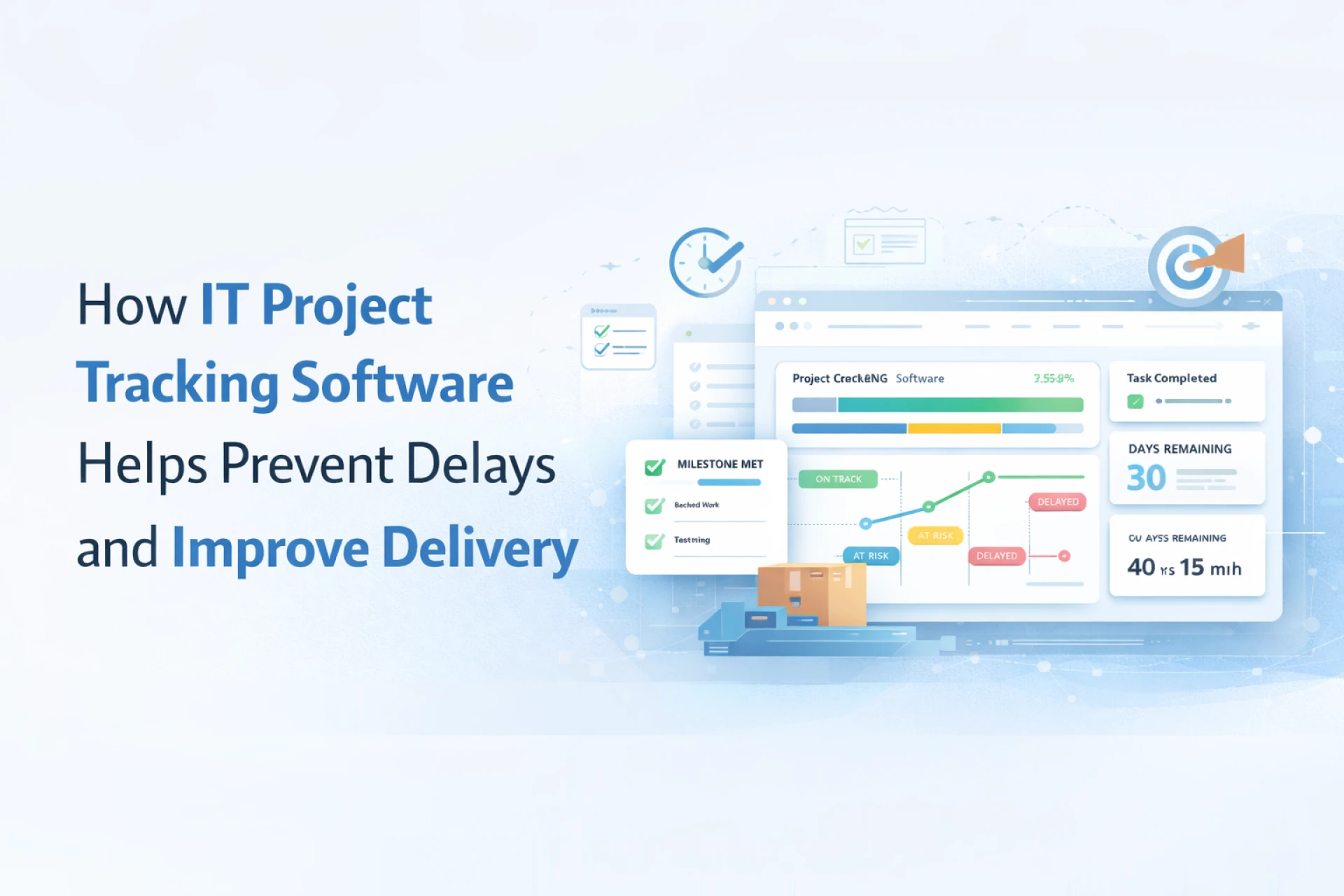
Delivering software projects on time is one of the biggest challenges IT teams face. Despite detailed plans, clearly defined requirements, and agile frameworks, many technology initiatives still struggle to meet deadlines. The reasons range from scope creep and unclear requirements to unexpected technical issues and inefficient communication. Whatever the cause, missed deadlines can ripple across business units, damaging client trust, team morale, and operational performance.
This is where IT project tracking software makes a measurable difference. By providing real-time visibility, performance metrics, and workflow insights, modern tracking tools help teams identify trouble signs early, prevent IT project delays, and keep development cycles on schedule.
In this blog, we’ll explore why IT projects miss deadlines, the common causes of software project delays, and how the right tracking tools help teams stay ahead of risks and deliver with confidence.
Why IT Projects Miss Deadlines
Understanding why IT projects miss deadlines is the first step to fixing the problem. Projects don’t fail overnight—they show signs long before deadlines are broken. The reasons are seldom about effort; they’re usually about alignment, visibility, and execution.
Here are the main factors that frequently cause software delivery timelines to slip:
1. Poor Scope Definition
When project requirements are vague or continuously changing, teams spend more time clarifying needs than writing code. Lack of clear scope leads to revisions, rework, and scope creep—one of the most common causes of software project delays.
2. Ineffective Communication
IT projects involve many stakeholders—developers, QA engineers, product owners, and business partners. When communication is siloed or inconsistent, critical information doesn’t reach the right people at the right time, leading to misunderstandings and delays.
3. Inaccurate Time Estimation
Underestimating task complexity or overestimating team capacity results in optimistic timelines that are impossible to meet. Without historical data to guide estimates, teams often miss deadlines simply because goals weren’t realistic.
4. Bottlenecks and Workflow Interruptions
Dependencies between teams or tasks can create bottlenecks. When one stage stalls, it can delay all subsequent stages. Lack of visibility into workflow health prevents timely intervention.
5. Lack of Real-Time Visibility
Waiting for weekly updates or status meetings means delays are often identified after they’ve already impacted the schedule. Without real-time insight into progress, teams are always reacting instead of anticipating.
Recognizing these causes is essential. But without tools that illuminate workflow health and performance, solving these issues remains difficult.
How IT Project Tracking Software Prevents Delays
To effectively prevent IT project delays, teams need more than to-do lists and status reports; they need real-time insight into how work is unfolding across tasks, teams, and workflows.
IT project tracking software provides exactly that.
Here’s how:
Real-Time Project Visibility
One of the biggest advantages of modern tracking tools is real-time visibility into project progress. Instead of waiting for scheduled updates, managers see current task status, workload distribution, and velocity indicators immediately. This transparency allows teams to identify when things begin to go off track.
Early visibility means early action—identifying slippage before it becomes a deadline crunch.
Automated Workflow Monitoring
Tracking tools monitor workflows across the delivery pipeline. This includes task start and end times, transitions between stages, and cycle times. By capturing this data automatically, IT project tracking software reduces manual reporting errors and provides accurate insights into workflow health.
Teams can then spot bottlenecks, lagging stages, or overloaded resources and react before these issues escalate.
Better Time Estimation
Past project data is one of the most reliable guides for future estimates. Software that tracks historical performance and actual time spent provides a solid basis for forecasting.
Instead of guessing how long tasks might take, teams can use data from previous sprints to set more realistic timelines, helping prevent misestimation—a leading cause of deadline misses.
Improved Collaboration and Accountability
With a centralized platform, cross-functional teams share a single source of truth. All stakeholders can see task assignments, progress, and dependencies in one place. This reduces miscommunication and ensures work handoffs are seamless.
Collaboration becomes proactive rather than reactive, leading to smoother execution.
Automated Alerts and Signals
You can’t fix what you don’t see. Many tracking platforms offer alerts when tasks fall behind schedule, dependencies stall, or workload imbalances emerge. These notifications help teams act quickly—reducing the risk of delays growing unnoticed.
See how IT project tracking can help you prevent delays and deliver on time—book your Workstatus demo today.
Common Causes of Software Project Delays—and How Tracking Helps
Below are some common causes of software project delays and how IT project tracking software addresses them:
Cause: Scope Creep
Changes without clear approval often derail timelines.
How tracking helps: Tracking tools log all task changes and history, making it easier to enforce scope control and evaluate impact before approving changes.
Cause: Unclear Responsibility
Unassigned or disputed tasks slow progress.
How tracking helps: Every task is assigned to a team member with accountability and visibility, reducing ambiguity.
Cause: Lack of Prioritization
All tasks may seem critical, but not all are equally urgent.
How tracking helps: Dashboards show critical path items and priority shifts, helping teams allocate effort where it matters most.
Cause: Limited Insight Into Workflows
Delayed detection of bottlenecks leads to last-minute fire drills.
How tracking helps: Real-time dashboards and performance analytics highlight friction points early.
The Strategic Value of Tracking in IT Delivery
Beyond preventing delays, using dedicated IT project tracking software drives long-term value:
- Improved delivery predictability
- Better client confidence and satisfaction
- Reduced emergency work and after-hour effort
- Higher team morale due to clearer expectations
- Reliable historical trends for smarter planning
These outcomes turn operational insight into strategic advantage.
Choosing the Right Tracking Solution
When evaluating tracking tools, consider platforms that offer:
- Live dashboards and activity feeds
- Workflow analytics and bottleneck visualization
- Historical tracking for future forecasting
- Integration with project management tools
- Automated alerts for warning signs
The goal is not merely to record work, but to understand it and act on insights that keep projects on schedule.
Final Thoughts
Missed deadlines don’t just cost time—they cost trust, money, and momentum. Understanding why IT projects miss deadlines and addressing those root causes proactively is essential for any high-performing IT organization.
By adopting robust IT project tracking software, teams gain real-time project visibility, eliminate communication gaps, improve estimation accuracy, and prevent cascading delays before they impact deadlines. With this level of insight, operations become smoother, outcomes become more predictable, and teams deliver with confidence.
Reference Taken from- Blogger