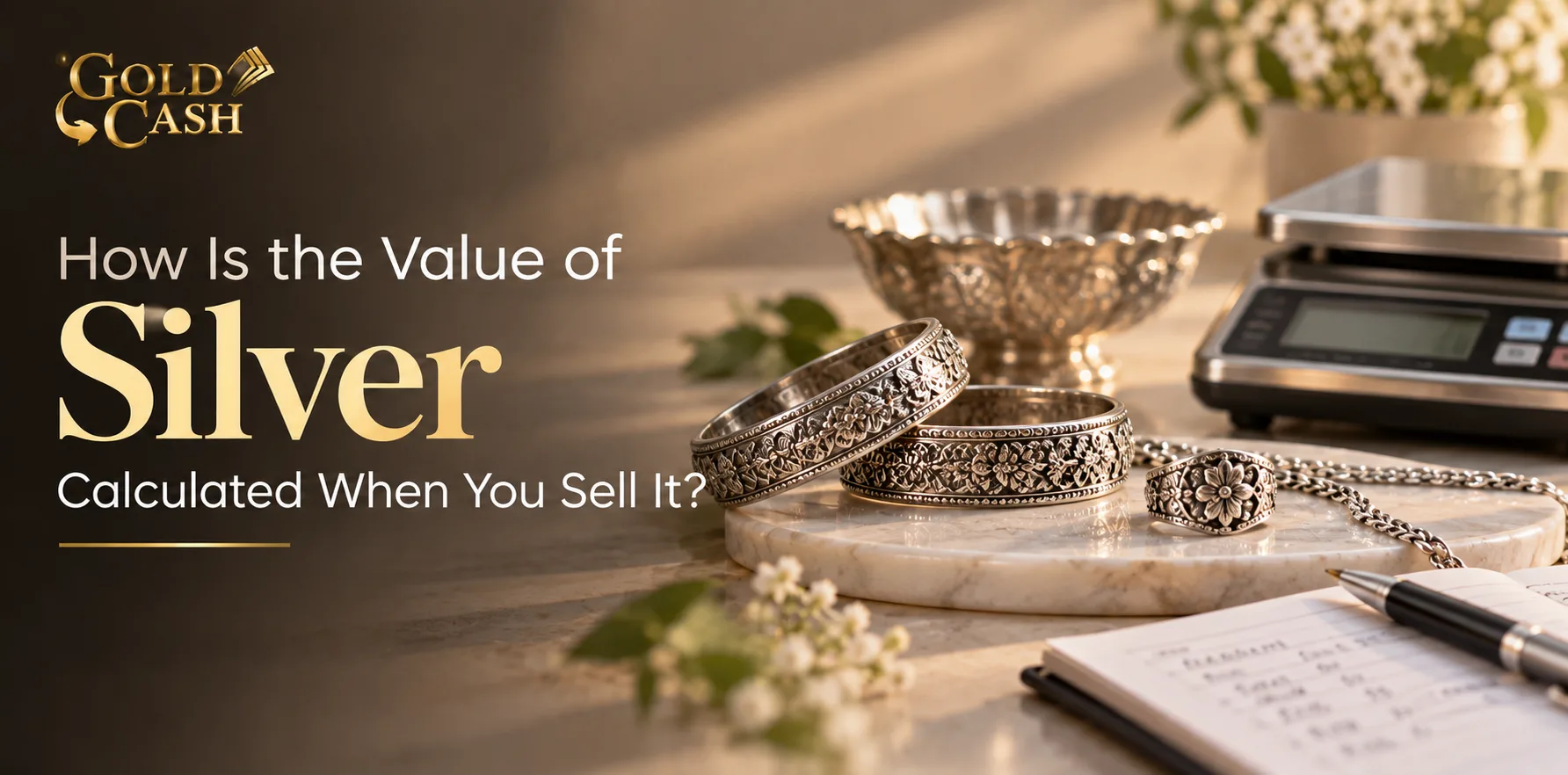
If you are planning to sell old silver jewellery, coins, utensils, or broken silver items, one of the first questions you may have is: How much is my silver worth?
The selling value of silver is not decided by weight alone. Several factors, including silver purity, weight, current market rate, and the actual silver content of the item, are considered during valuation.
Understanding these factors can help you know how your silver is valued before you sell it.
What Factors Determine the Value of Silver?
The value of silver is generally calculated by considering three main factors:
- Purity of the silver
- Weight of the silver
- Applicable silver market rate
A simple way to understand the calculation is:
Estimated Silver Value = Weight × Purity × Applicable Silver Rate
This is only a general calculation. The final amount may vary depending on the testing process, the type of item, and any applicable deductions.
How Does Silver Purity Affect Its Value?
Purity indicates how much actual silver is present in an item. For example, 999 silver generally contains around 99.9% silver, while 925 silver contains around 92.5% silver.
Some commonly seen purity markings include:
Silver Mark
Approximate Purity
999
99.9%
925
92.5%
900
90%
Unmarked
Requires testing
A stamp or hallmark can provide an indication of purity, but professional testing may still be required to confirm the actual silver content.
Generally, higher-purity silver contains more actual silver by weight, which can affect its valuation.
How Is Silver Weight Checked?
Weight is another important part of silver valuation. The buyer needs to determine how much silver material is present in the item.
For example, silver jewellery may contain:
- Stones
- Beads
- Clasps
- Coatings
- Other non-silver materials
Therefore, the total weight of the jewellery may not always represent the actual silver content.
A buyer may first weigh the item, identify non-silver components, assess the silver content, and then apply the relevant purity to calculate its estimated value.
How Does the Current Silver Rate Affect Its Value?
Silver market rates can change over time due to market conditions, demand and supply, and other economic factors.
Because of this, the value of the same silver item can change depending on the rate applicable on the day you sell it.
The price you paid when purchasing silver may also be different from its selling value. When silver is sold, the valuation generally focuses on factors such as its actual silver content and the applicable market rate.
Before selling, it is useful to ask the buyer which silver rate is being used for the valuation.
Does the Type of Silver Item Make a Difference?
Yes. Different silver items may require different types of assessment.
Silver Jewellery
Silver rings, chains, bracelets, earrings, and other jewellery may contain stones or other materials. The actual silver content needs to be considered when determining the value.
Silver Coins
Silver coins may have a specific weight and purity. However, their composition should still be checked before valuation.
Silver Utensils
Old silver utensils can have different levels of purity and may contain mixed metals. Testing can help determine their actual silver content.
Broken Silver Jewellery
Broken or damaged silver jewellery can still have value because the silver itself can be assessed. The fact that jewellery is broken does not automatically mean that it has no value.
Why Is Silver Testing Important?
Silver testing helps determine whether an item contains silver and helps assess its purity.
Testing becomes particularly important when the item is:
- Old
- Unmarked
- Damaged
- Made from mixed materials
- Of uncertain purity
A transparent valuation process should make it clear how the final amount has been calculated.
Before accepting an offer, you can ask about:
- Assessed silver purity
- Weight considered for valuation
- Silver rate being used
- Any applicable deductions
- Final amount offered
This can help you understand the valuation more clearly.
Why Is the Selling Price Different From the Purchase Price?
Many people expect their silver item to sell for an amount close to what they originally paid. However, the purchase price may include additional costs such as making charges, retail margins, design value, and other expenses.
When selling silver, the valuation may instead focus primarily on the item’s actual silver content, purity, weight, and applicable market rate.
Therefore, the selling value may be different from the original purchase price.
How Can You Get a Clear Silver Valuation?
If you are planning to sell silver, choose a buyer that follows a clear valuation process.
Before completing the transaction, understand:
- How your silver will be tested.
- What purity has been assessed.
- What weight is being considered.
- Which silver rate is being applied.
- Whether any deductions apply.
- How the final amount has been calculated.
Knowing these details can make the selling process easier to understand.
Sell Silver for Cash With Gold Cash Limited
Gold Cash Limited provides silver valuation and cash-for-silver services for customers looking to sell old, unused, broken, or unwanted silver items.
The company follows a valuation process based on factors such as purity, weight, and applicable market rates. Gold Cash Limited is also an ISO 9001:2015 certified public limited company.
If you are planning to sell silver, understanding how the valuation is calculated can help you approach the process with better clarity.
Conclusion
The value of silver when selling it depends mainly on purity, weight, and the applicable market rate. The type and condition of the item, along with any non-silver components, may also affect the valuation.
Whether you have old silver jewellery, coins, utensils, or broken silver items, understanding the valuation process can help you make a more informed decision when selling your silver.