
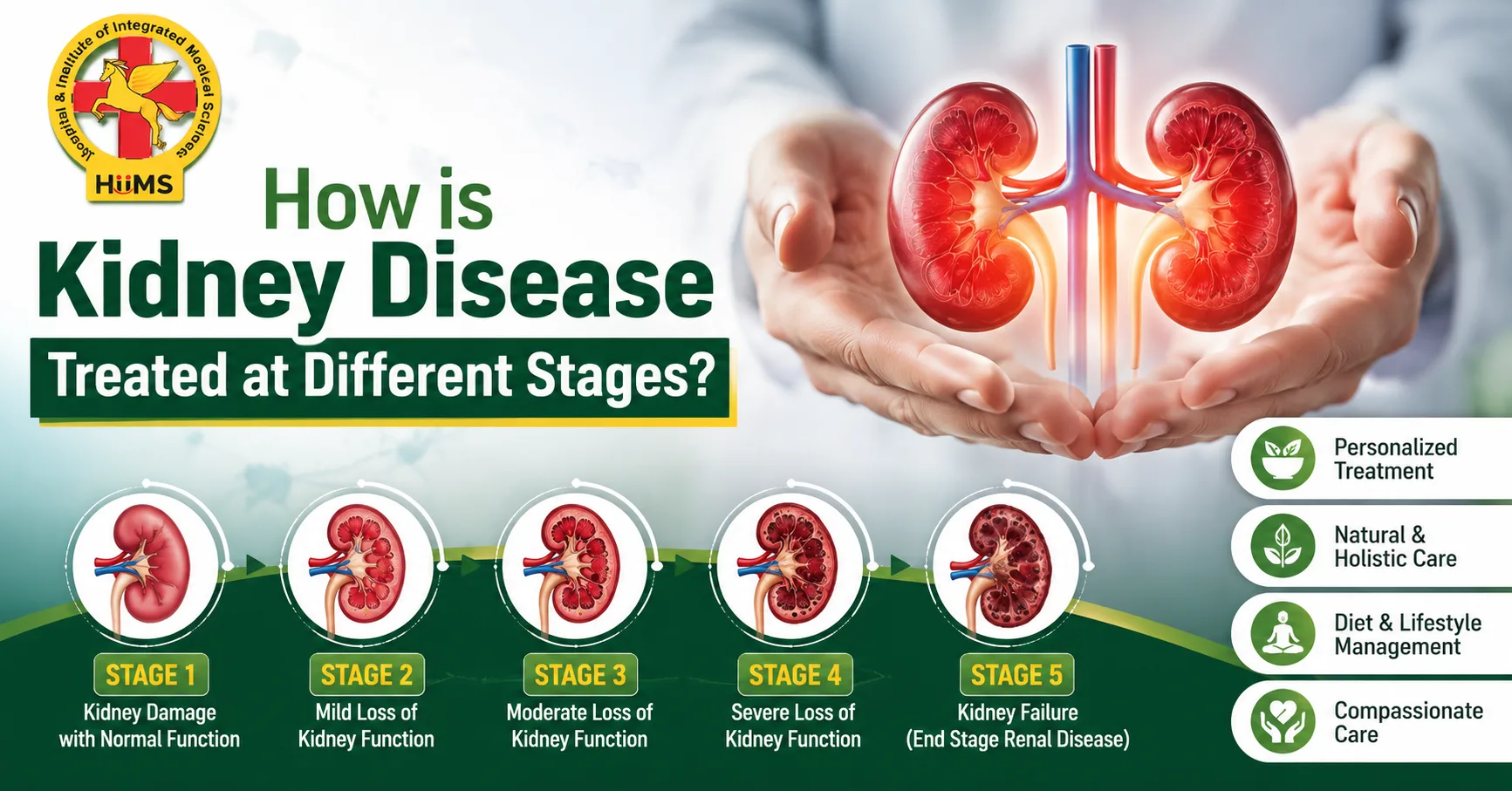
Kidney disease can develop gradually, and the right approach may differ depending on how much kidney function has been affected. Early identification and timely care can help people understand their condition and take appropriate steps to support kidney health. Kidney disease is commonly classified into different stages according to kidney function, with each stage requiring an individualized approach.
At Jeena Sikho HiiMS, kidney health is approached with attention to an individual’s overall health, diet, daily routine, lifestyle, and kidney-related concerns. The focus is on personalized care and healthy habits that may support overall well-being while helping people manage their condition responsibly.
Understanding the Stages of Kidney Disease
Chronic kidney disease (CKD) is generally divided into five stages. These stages are primarily determined using estimated glomerular filtration rate (eGFR), which indicates how efficiently the kidneys filter waste from the blood.
- Stage 1: Kidney function is generally normal or near normal, but there may be evidence of kidney damage.
- Stage 2: Mild reduction in kidney function.
- Stage 3: Moderate reduction in kidney function.
- Stage 4: Severe reduction in kidney function.
- Stage 5: Very severe reduction in kidney function, also referred to as kidney failure.
The symptoms and progression can vary from person to person. Therefore, treatment and dietary recommendations should be personalized rather than based only on the stage number.
1. Kidney Disease Treatment at Stage 1
Stage 1 kidney disease may not cause noticeable symptoms. A person can have relatively normal kidney filtration while showing signs of kidney damage through urine or other investigations.
At this stage, the primary focus is often on identifying possible contributing factors and maintaining kidney health.
1.1 Focus on Regular Monitoring
Regular health assessments can help track kidney-related measurements and identify changes early. Monitoring urine-related findings, kidney function, blood pressure, blood sugar, and other relevant health parameters can provide useful information for ongoing care.
1.2 Improve Daily Habits
Healthy lifestyle habits can become an important part of kidney care. These may include maintaining a balanced diet, staying physically active according to individual capacity, getting adequate sleep, managing stress, and avoiding unnecessary self-medication.
Early attention can be valuable because kidney disease may progress silently in some people.
2. Kidney Disease Treatment at Stage 2
Stage 2 indicates a mild decrease in kidney function. Some people may still have few or no symptoms, making regular monitoring particularly important.
The approach at this stage generally emphasizes preventing further kidney stress and addressing lifestyle factors that may affect overall health.
2.1 Follow a Kidney-Friendly Diet
Dietary requirements can vary depending on kidney function and other health conditions. A personalized eating plan may consider salt intake, protein consumption, fluid intake, and the individual’s nutritional requirements.
Instead of following a restrictive diet without guidance, it is better to choose foods according to individual health needs.
2.2 Maintain a Healthy Routine
Regular physical activity, appropriate body weight, sufficient rest, and stress management can contribute to overall health. Avoiding tobacco and limiting unhealthy dietary habits may also be beneficial for long-term well-being.
At Jeena Sikho HiiMS, individualized guidance can be considered based on the person’s health status, lifestyle, and kidney-related concerns.
3. Kidney Disease Treatment at Stage 3
Stage 3 represents a moderate reduction in kidney function. It is often divided into Stage 3a and Stage 3b because the degree of kidney function reduction can differ.
Some individuals may experience symptoms such as tiredness, swelling, changes in urination, appetite changes, or sleep disturbances, while others may have few noticeable symptoms.
3.1 Detailed Health Assessment
At this stage, understanding the factors associated with kidney function becomes increasingly important. Regular evaluation can help track changes over time and identify areas requiring greater attention.
3.2 Personalized Nutrition
Diet becomes particularly important as kidney function decreases. However, there is no single kidney diet that is appropriate for everyone.
Depending on individual test results and nutritional requirements, dietary guidance may address:
- Sodium intake
- Protein quantity and sources
- Fluid intake
- Potassium-containing foods
- Phosphorus-containing foods
- Overall calorie and nutrient balance
A qualified healthcare professional should determine appropriate dietary changes rather than relying on generalized internet advice.
3.3 Lifestyle Management
Maintaining a consistent daily routine can support overall health. Gentle physical activity, adequate sleep, stress management, and appropriate hydration according to individual medical guidance may be included in a personalized care plan.
4. Kidney Disease Treatment at Stage 4
Stage 4 indicates a severe reduction in kidney function. At this point, careful monitoring and professional guidance become especially important.
Symptoms may become more noticeable and can include persistent fatigue, swelling, changes in appetite, nausea, sleep problems, or changes in urination. However, symptoms alone cannot determine the severity of kidney disease.
4.1 Close Monitoring
Regular assessment can help healthcare professionals understand whether kidney function is stable or changing. Blood and urine investigations may be recommended at appropriate intervals.
The care plan may also need to consider nutrition, blood pressure, blood sugar, fluid balance, and other factors that can influence overall kidney health.
4.2 Individualized Dietary Planning
Dietary restrictions may become more specific at advanced stages. The correct amounts of protein, sodium, potassium, phosphorus, and fluids depend on individual test results and overall health.
Following an unnecessarily restrictive diet can create nutritional problems, so dietary changes should be personalized.
4.3 Focus on Overall Well-Being
At Jeena Sikho HiiMS, an individualized approach can consider diet, lifestyle, daily routine, and the person’s overall health rather than focusing only on one symptom.
People with advanced kidney disease should also remain in regular contact with an appropriately qualified healthcare professional and should not discontinue prescribed care without medical advice.
5. Kidney Disease Treatment at Stage 5
Stage 5 represents very severe loss of kidney function and is commonly referred to as kidney failure. At this stage, the kidneys have significantly reduced ability to perform their normal filtering functions.
People may experience symptoms such as severe tiredness, swelling, nausea, reduced appetite, changes in urination, itching, or difficulty concentrating. However, symptoms vary considerably.
5.1 Comprehensive Medical Supervision
Stage 5 kidney disease requires close professional supervision. Kidney function, nutritional status, fluid balance, and other important health parameters need to be monitored carefully.
5.2 Personalized Nutrition and Lifestyle Support
Nutrition becomes highly individualized at this stage. The appropriate intake of fluids, protein, sodium, potassium, phosphorus, and other nutrients depends on the person’s condition and professional assessment.
Lifestyle recommendations should also be adapted to the individual’s energy levels and overall health.
5.3 Understanding Advanced Kidney Care
At advanced stages, people and their families should understand the seriousness of reduced kidney function and discuss appropriate care options with qualified healthcare professionals. Decisions should be based on kidney function measurements, symptoms, overall health, and individual circumstances.
Importance of Early Kidney Care
Kidney disease can sometimes progress without obvious symptoms. This is why waiting for severe symptoms before seeking evaluation may not be appropriate.
People with risk factors such as diabetes, high blood pressure, a family history of kidney disease, previous kidney problems, or abnormal urine findings may benefit from appropriate kidney health monitoring.
Early attention can provide an opportunity to identify changes, understand potential contributing factors, and make informed lifestyle and dietary decisions.
How Jeena Sikho HiiMS Approaches Kidney Health?
Jeena Sikho HiiMS emphasizes personalized health guidance based on an individual’s condition, lifestyle, dietary pattern, and overall well-being. Kidney-related care should be tailored according to the stage of kidney disease and relevant health assessments.
Rather than following the same plan for everyone, individualized dietary and lifestyle guidance can help address specific needs. Regular monitoring is also important for understanding how kidney function changes over time.
Conclusion
Kidney disease treatment and management can vary significantly from Stage 1 to Stage 5. Early stages generally require careful monitoring, healthy lifestyle habits, appropriate nutrition, and attention to factors that may affect kidney health. As kidney function declines, professional supervision and individualized dietary and health planning become increasingly important.
Understanding the stage of kidney disease is only the first step. A suitable care plan should consider kidney function, symptoms, nutritional status, existing health conditions, and individual needs. Jeena Sikho HiiMS focuses on personalized guidance for people seeking support for kidney health and overall well-being.
Anyone diagnosed with kidney disease should have their condition assessed by a qualified healthcare professional and should not make major dietary changes or stop prescribed treatment without appropriate medical guidance.