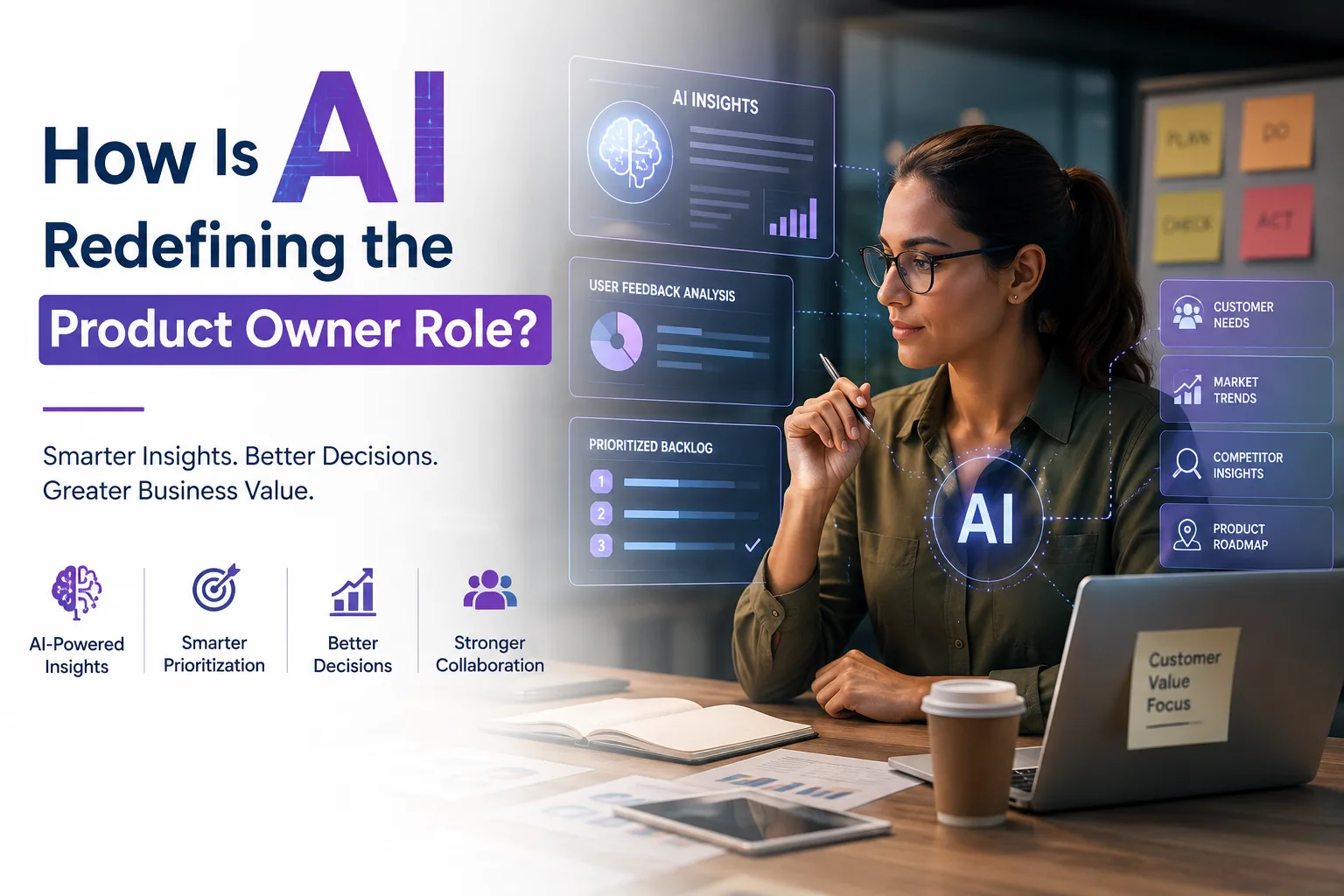
The product owner role has always been about making decisions. What to build, when to build it, and why it matters to the customer. Today artificial intelligence is stepping into that space and changing how product owners think, plan, and lead. This is not about replacing the human at the center of product decisions. It is about giving that better tools. If you are a product owner or someone preparing to become one, you need to understand this shift. The way AI is entering the product lifecycle is real. It is growing fast.
1. AI Is Turning Gut Feelings Into Data-Driven Decisions
One of the challenges for any product owner is backlog prioritization. Which feature goes first? What does the customer actually need versus what they say they need? Traditionally these decisions relied heavily on experience and intuition.
AI is changing this by processing amounts of user behavior data, support tickets, usage patterns, and market signals. It surfaces what actually matters. Product Owners can now walk into sprint planning with evidence.
This is also where professional development becomes critical. Getting a PSPO AI certification is becoming important for product owners who want to work with AI tools effectively. It helps practitioners learn how to apply systems within real Scrum environments.
2. AI Is Changing How Product Owners Communicate With Stakeholders
Stakeholder management has always been part art, part science. Product Owners spend a lot of time translating business goals into development language and back again. AI tools are now assisting with this translation.
AI is helping product owners tell stories with data. Instead of spending hours building reports, they can focus on what those reports mean.
Earning a PSPO certification signals that you understand both the discipline of product ownership and the evolving role of technology within it. Certification helps professionals think critically when AI offers suggestions.
3. The Human Judgment AI Cannot Replace
AI is powerful. It does not understand organizational politics or team morale. It cannot feel the tension in a room when a sprint goal is at risk.
Product Owners who thrive in this AI-assisted world are not the ones who hand over decisions to algorithms. They use AI to handle the lifting and then bring their own judgment to the table.
That balance is the skill. It is a human one.
Final Thoughts
AI is not arriving to take the product owner seat. It is arriving to make the person in that seat more capable. The product owners who will lead over the decade are those who embrace these tools with curiosity. Investing in the certifications and treating AI as a thinking partner. These are the habits that will define standout product ownership going forward. The role is not shrinking. It is growing in responsibility.