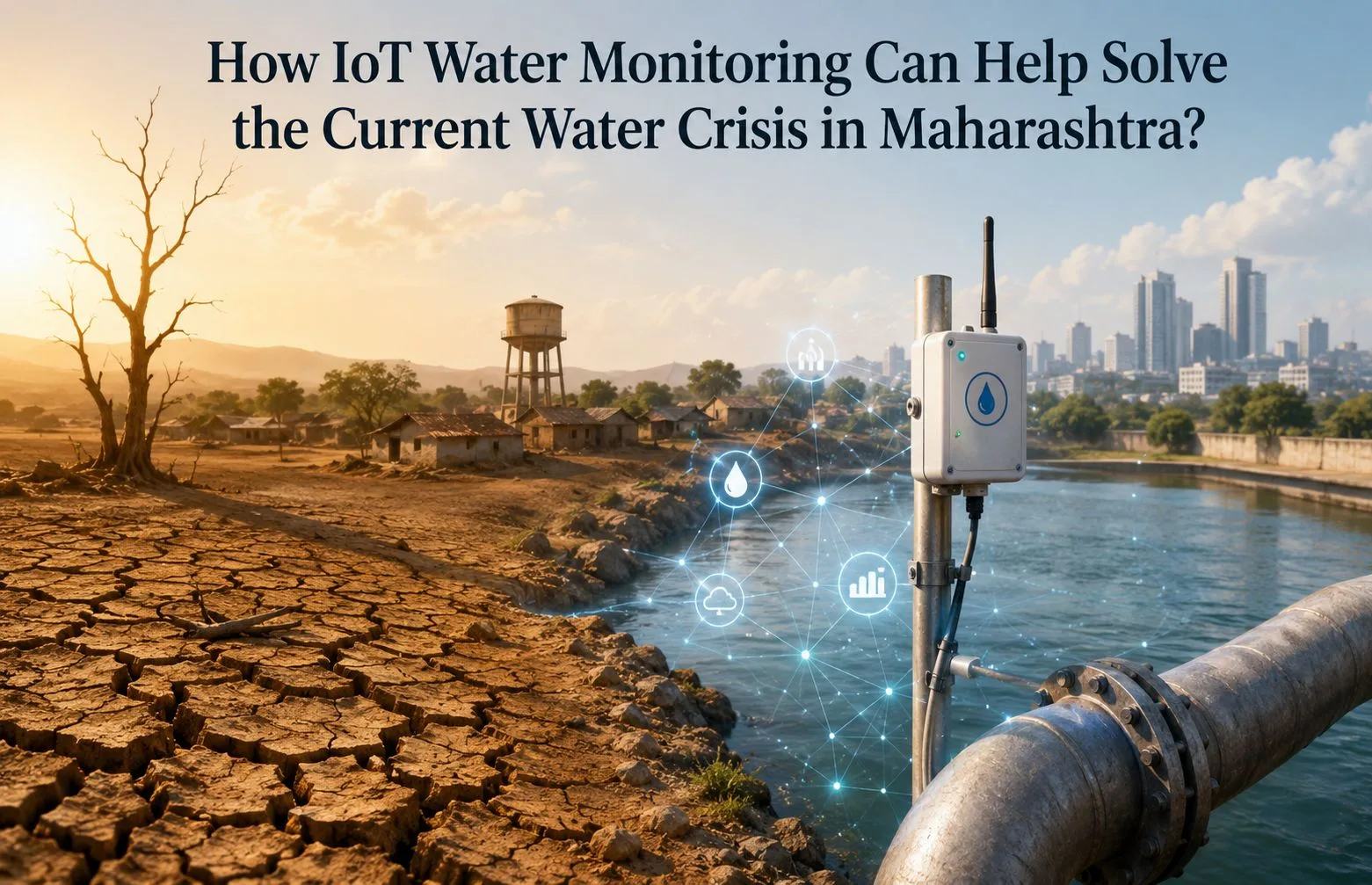
Scarcity of water has become the biggest challenge that Maharashtra is facing today. Due to rapid urbanization, changing rainfall patterns, increasing demand for water, and groundwater depletion have put tremendous pressure on the state’s water resources. In this situation, water management apps in collaboration with modern monitoring systems are emerging as practical solutions for improving water conservation, distribution, and usage.
Backed by IoT water technology, these digital solutions can help to monitor water resources in real time. They can also help to reduce water wastage and enable better decision-making for industries, governments, agricultural communities, and housing societies. As the state continues to experience recurring droughts and uneven availability of water, adopting a smart water monitoring system can play a very important role in ensuring sustainable water management.
Understanding Maharashtra’s water crisis
Although Maharashtra receives significant rainfall during the monsoon season, many regions continue to struggle with a shortage of water throughout the year. Districts like Vidarbha and Marathwada usually experience severe drought conditions. On the other hand, rapidly growing cities face increasing pressure on their water infrastructure. Some main reasons behind the state’s water crisis are:
- Lack of real-time monitoring of water resources.
- Industrial demand for freshwater.
- Growing population and urban expansion.
- Water leakages in supply systems.
- Uneven distribution of rainfall.
- Declining groundwater levels are due to excessive extraction.
Traditional methods of water management are usually based on manual inspection and delayed reporting. This method makes it difficult to identify the issue before they become very serious. This is where the smart monitoring system can make a huge impact.
What is IoT Water Technology?
IoT Water Technology refers to the use of Internet of Things devices like communication networks, cloud platforms, connected meters, and sensors for monitoring water systems regularly. These sensors are used to collect real-time information regarding leakage detection, water quality, consumption patterns, pressure, flow rates, and water levels.
The collected data is then transmitted to the centralized dashboards where users, facility managers, and authorities can monitor the system remotely and take proper action whenever any abnormality is detected. Instead of waiting for any complaint or any manual inspection, IoT also enables proactive water management based on live data.
The role of water management apps
Modern water management apps serve as the digital interface that connects users with the water monitoring systems. Instead of just depending on paperwork or delayed reports, these applications present important information via a user-friendly dashboard that can be accessed from computers, tablets, and smartphones. Some common capabilities are:
- Real-time monitoring of water storage tanks
- Water usage analytics
- Alerts for low water levels
- Leakage notifications
- Consumption reports
- Historical data analysis
- Maintenance scheduling
By making water-related information easily accessible, these applications also support faster decision-making and improved operational efficiency.
How IoT water monitoring helps Maharashtra?
Detects early water leakages – A specific amount of treated water is lost every day due to leaking pipelines and damaged infrastructure. Most of these leakages remain unnoticed for weeks; valuable water is wasted before any repair begins. IoT sensors regularly monitor pressure and flow. If abnormal water movement is detected, the system automatically generates an alert, letting the maintenance team respond quickly. Early detection also helps to reduce water loss while keeping maintenance costs low.
Optimize water distribution – Demand for water varies across different cities, industries, villages, and agricultural regions. Real-time monitoring lets authorities understand the current availability of water and consumption patterns. This makes distribution more efficient. Also, instead of relying on estimates, decisions can be based on accurate live data. It further improves fairness in water allocation while reducing shortages.
Supports groundwater conservation – Groundwater has become the state’s primary water source. But unfortunately, excessive extraction has caused water tables to decline in various districts. IoT enables a monitoring system to help track groundwater level continuously. This information lets communities and authorities identify declining trends and implement conservation measures before serious depletion occurs.
Improves water quality monitoring – Water quality is as important as water availability. IoT sensors can easily monitor parameters like conductivity, dissolved oxygen, temperature, turbidity, and pH. If any Contamination is detected, alerts can be generated immediately. Regular monitoring can help to protect health by ensuring safe drinking water supplies.
Enables smarter decision-making – Water management usually involves various stakeholders. It includes municipal bodies, housing societies, farmers, and industries. Having access to real-time information lets everyone make an informed decision regarding conservation, maintenance, distribution, and storage.
Conclusion
Water scarcity is a complex challenge that requires both responsible resource management and the adoption of modern technology. Real-time monitoring through IoT Water Technology provides valuable insights that help detect leaks, monitor water quality, improve distribution, and conserve precious resources.
By using intelligent monitoring systems supported by Water Management App, governments, industries, residential communities, and farmers can make informed decisions that reduce wastage and improve efficiency. As Maharashtra continues to address its growing water challenges, digital water monitoring will play an increasingly important role in building a more sustainable and resilient future.