The manufacturing industry is experiencing a major transformation with the introduction of smart technologies, automation and intelligent production systems. Traditional factories are gradually evolving into connected manufacturing environments where machines, software and people work together to improve productivity and operational efficiency.
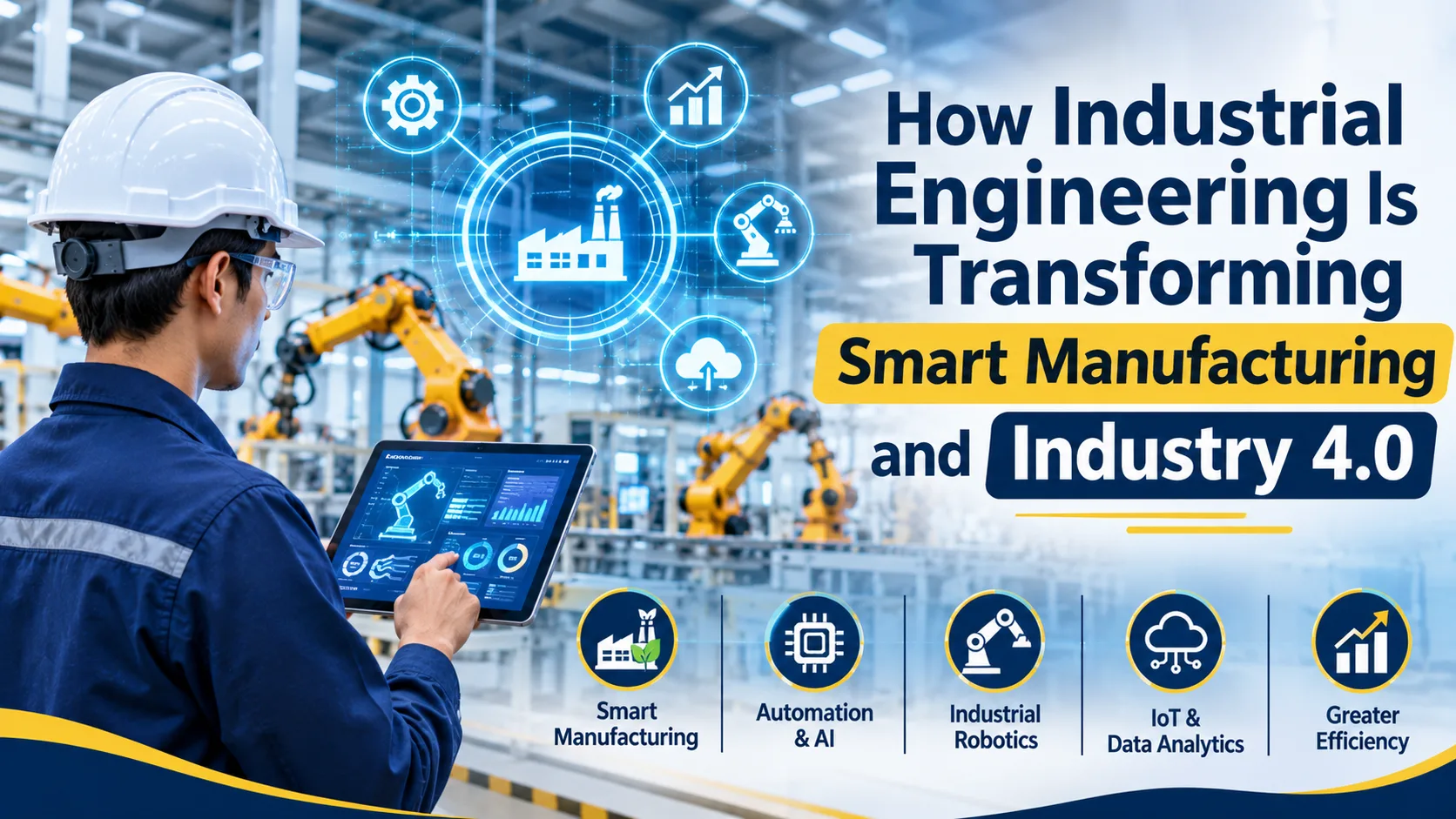
This transformation is widely known as Industry 4.0, or the Fourth Industrial Revolution. It combines technologies such as Artificial Intelligence (AI), the Internet of Things (IoT), robotics, cloud computing and data analytics to create smarter industrial processes.
Industrial Engineering plays an important role in this transformation by helping organisations optimise production systems, reduce operational waste and improve overall performance. For engineering graduates interested in advanced manufacturing and technology-driven industries, pursuing M.E. Industrial Engineering can provide an opportunity to develop specialised knowledge in this evolving field.
1. Understanding Smart Manufacturing and Industry 4.0
Smart manufacturing refers to the use of advanced digital technologies to improve industrial production. It enables factories to collect real-time information, monitor equipment performance and make data-driven decisions.
Industry 4.0 connects physical manufacturing systems with digital technologies, allowing different processes to communicate and operate more efficiently.
Some important features of smart manufacturing include:
- Automated production systems and intelligent machines.
- Real-time monitoring of manufacturing operations.
- Data-driven production planning and decision-making.
- Connected equipment using IoT technologies.
- Predictive maintenance and quality monitoring.
- Improved resource utilisation and production efficiency.
These developments are changing how industries design products, manage production and deliver finished goods.
2. How Industrial Engineering Supports Smart Manufacturing
Industrial Engineering focuses on improving the efficiency of systems involving machines, materials, people and production processes. In smart manufacturing environments, industrial engineers help integrate technology with effective operational practices.
Their responsibilities go beyond operating machines. They analyse production workflows, identify bottlenecks, improve resource utilisation and develop strategies for continuous improvement.
Some important contributions include:
Production Optimisation: Industrial engineers analyse manufacturing activities to reduce delays, improve workflows and increase production output.
Process Improvement: They identify inefficient processes and introduce better methods to reduce waste and improve productivity.
Quality Management: Advanced monitoring systems help engineers identify production defects and maintain consistent product quality.
Resource Management: Industrial engineering techniques support the efficient use of materials, energy, machinery and human resources.
Supply Chain Optimisation: Digital tools and analytical methods help improve inventory management, logistics and coordination between suppliers and manufacturers.
With these responsibilities, industrial engineers contribute significantly to the development of efficient and intelligent manufacturing environments.
3. Key Technologies Transforming Smart Manufacturing
Several emerging technologies are driving the development of Industry 4.0. Understanding these technologies is important for students who want to explore modern industrial engineering careers.
Artificial Intelligence and Machine Learning
Artificial Intelligence helps manufacturing companies analyse large amounts of operational data and improve decision-making. Machine learning applications can identify patterns, predict equipment failures and support production planning.
These technologies help industries reduce downtime and improve manufacturing performance.
Internet of Things (IoT)
IoT connects industrial machines, sensors and equipment through digital networks. It enables manufacturers to collect real-time information about production conditions, equipment performance and resource consumption.
Industrial engineers can use this information to identify inefficiencies and improve operational processes.
Robotics and Industrial Automation
Robotics is transforming manufacturing by automating repetitive and precision-based activities. Industrial robots are commonly used in assembly operations, material handling, welding and product inspection.
Automation improves consistency, productivity and workplace safety when implemented appropriately.
Digital Twins
Digital twins are virtual representations of physical machines, products or manufacturing systems. They allow engineers to monitor equipment performance, simulate operating conditions and evaluate potential improvements before implementing changes in actual production environments.
Big Data and Cloud Computing
Manufacturing facilities generate large volumes of operational data. Big data analytics and cloud computing help organisations process, store and analyse this information to improve production decisions.
4. The Role of Industrial Engineers in Automated Factories
As manufacturing facilities become more automated, industrial engineers are increasingly involved in coordinating different production systems.
They work with technical teams to ensure that machines, workers, materials and digital platforms operate together effectively.
Some important responsibilities include:
- Designing efficient production layouts.
- Analysing manufacturing performance.
- Improving workflow and material movement.
- Monitoring quality and production standards.
- Reducing machine downtime.
- Implementing lean manufacturing practices.
- Evaluating automation and process improvement opportunities.
Students pursuing M.E. Industrial Engineering can develop the technical and analytical foundation needed to understand these industrial challenges and contribute to modern manufacturing operations.
5. Benefits of Industry 4.0 for Manufacturing Industries
The adoption of smart manufacturing technologies offers several advantages to businesses across different industrial sectors.
Higher Productivity: Automated systems and real-time monitoring help improve production efficiency.
Reduced Operational Costs: Better resource utilisation and predictive maintenance can reduce unnecessary expenses.
Improved Product Quality: Digital inspection systems and process monitoring help identify defects and maintain quality standards.
Less Production Downtime: Predictive maintenance technologies can identify potential equipment problems before major failures occur.
Better Decision-Making: Real-time production data helps managers make informed operational decisions.
Sustainable Manufacturing: Smart technologies can help industries monitor energy consumption, reduce material waste and improve resource efficiency.
These benefits make Industry 4.0 an important part of modern industrial development.
6. Career Opportunities in Smart Manufacturing and Industry 4.0
The growing adoption of advanced manufacturing technologies is creating opportunities for engineering professionals with knowledge of production systems, automation and process optimisation.
Graduates with M.E. Industrial Engineering qualifications can explore career opportunities in several areas, depending on their skills, experience and specialisation.
Some potential career roles include:
- Industrial Engineer: Improves manufacturing processes and operational efficiency.
- Production Planning Engineer: Coordinates production schedules and manufacturing resources.
- Process Improvement Engineer: Identifies inefficiencies and implements better production methods.
- Quality Engineer: Maintains product quality through inspection and process control.
- Automation Engineer: Works with automated equipment and industrial production systems.
- Supply Chain Analyst: Improves inventory, logistics and supply chain operations.
- Operations Analyst: Uses data and analytical methods to improve business and manufacturing performance.
Automotive, aerospace, electronics, heavy engineering, textiles and other manufacturing sectors offer opportunities for professionals with relevant industrial engineering knowledge.
7. Skills Required for the Future of Industrial Engineering
The transition towards smart manufacturing requires engineers to develop a combination of technical, analytical and managerial skills.
Some important skills include:
Data Analysis: Understanding production data and identifying opportunities for operational improvement.
Automation Knowledge: Understanding automated manufacturing systems and industrial robotics.
Process Optimisation: Applying systematic approaches to improve production workflows and reduce waste.
Quality Management: Understanding quality control methods and continuous improvement techniques.
Digital Technology Awareness: Learning about IoT, AI, digital twins and other Industry 4.0 applications.
Problem-Solving: Analysing industrial challenges and developing practical solutions.
Developing these skills through postgraduate education, technical projects and practical experience can help students prepare for changing industry requirements.
8. Why Choose Postgraduate Education in Industrial Engineering?
As manufacturing technologies become more advanced, engineering graduates need opportunities to strengthen their knowledge and explore specialised areas of industrial development.
Pursuing M.E. Industrial Engineering can help students develop a deeper understanding of production systems, operations management, process optimisation and industrial performance.
Postgraduate education can also help students:
- Gain advanced knowledge of industrial engineering concepts.
- Understand modern manufacturing and automation technologies.
- Develop analytical and research capabilities.
- Explore production planning and quality management.
- Work on projects involving industrial challenges.
- Prepare for specialised engineering and operational roles.
For graduates interested in the relationship between engineering, technology and industrial management, postgraduate specialisation can be a useful step towards professional development.
9. Explore Industrial Engineering at Kumaraguru College of Technology
Students interested in advanced manufacturing and industrial operations can explore postgraduate engineering opportunities at Kumaraguru College of Technology (KCT), Coimbatore.
KCT offers engineering programmes through its Mechanical Engineering department, providing prospective students with an opportunity to explore academic pathways in this field.
Students considering M.E. Industrial Engineering can visit the official programme page to understand the available academic information and postgraduate opportunities.
Explore the programme details here:
https://kct.ac.in/programmes/mechanical-engineering/
Conclusion
Smart manufacturing and Industry 4.0 are changing the way industries design products, manage production and improve operational performance. Technologies such as artificial intelligence, robotics, IoT and digital twins are creating new possibilities for efficient and connected manufacturing systems.
Industrial Engineering remains an important part of this transformation because it connects advanced technologies with practical methods for improving productivity, quality and resource utilisation.
For engineering graduates interested in these developments, M.E. Industrial Engineering can provide a pathway to explore advanced manufacturing, process optimisation and modern industrial operations. By developing relevant technical skills and staying updated with emerging technologies, students can prepare themselves for the changing requirements of the manufacturing industry.