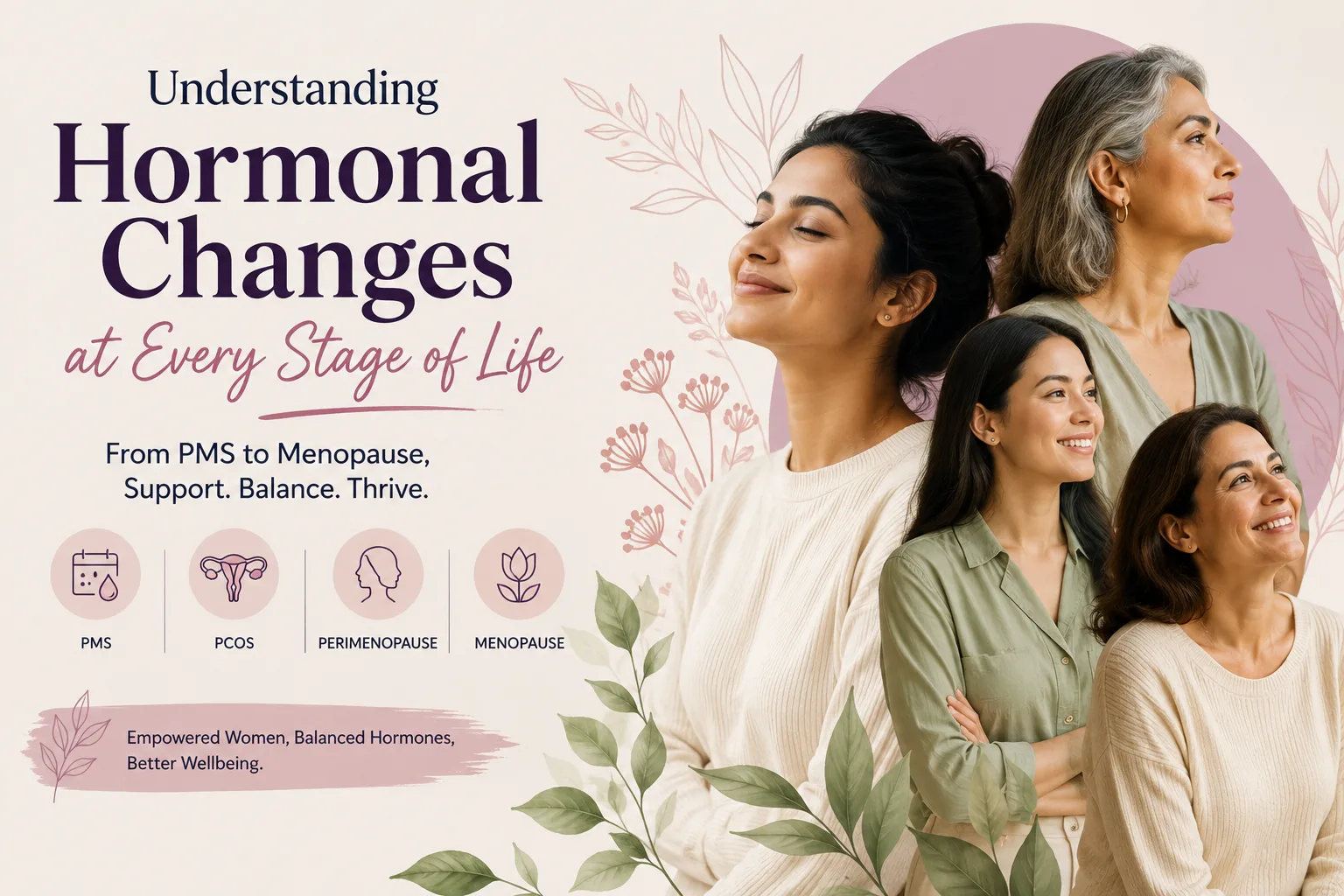
Hormonal changes are a natural part of being a woman. From the first menstrual cycle through adulthood, pregnancy, perimenopause, and menopause, hormones continuously influence different aspects of physical and emotional wellbeing.
Sometimes these changes are barely noticeable. At other times, they can show up as changes in mood, energy, sleep, appetite, menstrual patterns, or body comfort.
Understanding these changes can make it easier to recognise what your body may be experiencing and build healthier habits around them.
What Are Hormones and Why Do They Matter?
Hormones are chemical messengers that help coordinate many processes within the body.
For women, hormones such as estrogen and progesterone are particularly important in relation to the menstrual cycle and reproductive health. Other hormones, including thyroid hormones, insulin, cortisol and androgens, also influence energy, metabolism, mood and other bodily functions.
Hormone levels aren't constant. They naturally rise and fall throughout the menstrual cycle and change considerably during different life stages.
This is why the same woman can experience very different symptoms at different points in her life.
Hormonal Changes During the Menstrual Cycle
For many women, the menstrual cycle is the first recurring experience of significant hormonal fluctuations.
Estrogen and progesterone change throughout the cycle, preparing the body for a potential pregnancy and subsequently returning to lower levels if pregnancy doesn't occur.
These changes can coincide with symptoms commonly associated with PMS, including:
- Mood changes
- Bloating
- Breast tenderness
- Cramps
- Food cravings
- Fatigue
- Headaches
- Irritability
The intensity of these symptoms varies considerably between individuals.
Maintaining regular meals, exercising, getting adequate sleep and managing stress can all contribute to overall wellbeing during the menstrual cycle.
Hormonal Health and PCOS
Polycystic ovary syndrome, commonly known as PCOS, is a hormonal and metabolic condition that affects many women of reproductive age.
PCOS can be associated with irregular periods, acne, excess hair growth, difficulty with ovulation and metabolic changes.
Because PCOS can present differently from one person to another, there isn't a single lifestyle strategy that works for everyone.
A balanced diet, regular physical activity, sufficient sleep and appropriate medical care can all form part of managing PCOS.
Women experiencing persistent irregular cycles or other concerning symptoms should speak with a qualified healthcare professional rather than assuming that hormonal imbalance is the only possible explanation.
What Happens During Perimenopause?
Perimenopause is the transition leading up to menopause.
During this stage, reproductive hormones begin to fluctuate more significantly. The transition can last for several years, and symptoms can vary considerably.
Some women may experience:
- Irregular periods
- Hot flashes
- Night sweats
- Sleep difficulties
- Mood changes
- Changes in libido
- Vaginal dryness
- Changes in energy levels
Perimenopause isn't an illness. It is a natural stage of reproductive ageing.
However, symptoms can sometimes interfere with everyday life, making it important to seek appropriate guidance when needed.
Menopause and Changing Estrogen Levels
Menopause marks the point when a woman has gone 12 consecutive months without a menstrual period, provided there isn't another medical explanation.
As ovarian hormone production changes, some women experience symptoms such as hot flashes, sleep disruption, mood changes and vaginal dryness.
Long-term health also becomes increasingly important during this stage. Bone health, cardiovascular health, physical activity, nutrition and maintaining muscle mass deserve greater attention.
Rather than looking at menopause simply as a period of symptoms, it can be useful to view it as another stage of life requiring a slightly different approach to health and wellbeing.
Can Lifestyle Habits Support Hormonal Wellness?
Although lifestyle habits cannot stop normal hormonal transitions, they can provide an important foundation for overall health.
Eat a Nutrient-Dense Diet
A varied diet containing vegetables, fruits, whole grains, legumes, protein sources, healthy fats, vitamins and minerals provides the nutrients needed for normal bodily functions.
Protein becomes particularly important as women get older because maintaining muscle mass is an important part of healthy ageing.
Stay Physically Active
Regular physical activity supports cardiovascular fitness, muscle strength, bone health and mental wellbeing.
A combination of resistance training, aerobic activity, walking and mobility exercises can provide a balanced approach.
Prioritise Sleep
Hormonal changes and sleep can influence each other.
Poor sleep can make it harder to manage stress and may affect mood, concentration and energy during the day.
Creating a consistent bedtime routine, reducing late-night screen exposure and maintaining a comfortable sleep environment can help support better sleep habits.
Manage Everyday Stress
Stress is unavoidable, but chronic stress can affect how you feel physically and emotionally.
Activities such as walking, meditation, breathing exercises, hobbies, social connection and regular exercise can help create opportunities for recovery.
What Are Hormone Balance Supplements?
The growing interest in women's wellness has led to increased demand for hormone balance supplements.
These products may contain vitamins, minerals, botanical extracts, phytoestrogens or adaptogenic ingredients intended to complement a healthy lifestyle.
However, the term "hormone balance" can mean different things depending on the product.
It's important to look at the actual ingredients and evidence rather than assuming that a supplement can correct a diagnosed hormonal condition.
Supplements should complement good nutrition and lifestyle habits—not replace appropriate medical care.
The Role of Plant-Based Ingredients
Some women's wellness products use botanical ingredients that have traditionally been associated with women's health.
For example, Arelang's Rekindle for Women contains a combination of flaxseed, soy isoflavones, shatavari, ginseng, black cohosh and saffron, among other ingredients. Arelang positions the formulation around women's hormonal wellness across different life stages.
The product is offered as sugar-free dark chocolate in flavours including Orange Zest, Espresso Shot and Toasty Hazelnut.
This type of food-based format may appeal to women who prefer incorporating wellness products into an existing daily routine rather than taking conventional capsules or powders.
Can One Approach Work for Every Woman?
Probably not.
A woman experiencing PMS in her twenties has different needs from someone experiencing perimenopause in her forties or menopause in her fifties.
Even women at the same stage can experience very different symptoms.
That's why personalised healthcare matters.
Instead of trying to eliminate every symptom through supplements, it can be more useful to first understand what is happening and then build a routine around nutrition, exercise, sleep, stress management and appropriate professional support.
When Should You Speak to a Doctor?
Hormonal changes are normal, but persistent or severe symptoms shouldn't simply be dismissed as "hormones."
Consider speaking with a healthcare professional if you experience:
- Very heavy or unusually painful periods
- Persistent irregular periods
- Unexplained weight changes
- Severe or ongoing fatigue
- Significant mood changes
- Persistent hot flashes or night sweats
- Unexplained hair loss
- Fertility concerns
- Symptoms that significantly interfere with everyday life
A healthcare professional can help determine whether symptoms are related to normal hormonal changes or another underlying condition.
Building a Long-Term Women's Wellness Routine
Supporting women's health isn't about finding one perfect product or habit.
A sustainable routine can include:
Nutrition → Movement → Sleep → Stress management → Preventive healthcare → Targeted support when needed
This approach becomes particularly valuable as the body moves through different hormonal stages.
What works during the menstrual years may need to change during perimenopause, and priorities can change again after menopause.
The goal isn't to fight these transitions but to understand them and support your body through them.
Final Thoughts
Hormonal changes are a normal part of a woman's life, but that doesn't mean women have to ignore symptoms that affect their everyday wellbeing.
From PMS and PCOS to perimenopause and menopause, each stage can bring different physical and emotional experiences.
A healthy foundation of nutritious food, regular movement, adequate sleep and stress management can provide a strong starting point. For women looking for additional nutritional support, hormone balance supplements and plant-based wellness products can be considered alongside—not instead of—healthy lifestyle habits and appropriate healthcare.
Understanding your body's changing needs is ultimately one of the most valuable steps toward feeling more comfortable and confident through every stage of life.