Introduction
Electric vehicles have created new opportunities for innovation in automotive engineering. As manufacturers develop electric drive systems, attention is increasingly focused on improving motor efficiency, managing heat, and maintaining consistent performance over time.
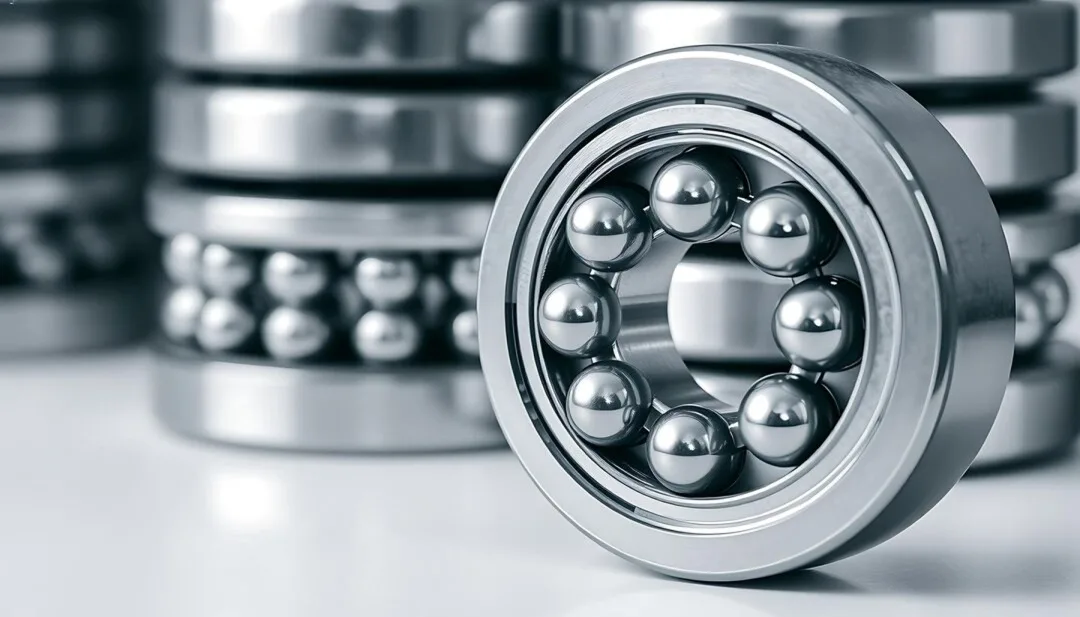
Bearings play an important role in these systems by supporting rotating shafts and helping maintain alignment between moving components. Their operating characteristics can influence friction, vibration, temperature, and mechanical reliability. For this reason, bearing selection is an important consideration in the design of electric vehicle motors.
The Function of Bearings in Electric Motors
An electric motor relies on a rotor that rotates within a stationary assembly. Bearings support the rotor shaft and help it rotate while maintaining the required position and alignment.
The conditions experienced by electric motor bearings depend on the motor's design and intended use. Some applications involve high rotational speeds, changing loads, and variations in operating temperature. Bearings must be suitable for these conditions while remaining within their specified operating limits.
Selecting a suitable bearing requires more than checking its dimensions. Engineers also consider load capacity, speed capability, internal clearance, lubrication, and mounting arrangements.
Why High-Speed Bearing Performance Matters
High-speed bearings are designed for applications in which rotational speed is an important operating factor. Their suitability for electric vehicle motors depends on how their design interacts with the actual operating environment.
Managing Friction and Mechanical Losses
Friction occurs as bearing components move relative to one another. The amount of friction depends on the bearing design, applied load, lubricant properties, and rotational speed.
Appropriate bearing selection and lubrication can help control mechanical losses. However, the overall efficiency of an electric vehicle motor also depends on electrical components, cooling systems, and drivetrain design.
Controlling Operating Temperature
Temperature management is important in high-speed applications. Heat can develop within the bearing due to friction, while heat generated by the motor may also affect nearby components.
Excessive temperatures can influence lubricant performance and bearing operating clearance. Engineers should therefore consider thermal expansion, shaft and housing fits, cooling arrangements, and lubricant suitability when selecting bearings for electric motors.
Maintaining Smooth Rotation
Bearing condition can affect the noise and vibration produced by rotating machinery. Incorrect mounting, contamination, misalignment, or unsuitable lubrication may contribute to abnormal operating conditions.
Choosing bearings that meet the required specifications and following appropriate installation procedures can help maintain stable rotation and reduce avoidable wear.
Key Considerations for Electric Motor Bearing Selection
Different electric motor designs have different bearing requirements. A careful assessment of the application helps engineers identify an appropriate solution.
- Operating speed: Verify that the bearing is suitable for the required speed under the intended loading and lubrication conditions.
- Load requirements: Evaluate radial and axial loads, including changes during acceleration and deceleration.
- Lubrication: Consider lubricant type, viscosity, quantity, and delivery method.
- Internal clearance: Account for mounting conditions and thermal expansion when determining the required operating clearance.
- Precision: Match bearing tolerances to the motor's design and performance requirements.
- Environmental protection: Assess the risk of contamination and whether seals or shields are appropriate.
- Electrical conditions: Where relevant, evaluate the risk of electrical current passing through the bearing and causing surface damage.
These factors should be considered together rather than treating any one specification as the sole basis for selection.
The Importance of Bearing Quality in Manufacturing
Consistent component quality is important for manufacturers that produce electric motors at scale. Differences in bearing dimensions, tolerances, or product specifications can affect assembly and operating performance.
Original equipment manufacturers (OEMs) typically need components that meet established technical requirements across production batches. Evaluating bearing documentation, dimensional accuracy, application suitability, and supplier consistency can help purchasing and engineering teams make informed decisions.
Clear communication between the motor manufacturer and bearing supplier is also useful when an application has specific speed, load, or temperature requirements.
Practices That Help Extend Bearing Service Life
Bearing reliability depends on more than the product itself. Storage, handling, installation, lubrication, and operating conditions all influence service life.
Bearings should be protected from dust and moisture before installation. Correct mounting methods help prevent damage to raceways and rolling elements. Lubricants should be compatible with the application and used in the recommended quantity.
During operation, unusual noise, vibration, or temperature changes should be investigated. These signs may indicate a lubrication problem, contamination, misalignment, or developing wear. Timely inspection can help identify issues before they cause more extensive damage.
Conclusion
High-speed bearings contribute to electric motor reliability by supporting rotating shafts and influencing friction, temperature, vibration, and operating stability. Their performance depends on suitable design, lubrication, load conditions, internal clearance, and correct installation.
For engineers and manufacturers, understanding these factors helps guide bearing selection for electric vehicle motor applications. A well-matched bearing, combined with appropriate handling and maintenance, can support dependable operation within the intended design limits.