
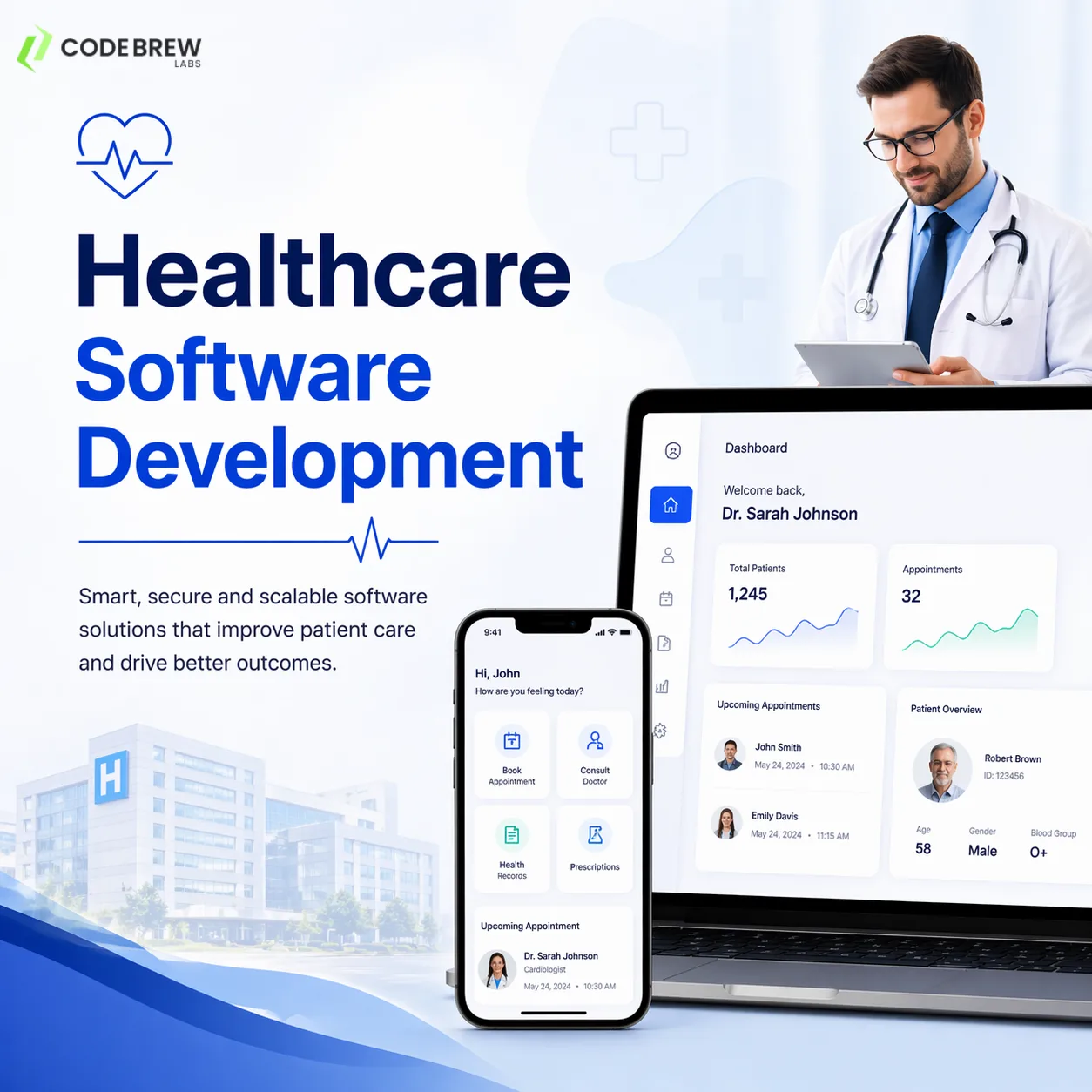
The medical industry is in the middle of a profound transformation. What once relied heavily on paperwork, manual processes, and in-person interactions is now evolving into a highly connected, data-driven ecosystem. At the heart of this change is healthcare software development—powering everything from hospital management systems to AI-driven diagnostics and remote patient care.
In 2026, healthcare software is no longer just a support tool—it’s a strategic driver of innovation, efficiency, and improved patient outcomes. In this blog, we explore how healthcare software development is revolutionizing the medical industry and shaping the future of care delivery.
The Digital Shift in Healthcare
Healthcare systems worldwide are embracing digital solutions to overcome long-standing challenges such as:
- Inefficient workflows
- Limited accessibility
- Rising operational costs
- Fragmented patient data
- Increasing demand for personalized care
Healthcare software bridges these gaps by enabling seamless communication, automation, and intelligent decision-making.
Key Ways Healthcare Software Is Transforming the Industry
1. Improving Patient Care and Experience
Modern healthcare software puts patients at the center of care.
With features like:
- Online appointment scheduling
- Teleconsultations
- Digital prescriptions
- Patient portals
Patients now enjoy convenient, faster, and more transparent healthcare services.
Personalized dashboards, reminders, and real-time updates enhance engagement and satisfaction.
2. Enabling Telemedicine and Remote Care
One of the biggest revolutions in healthcare is the rise of telemedicine.
Healthcare software enables:
- Virtual doctor consultations
- Remote diagnosis
- Continuous patient monitoring
- Digital follow-ups
This has made healthcare more accessible, especially for people in remote or underserved areas.
3. Streamlining Hospital Operations
Hospitals and clinics are complex environments with multiple workflows.
Healthcare software helps streamline operations through:
- Hospital Management Systems (HMS)
- Electronic Health Records (EHR)
- Automated billing and invoicing
- Staff and resource management
This reduces administrative burden and improves overall efficiency.
4. Powering Data-Driven Decision Making
Healthcare generates massive amounts of data every day.
Advanced software solutions use:
- Big data analytics
- AI algorithms
- Predictive modeling
to provide actionable insights for:
- Early disease detection
- Treatment planning
- Population health management
This leads to better clinical decisions and improved patient outcomes.
5. Enhancing Data Security and Compliance
Patient data is highly sensitive, making security a top priority.
Healthcare software incorporates:
- End-to-end encryption
- Secure data storage
- Role-based access control
- Compliance with regulations like HIPAA and GDPR
These measures ensure data privacy and build trust among users.
6. Supporting Wearables and IoT Integration
Healthcare software integrates with wearable devices and IoT systems to enable real-time monitoring.
This includes:
- Heart rate tracking
- Blood pressure monitoring
- Glucose level tracking
Doctors can access real-time data and intervene when necessary, shifting healthcare from reactive to proactive.
7. Accelerating Diagnosis with AI
Artificial Intelligence is transforming diagnostics.
Healthcare software uses AI for:
- Medical imaging analysis
- Symptom checking
- Risk prediction
AI-powered tools can detect diseases earlier and with greater accuracy, supporting healthcare professionals in making informed decisions.
8. Enabling Personalized Medicine
Every patient is different, and healthcare software is making personalized treatment possible.
By analyzing:
- Medical history
- Genetic data
- Lifestyle patterns
Software can recommend tailored treatment plans and medications.
9. Improving Collaboration Across Healthcare Systems
Healthcare software enables seamless communication between:
- Doctors
- Nurses
- Specialists
- Laboratories
- Pharmacies
Interoperability ensures that patient data is shared securely and efficiently, improving coordination and reducing errors.
10. Reducing Costs and Increasing Efficiency
Healthcare software reduces operational costs by:
- Automating repetitive tasks
- Minimizing paperwork
- Reducing hospital visits through remote care
- Optimizing resource utilization
This leads to more efficient healthcare systems and better resource allocation.
Benefits for Healthcare Providers and Patients
For Healthcare Providers:
- Improved workflow efficiency
- Better patient data management
- Faster decision-making
- Reduced administrative workload
For Patients:
- Convenient access to healthcare services
- Personalized treatment plans
- Improved communication with doctors
- Better health outcomes
Challenges in Healthcare Software Development
Despite its benefits, healthcare software development comes with challenges:
- Regulatory compliance requirements
- Data privacy concerns
- Integration with legacy systems
- High development costs
- User adoption barriers
Overcoming these challenges requires careful planning, expertise, and the right technology partner.
Future of Healthcare Software Development
The future of healthcare software is incredibly promising.
Emerging trends include:
- AI-driven predictive healthcare
- Blockchain for secure data sharing
- Advanced telehealth platforms
- Voice-enabled healthcare solutions
- Fully connected digital health ecosystems
Healthcare software will continue to evolve, making care more accessible, efficient, and personalized.
Conclusion
Healthcare software development is transforming the medical industry by changing how care is delivered, managed, and experienced. These software solutions are enhancing patient engagement, enabling advanced diagnostics, and reducing operational costs, marking the beginning of a new era in digital healthcare.
For businesses and healthcare providers, investing in the right healthcare software has become essential for maintaining competitiveness and delivering high-quality care. As technology continues to advance, the impact of healthcare software will only grow stronger, leading to a smarter and more connected future for the medical industry.
Partnering with Code Brew Labs can help you leverage cutting-edge technologies to build secure, scalable, and innovative healthcare software solutions tailored to your business needs.