
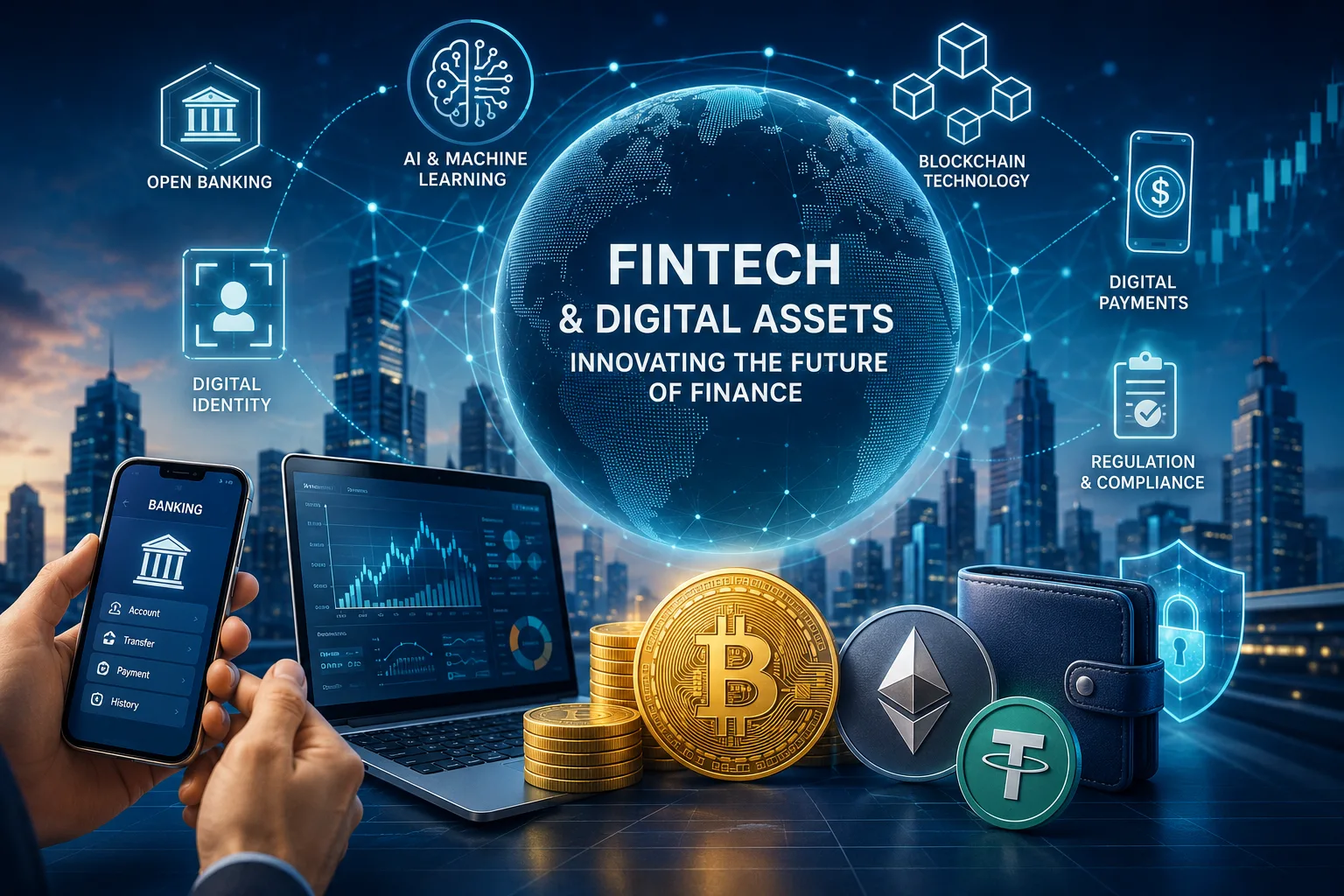
The financial industry is undergoing one of its most significant transformations in decades. Traditional banking, payments, investing, lending, insurance, and wealth management are increasingly being influenced by artificial intelligence, blockchain, automation, open banking, digital identity, and digital assets. As these technologies mature, consumers and businesses have access to financial products that are faster, more accessible, and increasingly personalized.
However, innovation also introduces new challenges. The rapid growth of financial technology has created complex questions around cybersecurity, regulatory compliance, consumer protection, fraud prevention, data privacy, and platform transparency. Digital assets bring additional considerations involving custody, market volatility, tokenization, stablecoins, and blockchain infrastructure.
Understanding these developments requires more than following headlines or promotional claims. It requires independent research, critical thinking, and reliable financial education. This is where Fintvia provides valuable context by examining fintech companies, financial technologies, digital assets, fraud risks, regulatory developments, and emerging trends through an analytical and educational approach. The platform's current coverage includes fintech investigations, regulatory data, complaints, corporate records, digital identity, fraud prevention, and crypto-related analysis.
The Evolution of Modern Fintech
Fintech has moved far beyond the idea of simply putting traditional banking services into a mobile application. Modern financial technology combines software, data analytics, artificial intelligence, cloud infrastructure, automation, and digital identity to create entirely new financial experiences.
Mobile banking applications allow consumers to manage accounts remotely. Digital payment systems enable near-instant transactions. Automated investment services can help users manage portfolios. Businesses can use embedded financial services to integrate payments, lending, insurance, and banking features directly into their platforms.
For financial institutions, technology can also improve operational efficiency. Automated compliance systems, identity verification platforms, fraud monitoring tools, and transaction analytics can reduce manual processes while helping organizations identify suspicious behavior.
This transformation creates opportunities, but technology alone does not guarantee that a financial product is trustworthy. Users must understand who operates a platform, how customer funds are handled, what regulatory framework applies, and how personal information is protected.
Why Independent Fintech Analysis Matters
The increasing number of financial applications and technology providers makes it difficult for consumers to distinguish useful services from risky platforms.
A professional-looking website, attractive mobile application, or aggressive advertising campaign does not automatically establish credibility. Users should investigate a company's corporate information, regulatory status, business model, customer feedback, terms, fees, and security practices.
Independent analysis can help separate marketing claims from verifiable information. Fintvia emphasizes this type of research by examining fintech brands, potential scams, regulatory information, complaints, corporate records, and technology providers. Its educational material also focuses on helping readers understand how financial misinformation and modern fintech scams operate.
This approach is increasingly important because financial fraud is becoming more sophisticated. Scammers can use artificial intelligence, social engineering, fake applications, impersonation, deepfakes, and fabricated investment opportunities to create an appearance of legitimacy.
Artificial Intelligence Is Changing Financial Services
Artificial intelligence is becoming a major component of financial technology.
Banks and fintech companies can use machine learning for fraud detection, customer service, credit assessment, identity verification, risk monitoring, and transaction analysis. AI systems can process large amounts of information and identify patterns that might be difficult for human analysts to detect manually.
Digital identity providers demonstrate how this technology can be applied. Platforms such as Socure use predictive analytics, identity intelligence, document verification, fraud detection, and other signals to support financial organizations during onboarding and risk assessment.
AI can also improve customer experiences by providing automated support and personalized financial insights. However, organizations must consider the risks associated with inaccurate models, biased data, privacy concerns, and automated decision-making.
For consumers, the rise of AI creates another challenge: fraudulent platforms can use the word "AI" as a marketing tool without providing meaningful technological capabilities. Claims about guaranteed profits from AI trading systems should therefore be treated cautiously. Legitimate technology can improve analysis or automation, but it cannot eliminate market risk or guarantee investment returns.
Digital Assets and the New Financial Infrastructure
Digital assets are another major component of financial innovation. Cryptocurrencies, stablecoins, tokenized assets, and blockchain-based financial applications are creating new ways to represent, transfer, and manage value.
Blockchain technology allows transactions and ownership records to be maintained through decentralized or distributed systems. This can create opportunities for faster settlement, programmable financial products, decentralized applications, and tokenization.
Tokenization is particularly interesting because traditional assets can potentially be represented digitally on blockchain networks. Real estate, securities, commodities, and other assets may be incorporated into digital financial infrastructure under appropriate legal and regulatory structures.
Stablecoins also have the potential to connect traditional financial systems with blockchain networks. Because their value is generally designed to remain relatively stable compared with volatile cryptocurrencies, they can be used for payments, settlement, and digital transactions.
Nevertheless, digital assets involve substantial risks. Market volatility, cybersecurity threats, custody issues, regulatory uncertainty, fraudulent projects, and misleading investment promotions can expose users to financial losses.
The Importance of Regulation and Compliance
Financial innovation cannot be separated from regulation.
As fintech and digital assets become more integrated into mainstream finance, regulators are increasingly focused on consumer protection, anti-money-laundering requirements, financial stability, cybersecurity, and transparency.
For businesses, compliance is no longer simply an administrative responsibility. It is becoming an important component of operational infrastructure.
Know Your Customer and Know Your Business procedures can help organizations establish whether customers and businesses are genuine. Corporate identity platforms such as Middesk illustrate how technology can automate business verification and access corporate records for compliance and underwriting purposes.
Regulatory technology, commonly called RegTech, is therefore becoming increasingly important. Automated screening, transaction monitoring, identity verification, and risk analytics can help organizations meet regulatory obligations while reducing manual work.
Consumers should also understand that regulatory claims require verification. A company describing itself as "regulated" or "licensed" does not necessarily mean every product or service it provides is covered by the same regulatory protections.
Financial Education Is Becoming Essential
The complexity of modern financial technology makes financial education more important than ever.
A consumer may encounter a bank, fintech application, crypto exchange, payment provider, investment platform, digital wallet, or financial technology company and assume that all operate under similar rules. In reality, their business structures and regulatory responsibilities can be very different.
Financial education helps users ask better questions.
Before using a financial platform, consumers should consider:
- Who owns and operates the company?
- Is the business properly registered where required?
- What financial services does it actually provide?
- Where are customer funds held?
- Are fees clearly disclosed?
- What security measures are available?
- How does customer support operate?
- What happens if an account is suspended?
- What are the withdrawal or transaction conditions?
- Are investment returns being presented realistically?
These questions can help users identify warning signs before committing money or personal information.
Educational platforms such as Fintvia can play an important role by explaining these concepts in accessible language and encouraging readers to investigate financial claims rather than accepting them at face value. Its educational content specifically addresses platform verification, financial red flags, misinformation, and fintech scam patterns.
Cybersecurity and Consumer Protection
As financial services become increasingly digital, cybersecurity becomes a core part of financial safety.
Cybercriminals can target passwords, payment credentials, personal information, cryptocurrency wallets, email accounts, and mobile devices. Phishing attacks can imitate legitimate institutions, while social engineering can manipulate users into authorizing transactions themselves.
Modern fraud can also involve fake customer support representatives, fraudulent investment advertisements, cloned websites, impersonation, and AI-generated content.
Consumers should therefore use strong authentication methods, avoid sharing security credentials, verify unexpected requests independently, and carefully examine investment opportunities before sending funds.
Financial institutions and fintech companies also have responsibilities. They must continuously improve fraud monitoring, identity verification, account security, transaction controls, and customer communication.
Fraud prevention should not be considered a one-time implementation. Threats evolve continuously, meaning financial organizations need to monitor new attack patterns and adapt their controls accordingly.
The Future of Fintech and Digital Assets
The next stage of financial innovation is likely to involve greater integration rather than isolated technologies.
Artificial intelligence may work alongside blockchain infrastructure, digital identity, open banking, cloud computing, and automated compliance systems. Financial products could become increasingly embedded into non-financial applications, allowing users to access payments, lending, insurance, or investment services without visiting a traditional financial institution.
Digital assets may also become more connected with conventional financial markets. Tokenization, stablecoins, institutional custody, and blockchain-based settlement could gradually influence how financial assets are issued and transferred.
However, adoption will depend on trust.
Consumers and institutions need confidence that financial technology providers are transparent, secure, compliant, and accountable. Technology that cannot establish trust may struggle to achieve sustainable adoption regardless of how advanced its features appear.
How Consumers Can Make Better Financial Decisions
Technology should make financial services more convenient, but convenience should never replace due diligence.
A practical research process begins with identifying the company behind a product. Users should then examine regulatory information, corporate records, product disclosures, security practices, fees, customer feedback, and potential complaints.
It is also useful to compare claims with independent evidence. Guaranteed returns, extreme urgency, unusually high rewards, requests for upfront payments, and pressure to transfer funds quickly are important warning signs.
Consumers should avoid making decisions solely because an influencer, advertisement, social media account, or online review recommends a particular platform.
A balanced approach combines independent research with official information and careful risk assessment.
Conclusion
Fintech and digital assets are reshaping the financial ecosystem by introducing faster payments, automated services, artificial intelligence, blockchain infrastructure, digital identity, tokenization, and new approaches to financial management. These technologies can create significant opportunities for consumers and businesses, but they also introduce new forms of fraud, operational risk, cybersecurity threats, and regulatory complexity.
The future of finance will therefore depend not only on technological innovation but also on transparency, accountability, education, and informed decision-making. Users need reliable information to understand what financial platforms actually do and whether their claims can be supported by evidence.
By combining fintech research, digital asset analysis, fraud awareness, regulatory information, and financial education, Fintvia helps readers approach the rapidly changing financial landscape with greater awareness. In an environment where technology continues to evolve, informed decision-making remains one of the strongest tools consumers have for navigating modern finance responsibly.