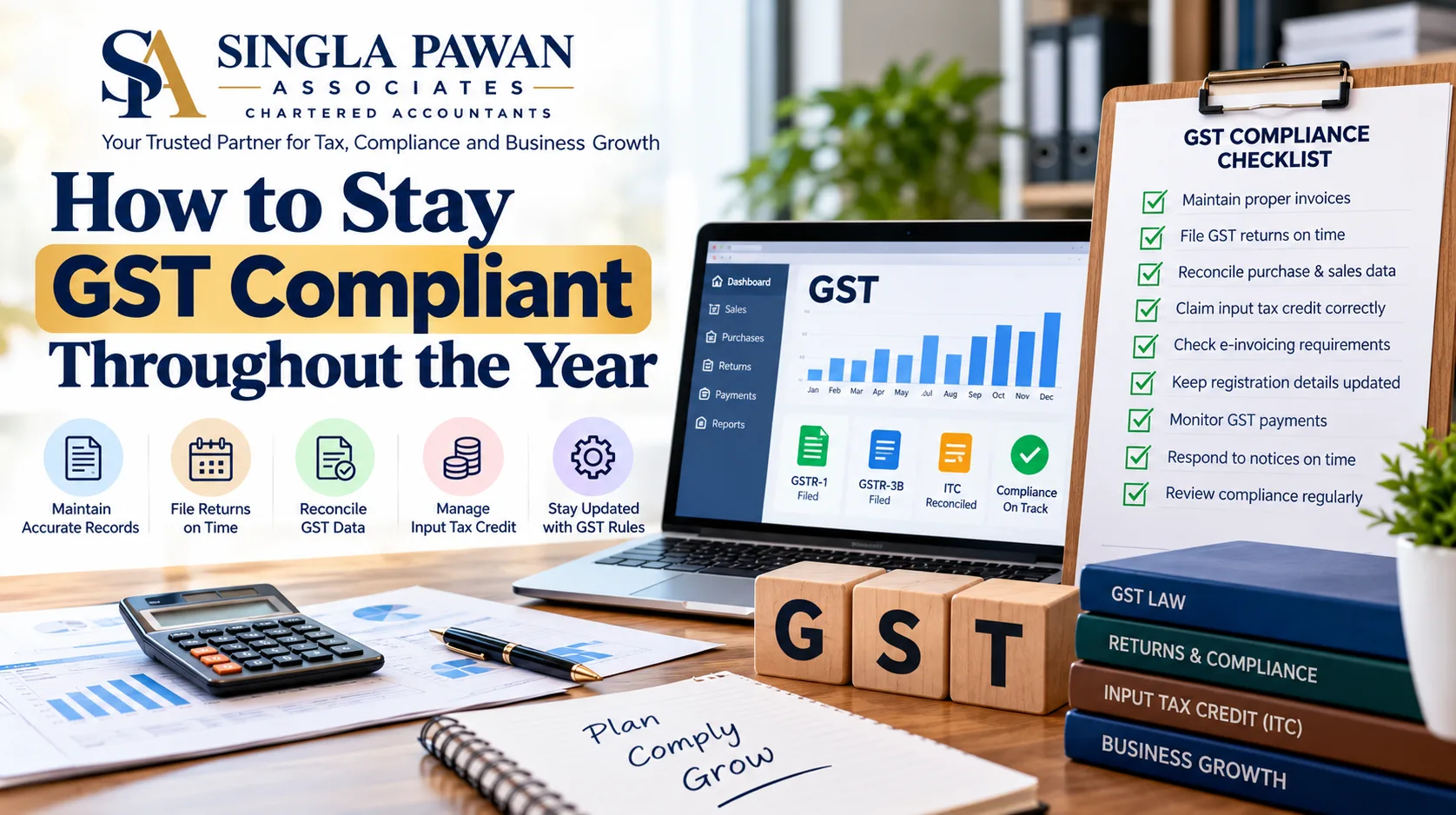
Managing GST compliance can sometimes feel like a full-time job for business owners. From filing returns and maintaining invoices to tracking payments and reconciling records, there are several responsibilities that need regular attention. Missing a deadline or making a small mistake can lead to additional costs, notices, or unnecessary stress.
The good news is that GST compliance becomes much easier when you follow a proper routine throughout the year. Whether you run a small business, a startup, or an established company, a few simple practices can help you manage your GST responsibilities more efficiently.
In this article, Singla Pawan Associates shares practical tips to help businesses stay GST compliant throughout the year.
1. Maintain Accurate Sales and Purchase Records
One of the most important parts of GST compliance is maintaining accurate financial records. Every business should record its sales, purchases, expenses, and GST collected or paid on time.
Avoid waiting until the end of the month to organize all your invoices. When records are updated regularly, it becomes easier to prepare GST returns filing and identify errors before filing.
Make sure your invoices contain the required details, including GSTIN, invoice number, date, taxable value, and applicable tax rates. Keep separate records for different types of transactions wherever necessary.
Proper recordkeeping also helps business owners understand their cash flow and prepare for future tax payments.
2. Follow the GST Return Filing Schedule
Filing GST returns on time is an essential responsibility for registered businesses. The applicable forms and due dates depend on your registration type, turnover, filing frequency, and the nature of your transactions.
For example, many regular taxpayers file GSTR-1 to report outward supplies and GSTR-3B to report summary details and discharge their tax liability. Eligible taxpayers under the QRMP scheme may follow a different reporting schedule.
Create a compliance calendar that includes your applicable return filing dates, tax payment deadlines, and other GST-related obligations. Set reminders a few days before each deadline rather than waiting until the last moment.
Even when business activity is low or there are no transactions, check whether a return or other filing is still required for your registration.
3. Reconcile Your GST Records Every Month
Reconciliation means comparing your business records with the information available on the GST portal. This process helps identify differences that could otherwise create problems during return filing.
Compare your sales register with the details reported in GSTR-1 and your relevant purchase records with information available through GSTR-2B.
Check for common issues such as:
- Missing or duplicate invoices
- Incorrect GSTIN details
- Differences in taxable values
- Incorrect tax rates
- Credit notes or debit notes that have not been recorded
- Purchases where supplier reporting is incomplete
Resolving these differences regularly is much easier than correcting several months of records at once. It also helps you review your eligibility for input tax credit (ITC) under the applicable GST rules.
4. Claim Input Tax Credit Carefully
Input tax credit allows eligible businesses to claim credit for GST paid on qualifying business purchases, subject to the conditions under GST law. Properly managing ITC can help prevent unnecessary tax costs.
However, businesses should not claim every amount simply because GST appears on a purchase invoice. Check the eligibility of the expense, the supporting documents, the relevant supplier reporting requirements, and other applicable conditions.
Certain purchases may be restricted or blocked under GST provisions. Therefore, review your purchase invoices and GSTR-2B before claiming credit.
If you identify an incorrect or ineligible ITC claim, consult a GST professional about the appropriate correction process.
5. Check Your GST Invoices and E-Invoicing Requirements
Incorrect invoices can create difficulties for both the business issuing them and the customer receiving them. Review your invoicing process to ensure that the required details are included and the correct GST treatment is applied.
Businesses should also check whether e-invoicing requirements apply to them based on the latest turnover thresholds and other applicable rules. Where e-invoicing is mandatory, the required invoice registration process must be followed.
Similarly, check whether e-way bills are required for the movement of goods in your transactions.
These requirements may vary according to the transaction type and applicable exemptions. Regular reviews can help prevent avoidable compliance issues.
6. Keep Your GST Registration Details Updated
Businesses sometimes change their address, contact information, business activities, or authorized signatories. If these changes affect the details recorded on the GST portal, the required amendment should be completed within the prescribed time.
Review your GST registration details periodically, including your business address, email address, mobile number, bank details, and other relevant information.
If your business expands into another state or its activities change significantly, check whether additional GST registrations or other compliance steps are required.
Keeping registration information current helps ensure that important communications and notices reach the right person.
7. Monitor GST Payments and Cash Flow
GST compliance is not limited to submitting returns. Businesses must also ensure that the applicable tax liability is paid correctly and on time.
Review your GST liability before the due date and maintain sufficient funds for tax payments. Reconcile the amounts reported in your returns with the payments made through the GST portal.
Keep copies of payment challans and relevant records for future reference. If you notice an outstanding liability or an incorrect payment, address the issue promptly rather than allowing it to remain unresolved.
Good cash flow planning is especially important for businesses with seasonal sales, delayed customer payments, or large purchase commitments.
8. Review GST Notices and Portal Updates Regularly
Ignoring a GST notice can turn a small issue into a bigger compliance problem. Assign responsibility to a specific person to check the GST portal and monitor official communications.
If a notice or discrepancy is received, review the issue carefully, collect the relevant documents, and respond within the prescribed time.
Do not assume that every notice indicates a major violation. Some communications may relate to differences in records, missing information, or requests for clarification. A timely and accurate response can help resolve such matters more efficiently.
For complicated cases, professional guidance may be useful before submitting a reply.
9. Use Accounting Software or Professional Support
Managing GST manually can become difficult as the number of invoices and transactions increases. Accounting software can help organize records, calculate tax amounts, track payments, and prepare information for return filing.
However, software alone does not guarantee compliance. Your team still needs to enter accurate information, review reports, and stay informed about changes in GST rules.
If you do not have an in-house accounts team, working with an experienced Chartered Accountant or GST consultant can help you manage recurring compliance tasks and address complicated transactions.
10. Conduct a Quarterly GST Review
Along with monthly activities, conduct a broader review every quarter. This gives you an opportunity to identify recurring errors and improve your compliance process.
During the review, check whether returns have been filed, tax liabilities have been paid, purchase and sales records have been reconciled, and outstanding notices have been addressed.
Review your input tax credit claims and examine whether your accounting records match the information reported on the GST portal.
A quarterly review can also help identify training needs for employees responsible for billing, accounting, and tax compliance.
Conclusion
Staying GST compliant throughout the year does not have to be complicated. The key is to maintain accurate records, follow the correct filing schedule, reconcile transactions regularly, review input tax credit claims, and respond promptly to notices.
Instead of treating GST as a task to complete at the end of each month, make it part of your regular business routine. This approach can reduce last-minute pressure and help you manage your financial responsibilities more confidently.
Singla Pawan Associates, a Chartered Accountancy firm in Chandigarh, provides accounting, taxation, GST compliance, auditing, and financial consultancy services. Businesses that need assistance with GST return filing, reconciliation, or other tax-related matters can consult a qualified professional for guidance based on their specific requirements.