

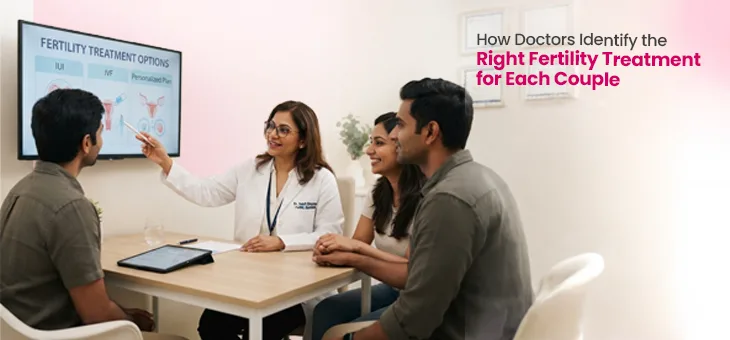
How Fertility Specialists Decide the Right Treatment Path for Couples
Fertility treatment is rarely the same for every couple. Two couples may experience a similar delay in conception but require completely different approaches depending on age, reproductive health, medical history, previous pregnancies, and fertility factors involving either partner.
This is why fertility specialists generally begin with a detailed assessment rather than recommending treatment immediately.
A consultation at a fertility hospital in Bangalore can help couples understand possible factors affecting conception and determine whether continued natural attempts, further evaluation, or fertility treatment may be appropriate.
Why Does Fertility Care Need to Be Personalised?
Infertility can have several possible contributing factors. Sometimes a specific cause is identified, while in other situations multiple reproductive or medical factors may need to be considered together.
Doctors may look at:
- Age
- How long the couple has been trying to conceive
- Menstrual and ovulation patterns
- Previous pregnancies
- Previous pregnancy losses
- Existing medical conditions
- Previous reproductive surgery
- Male fertility factors
- Previous fertility treatments
- Results from earlier fertility investigations
Because these factors differ between couples, fertility care should ideally be based on individual circumstances rather than following the same treatment pathway for everyone.
What Happens During a Fertility Evaluation?
A fertility evaluation usually begins with understanding the couple's reproductive and medical history.
The purpose is not simply to identify whether infertility is present. The evaluation helps doctors understand what may be contributing to difficulty conceiving and whether medical treatment is necessary.
Reviewing How Long the Couple Has Been Trying
Doctors usually ask how long the couple has been having regular unprotected intercourse without pregnancy.
This information is considered together with age and any known fertility concerns.
For some couples, continued natural attempts may still be reasonable. For others, further investigation may be appropriate instead of continuing to wait without understanding the possible cause.
Understanding Menstrual and Ovulation Patterns
Menstrual history can provide useful information about reproductive health.
Irregular or absent menstrual cycles may sometimes indicate that ovulation is not occurring regularly.
Depending on the woman's symptoms and medical history, the fertility specialist may recommend further assessment before deciding whether treatment is required.
Looking at Previous Pregnancies
Previous pregnancies and pregnancy losses can also provide important information.
A fertility specialist may ask whether the couple has conceived before, whether there have been recurrent pregnancy losses, and whether any previous pregnancy-related concerns could influence future fertility planning.
Why Are Both Partners Considered During Fertility Assessment?
Difficulty conceiving is not always related to one partner.
Fertility factors can involve the woman, the man, both partners, or sometimes remain unexplained even after evaluation.
For this reason, doctors may consider the reproductive health of both partners when appropriate.
An infertility diagnosis can help the fertility team understand possible contributing factors before recommending a treatment plan.
How Does Age Influence Fertility Treatment Decisions?
Age is one of several factors doctors consider when planning fertility care.
Female reproductive potential can change with age, which may influence how long a couple is advised to continue trying naturally and when further treatment may be considered.
However, age alone does not determine treatment.
Doctors may also consider:
- Ovarian reserve
- Menstrual regularity
- Existing medical conditions
- Previous pregnancies
- Previous fertility treatment
- Male fertility factors
- Other reproductive findings
The treatment decision is therefore based on the overall fertility picture.
Why Does Previous Fertility Treatment Matter?
Couples who have already undergone fertility treatment may require a different assessment from those seeking help for the first time.
A doctor may review:
- Previous fertility medicines
- Ovulation-induction cycles
- Previous IUI treatment
- Previous IVF cycles
- Previous ICSI treatment
- Response to earlier treatment
- Previous fertilisation or embryo-development outcomes
This information can help determine whether the previous treatment should be continued, modified, or replaced with another approach.
Does a Fertility Consultation Automatically Lead to Treatment?
No.
A fertility consultation does not automatically mean that a couple will need medication, IUI, IVF, or another procedure.
For some couples, the assessment may indicate that continued natural attempts are still appropriate.
Others may need additional testing or monitoring before a treatment decision is made.
The purpose of the consultation is to understand the fertility situation first and then decide what the next step should be.
What Fertility Treatment Options May Be Recommended?
Once the evaluation is complete, the fertility specialist can discuss available options based on the findings.
Possible approaches may include:
- Continued natural conception attempts
- Ovulation monitoring
- Fertility medicines
- Ovulation-related treatment
- Intrauterine insemination
- IVF
- ICSI
- Surgical treatment when medically appropriate
- Other assisted reproductive approaches based on the diagnosis
Not every couple experiencing infertility needs advanced treatment.
Couples considering fertility treatment in Bangalore can first undergo an appropriate evaluation and understand why a particular option is being recommended.
When Might Fertility Medicines Be Considered?
Fertility medicines may be recommended when doctors identify reproductive factors that could benefit from medical treatment.
For example, some treatment plans may focus on supporting or regulating ovulation.
The type of medication, dosage, and monitoring required depend on the woman's individual health and fertility findings.
Fertility medication should therefore be used under appropriate medical supervision.
When Can IUI Be Considered?
Intrauterine insemination, commonly known as IUI, is one fertility treatment option that may be considered for some couples.
Whether it is suitable depends on the fertility findings and individual circumstances.
IUI is not appropriate for every infertility diagnosis, which is why a fertility specialist generally evaluates the couple before recommending it.
When Might IVF Be Recommended?
IVF is one form of assisted reproductive treatment that may be considered when certain fertility factors are present.
Whether IVF is appropriate may depend on:
- Age
- Ovarian reserve
- Fallopian-tube factors
- Male fertility factors
- Previous fertility treatments
- Duration of infertility
- Other reproductive or medical conditions
IVF should not be viewed as the automatic first treatment for every couple experiencing difficulty conceiving.
A fertility specialist considers the complete clinical picture before recommending assisted reproductive treatment.
Where Does ICSI Fit Into Fertility Treatment?
ICSI, or Intracytoplasmic Sperm Injection, is a technique that may be used as part of assisted reproductive treatment.
During ICSI, a selected sperm is injected directly into a mature egg.
The technique may be considered in certain situations, including some male fertility concerns or previous difficulties with fertilisation.
ICSI is not required for every IVF cycle.
The decision depends on the individual fertility findings.
Can Surgery Be Part of Fertility Treatment?
In certain cases, fertility evaluation may identify a reproductive condition that requires surgical management.
Whether surgery is appropriate depends on the diagnosis, symptoms, and overall fertility plan.
It is not a routine requirement for every couple experiencing infertility.
Why Is Individualised Fertility Treatment Important?
A personalised treatment plan allows doctors to recommend care based on the couple's actual fertility factors rather than applying the same approach to everyone.
Individualised fertility care can help determine:
- Whether fertility treatment is currently necessary
- Whether natural conception attempts can continue
- Whether additional investigations are required
- Which treatment options may be appropriate
- Whether previous treatment should influence the next step
- When the treatment plan should be reviewed
Couples seeking an infertility hospital in Bangalore can discuss these factors with their fertility specialist before beginning treatment.
What Questions Should Couples Ask Before Starting Treatment?
Understanding why a treatment has been recommended can make fertility decisions clearer.
Before beginning treatment, couples may want to ask:
- What did the fertility evaluation identify?
- What may be contributing to difficulty conceiving?
- Why is this particular treatment being recommended?
- Can we continue trying naturally?
- Are there other treatment options?
- What will the recommended treatment involve?
- What monitoring will be required?
- When will the treatment plan be reviewed?
- What happens if the first approach does not work as expected?
These discussions can help couples understand their choices before moving forward.
When Should Couples Consider a Fertility Specialist?
Couples experiencing difficulty conceiving may consider discussing their situation with a fertility specialist.
In general, women below the age of 35 may consider evaluation after around 12 months of regular unprotected intercourse without pregnancy.
Women aged 35 and above may consider seeking fertility guidance after approximately six months.
Women aged 40 and above may benefit from an earlier consultation.
Earlier assessment may also be useful when there are:
- Irregular or absent menstrual cycles
- Known reproductive health conditions
- Previous pregnancy losses
- Previous pelvic or reproductive surgery
- Known male fertility concerns
- Previous fertility treatment
Seeking fertility guidance earlier does not necessarily mean treatment must begin immediately.
Can Couples Continue Trying Naturally After Evaluation?
Yes.
Depending on the results, a fertility specialist may recommend continued natural conception attempts.
For some couples, the evaluation may provide reassurance that additional time can reasonably be given.
For others, the findings may suggest that treatment or additional monitoring could be helpful.
The decision should be based on individual circumstances rather than assuming that every fertility consultation leads directly to treatment.
Why Is Clear Communication With the Fertility Team Important?
Fertility treatment can involve several medical decisions, particularly when more than one treatment option is available.
Couples should understand:
- What has been identified during evaluation
- Why treatment is being considered
- What the proposed treatment involves
- What alternatives may be available
- How progress will be monitored
- When the next decision will be made
Clear communication can help couples participate more actively in decisions about their fertility care.
How Can a Fertility Treatment Plan Change Over Time?
A fertility treatment plan is not always fixed from the beginning.
Doctors may review the plan based on how the patient responds, new investigation results, previous treatment outcomes, or changes in the couple's circumstances.
This means the treatment recommended initially may sometimes be adjusted as more information becomes available.
Personalised care involves reviewing progress rather than simply following the same approach regardless of response.
Frequently Asked Questions
Does every couple receive the same fertility treatment?
No. Fertility treatment depends on the couple's medical history, reproductive health, age, fertility evaluation, previous treatment, and other individual factors.
Does seeing a fertility specialist mean IVF will be required?
No. Depending on the findings, couples may be advised to continue trying naturally or consider monitoring, medication, IUI, IVF, ICSI, or another treatment approach.
Are both partners usually considered during fertility evaluation?
Fertility factors can involve either partner. Depending on the circumstances, doctors may evaluate relevant reproductive factors affecting both partners.
What is infertility diagnosis?
Infertility diagnosis involves evaluating possible factors that may be contributing to difficulty conceiving. This can include medical history, reproductive assessment, and other investigations recommended by the fertility specialist.
Is fertility evaluation always followed by treatment?
No. Some couples may be advised to continue trying naturally or undergo additional monitoring before treatment is considered.
Can previous IVF or IUI treatment affect the next plan?
Yes. Previous treatment and its outcome can provide useful information when a fertility specialist is deciding what approach may be considered next.
Is IVF the only assisted reproductive treatment?
No. Fertility and assisted reproductive treatment options vary according to the underlying fertility concern and individual clinical circumstances.
Making a Better-Informed Fertility Decision
Choosing fertility treatment should begin with understanding why conception may be taking longer than expected.
The goal of fertility assessment is not simply to choose between IUI, IVF, or ICSI. It is to determine whether treatment is necessary and, if so, which approach fits the couple's individual needs.
Couples can read more about how doctors choose fertility treatment for couples and discuss their own circumstances with a qualified fertility specialist.
Final Thoughts
There is no universal fertility treatment that works for every couple.
Doctors consider age, reproductive history, medical conditions, fertility findings, previous pregnancies, male fertility factors, and previous treatments before recommending the next step.
Some couples may continue trying naturally, while others may benefit from medication, IUI, IVF, ICSI, surgery, or another form of fertility care.
The most important starting point is a detailed fertility evaluation followed by a clear discussion about why a particular treatment option is being recommended.
Couples looking for a fertility hospital in Bangalore can consult Cambridge Hospital to discuss individual fertility concerns and available treatment options.
For broader information about hospital services and care, visit Cambridge Hospital.
Medical Disclaimer: This article is intended for general educational purposes only and does not replace personalised medical advice, diagnosis, or treatment from a qualified fertility specialist. Fertility investigations and treatment recommendations vary according to individual circumstances.


