Hip pain can be difficult to diagnose properly. Many patients have already had routine scans, visited their GP, or tried different treatments, yet the pain continues without a clear explanation. In many of these cases, the issue is not that imaging was done — it is that the wrong type of imaging was used.
Standard scans often focus only on the painful area and may be taken while lying down. But hip pain is frequently influenced by posture, pelvic position, spinal mechanics, and leg length all of which are best understood when the body is standing and carrying weight.
This is where EOS imaging can make a real difference. It provides a full-body, standing assessment that helps clinicians see the hidden alignment issues routine scans may miss.
Why Routine Hip Imaging Can Miss the Bigger Problem
A standard hip X-ray usually provides a flat view of the joint and may not reveal how the hip behaves during standing or walking. MRI is useful for soft tissue assessment, but it does not show full-body skeletal alignment under natural load.
Hip pain is often affected by:
- Pelvic tilt
- Postural imbalance
- Spinopelvic alignment
- Leg length discrepancy
- Hip dysplasia
- Lower back compensation
If these factors are not measured properly, patients may continue to experience pain even after normal-looking scan results.
What Is EOS Imaging for Hip Pain?
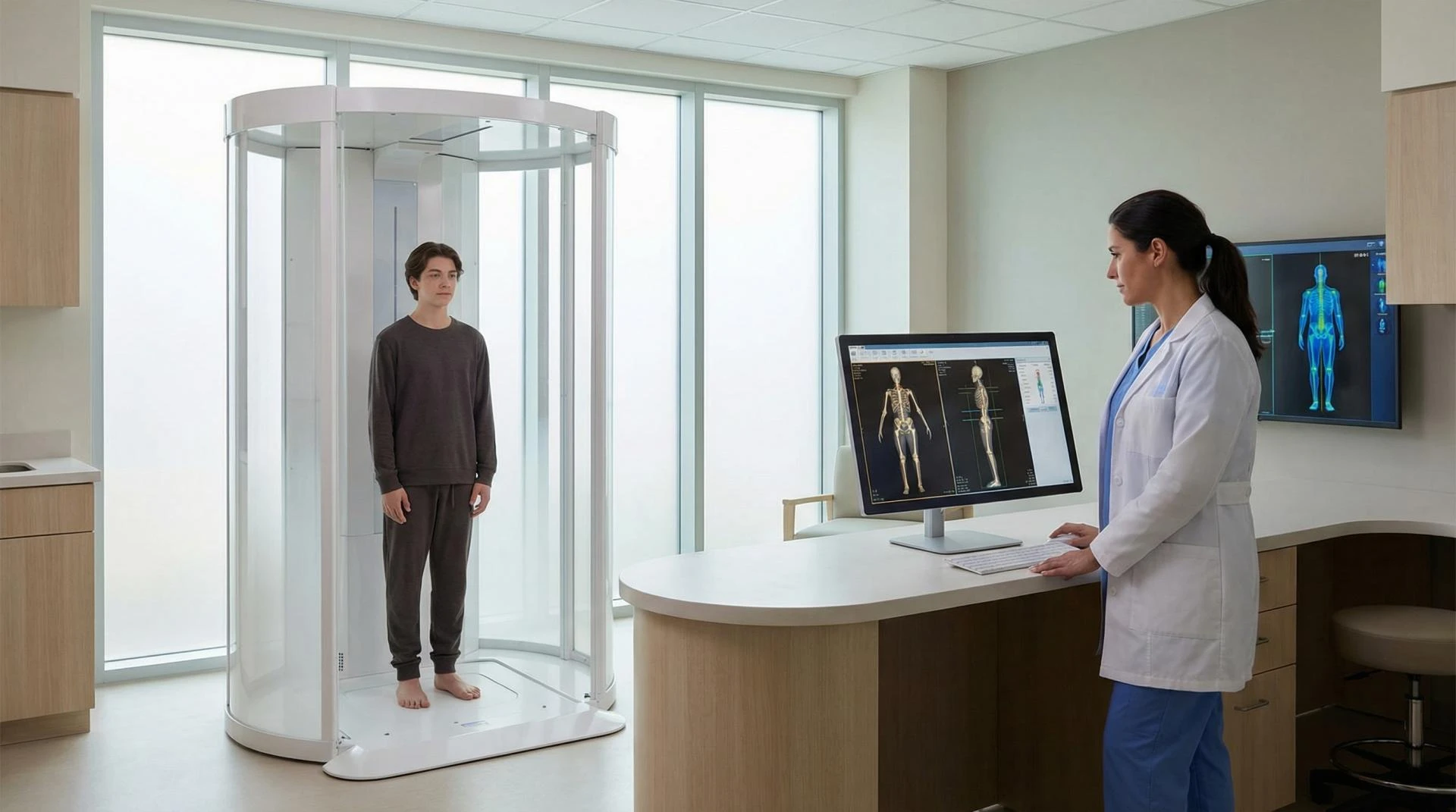
EOS imaging is a low-dose standing scan that captures simultaneous front and side images of the full skeleton. Because it images the body while upright, it shows how the spine, pelvis, hips, knees, and legs work together under real-life conditions.
This makes EOS particularly useful in patients whose hip pain is linked to alignment rather than only local joint damage.
It provides a broader understanding of how the body moves and where abnormal loading may be taking place.
How Posture and Pelvic Alignment Affect Hip Pain
The hip joint does not work in isolation. The way the body is aligned above and below the hip influences how force travels through the joint.
If the pelvis is tilted, rotated, or uneven, the hip socket may be loaded differently on one side. Over time, this can lead to pain, stiffness, gait changes, and abnormal wear.
Similarly, poor posture or spinal imbalance can shift body weight unevenly onto one hip. EOS imaging helps reveal these patterns clearly because it captures the full body in a functional standing position.
Spinopelvic Alignment and Why It Matters
Spinopelvic alignment refers to the relationship between the spine and the pelvis. Even small changes in this relationship can alter how the hip sits and moves.
When the lower spine is stiff, curved, or compensating for another problem, the pelvis may shift in response. This can overload the hip joint and contribute to pain during walking, standing, or activity.
EOS is especially useful here because it can show the entire spine-to-pelvis-to-hip chain in one image. That allows clinicians to understand not just where the pain is, but why it is happening.
Leg Length Difference and Hip Pain
Leg length discrepancy is another common but under-recognised cause of hip pain. Even a small difference can tilt the pelvis and place extra load on one hip. Over time, this may also affect gait and lower back mechanics.
EOS imaging can distinguish between:
- True leg length difference – where one leg is structurally shorter
- Functional leg length difference – caused by pelvic tilt or muscular imbalance
This distinction is important because each type requires a different treatment approach.
When EOS Imaging Is Especially Helpful for Hip Pain
EOS may be particularly valuable when:
- Hip pain continues despite normal routine scans
- Pain gets worse with standing or walking
- Pelvic tilt or posture imbalance is suspected
- Leg length difference may be contributing
- Hip dysplasia needs alignment assessment
- Pre-surgical planning is required
- Both hip and spine symptoms are present
In these cases, a full-body standing scan can reveal the alignment factors behind the symptoms.
Benefits of EOS Imaging for Hip Assessment
EOS offers several important advantages for hip pain diagnosis.
Standing Weight-Bearing Imaging
The scan reflects how the body behaves under real load, which is when many hip symptoms occur.
Low Radiation
EOS uses a low-dose imaging approach, making it suitable for repeated assessment where needed.
Full-Body Alignment View
Instead of focusing only on the hip, EOS shows the relationship between the spine, pelvis, hips, knees, and legs.
Better Pre-Surgical Planning
For patients being assessed before hip surgery, EOS provides alignment data that can support more precise planning.
Improved Diagnosis
By identifying hidden alignment problems, EOS can help explain pain that standard imaging may miss.
What to Expect from an EOS Hip Scan
During the scan, the patient stands comfortably inside the scanner while the system captures full-body images from head to toe. The process is quick, painless, and does not require the patient to lie down.
Because the scan is done in a natural standing position, the results give doctors information they can directly use for diagnosis and treatment planning.
Conclusion
Hip pain is often more complex than it first appears. The source may involve not just the hip joint itself, but also the pelvis, spine, posture, and leg length. That is why routine imaging sometimes fails to provide a clear answer.
EOS imaging offers a more complete approach by capturing the whole body in a standing, weight-bearing position. It can reveal pelvic tilt, spinopelvic imbalance, leg length discrepancy, and other alignment-related causes of hip pain that standard scans may overlook.
Find What May Be Causing Your Hip Pain
EOS imaging shows how posture, pelvic tilt, and spinal alignment affect the hips under real load.
It can uncover hidden causes of ongoing hip pain that standard scans may easily miss.
Contact ScanAlign to learn more!
FAQs
1. Is EOS better than a standard hip X-ray for hip pain?
For alignment-related hip pain, EOS is often more useful because it captures full-body standing data that a standard X-ray may miss.
2. Can EOS detect leg length difference causing hip pain?
Yes. EOS can measure leg length in a standing position and help distinguish structural differences from functional ones.
3. Is EOS useful for adult hip dysplasia assessment?
Yes. EOS can provide valuable standing alignment information for hip dysplasia evaluation and treatment planning.
4. What is the difference between EOS and CT for hip imaging?
CT provides detailed cross-sectional imaging but uses much more radiation and is taken lying down. EOS gives standing alignment data with much lower radiation.
5. Can EOS help before hip replacement surgery?
Yes. EOS can support preoperative planning by showing standing pelvic and hip alignment more accurately.