
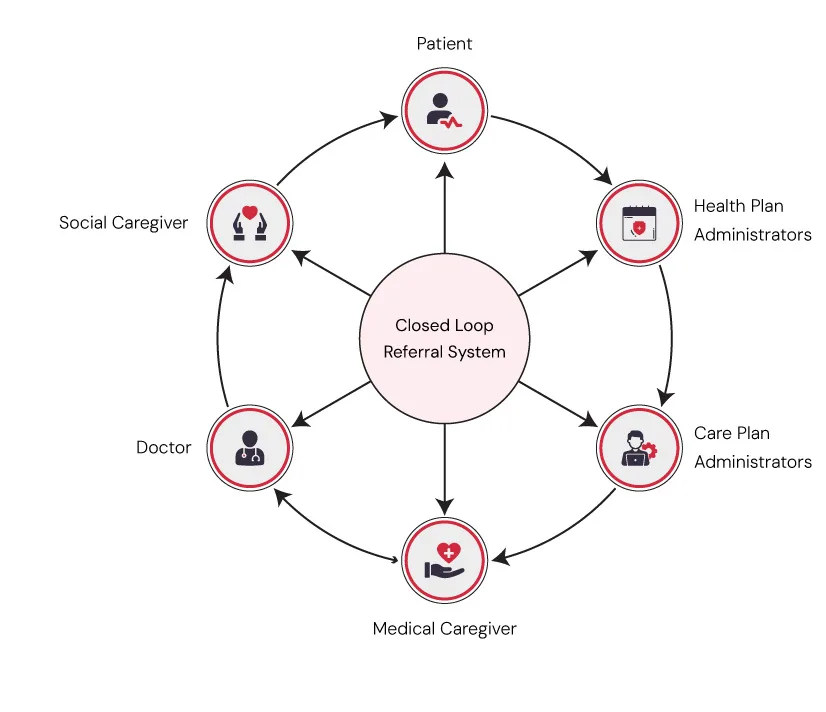
In an era where organizations are expected to deliver measurable results rather than isolated services, the Closed Loop Referral System has become a foundational element of modern coordination strategies. Community agencies, healthcare institutions, nonprofit networks, and public-sector organizations frequently encounter situations where individuals require assistance from multiple providers. Sending referrals without visibility into what happens afterward creates uncertainty and weakens accountability. A structured referral ecosystem resolves this challenge by connecting every stage of the service journey, from the original request through final resolution. The ability to verify engagement, monitor progress, and document outcomes transforms referral management into a strategic function rather than an administrative task. As organizations strive to create stronger community connections and deliver measurable impact, this model provides the operational framework necessary to ensure people receive the support they need while enabling partners to work together more effectively.
Moving Beyond Referral Handoffs
Historically, referrals functioned much like handoffs. One organization identified a need and directed an individual to another provider, often with little opportunity for follow-up communication. Although this method connected people with resources, it offered limited insight into whether assistance was actually delivered.
This lack of visibility introduced several challenges. Staff members were unable to determine if referrals resulted in appointments, enrollments, or completed services. Individuals frequently encountered barriers such as transportation difficulties, eligibility issues, scheduling conflicts, or communication gaps.
A closed-loop environment changes the dynamic entirely. Rather than ending at referral submission, the process remains active until a final outcome is recorded. This continuous oversight helps organizations ensure that service connections translate into meaningful support rather than unresolved requests.
Establishing a Shared Accountability Framework
Effective collaboration depends on mutual responsibility among participating organizations. When referral outcomes remain hidden, accountability becomes difficult to achieve because stakeholders lack access to consistent information.
A structured referral network introduces shared accountability by allowing every participant to contribute updates throughout the referral lifecycle. Organizations gain confidence knowing that requests are acknowledged, processed, and documented within a transparent environment.
This visibility encourages stronger engagement among partners. Service providers can prioritize responsiveness, referring agencies can monitor progress, and community leaders can evaluate network performance using objective data.
As accountability becomes embedded within operational workflows, organizations build stronger relationships and develop greater trust in collaborative initiatives.
Connecting Resources Across Diverse Sectors
Communities are supported by a broad range of organizations serving different purposes. Medical providers address clinical needs, while community agencies assist with housing, employment, food access, transportation, legal aid, education, and financial stability.
Without coordinated systems, these sectors often operate independently despite serving many of the same individuals. This fragmentation limits efficiency and creates unnecessary obstacles for those seeking assistance.
A connected referral infrastructure links organizations across multiple sectors, enabling seamless resource navigation. Providers can identify appropriate services quickly and coordinate support without requiring individuals to manage complex systems themselves.
This integrated approach promotes more comprehensive assistance while reducing fragmentation throughout the service landscape.
Eliminating Information Silos
One of the most significant barriers to coordinated care is the existence of information silos. Organizations often maintain separate records, communication channels, and workflows that limit visibility across the network.
A closed-loop referral strategy addresses this issue by centralizing referral activity within a unified environment. Relevant stakeholders can access referral statuses, engagement updates, and outcome information without relying on fragmented communication methods.
Breaking down silos improves collaboration while reducing duplication of effort. Organizations spend less time searching for information and more time addressing community needs.
Improved information sharing also supports faster decision-making and enhances overall service delivery effectiveness.
Strengthening Community Response Capabilities
Unexpected challenges can place significant strain on local support systems. Economic disruptions, public health concerns, housing shortages, and natural disasters often increase demand for community services.
Organizations that operate within coordinated referral networks are better positioned to respond effectively during periods of heightened need. Real-time visibility allows leaders to assess resource availability, monitor service demand, and identify emerging trends.
This responsiveness enables communities to adapt quickly while ensuring individuals receive timely assistance. Referral networks become valuable tools for managing both routine operations and large-scale response efforts.
Communities with stronger coordination capabilities often demonstrate greater resilience when facing evolving challenges.
Supporting Sustainable Organizational Growth
As organizations expand their programs and partnerships, operational complexity increases. Referral volumes rise, stakeholder networks grow, and reporting requirements become more demanding.
Manual processes that may have been manageable at smaller scales often become difficult to sustain. Staff members can spend excessive amounts of time tracking referrals, following up with partners, and compiling reports.
A technology-enabled referral framework supports sustainable growth by automating workflows and standardizing processes. Organizations can increase capacity without proportionally increasing administrative workloads.
This scalability allows providers to focus resources on mission-driven activities while maintaining high levels of operational efficiency.
Improving Visibility Into Community Needs
Every referral contains valuable information about the challenges individuals face within a community. When analyzed collectively, referral data reveals important patterns regarding service demand and resource utilization.
A closed-loop system captures these insights automatically. Organizations can identify which services are most frequently requested, where unmet needs exist, and how referral outcomes vary across populations.
This visibility supports strategic planning by helping leaders allocate resources more effectively. Rather than relying on assumptions, organizations can use evidence-based insights to guide investments and program development.
Understanding community needs at a deeper level enables more targeted and impactful interventions.
Encouraging Data-Informed Collaboration
Collaboration becomes more productive when decisions are supported by reliable information. Referral analytics provide a common foundation that partners can use to evaluate performance and identify opportunities for improvement.
Organizations can examine referral acceptance rates, completion timelines, engagement patterns, and outcome measures. These metrics create opportunities for collaborative problem-solving and continuous optimization.
Data-informed partnerships are often more effective because stakeholders can align efforts around measurable objectives rather than anecdotal observations.
This analytical approach strengthens network performance while fostering a culture of learning and improvement.
Creating More Positive Service Experiences
Individuals seeking assistance often encounter stressful circumstances. Navigating multiple organizations independently can add complexity to already challenging situations.
Coordinated referral processes help simplify the experience by reducing unnecessary repetition and improving communication among providers. Individuals benefit from clearer pathways to assistance and greater continuity throughout their service journey.
When organizations work together effectively, people spend less time searching for help and more time receiving support. Improved experiences can also increase engagement, satisfaction, and long-term outcomes.
A person-centered approach remains one of the most valuable benefits of connected referral ecosystems.
The Strategic Value of Outcome Verification
Organizations increasingly need evidence demonstrating that programs generate meaningful results. Outcome verification provides this evidence by documenting what happens after referrals are made.
Instead of measuring activity alone, organizations can assess whether services were delivered, barriers were addressed, and needs were resolved. This deeper level of insight supports stronger evaluation frameworks and more accurate reporting.
Outcome verification also helps identify opportunities for improvement. If referrals consistently fail to reach completion, organizations can investigate underlying causes and implement corrective measures.
By focusing on outcomes rather than outputs, referral networks contribute to more effective and accountable service delivery.
Conclusion
A Closed Loop Referral System represents a significant advancement in how organizations coordinate support, manage partnerships, and measure impact. Through enhanced visibility, shared accountability, integrated communication, and outcome verification, communities gain the tools needed to create stronger service ecosystems.
As healthcare providers, nonprofit organizations, and social service agencies continue pursuing more collaborative approaches, structured referral networks will play an increasingly important role in driving meaningful results. By connecting resources, eliminating barriers, and ensuring every referral reaches a documented conclusion, organizations can build more responsive systems that improve lives and strengthen communities.