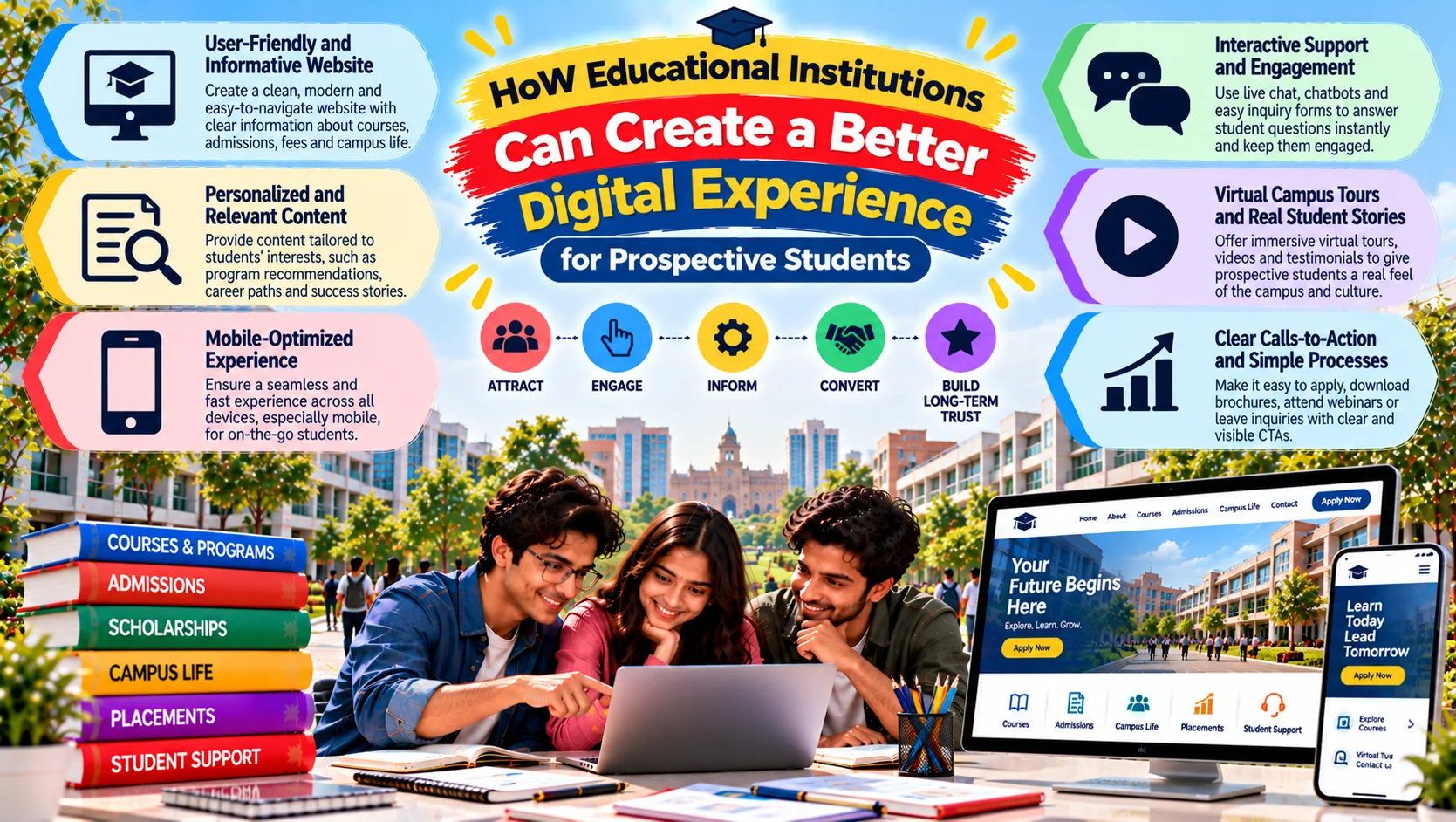
Choosing an educational institution involves many questions. Students and parents may want to understand course options, compare facilities, check eligibility, explore campus life, and learn how to apply. A well-planned website can help them find answers without unnecessary effort.
For this reason, UI UX design for educational websites should be treated as an important part of an institution's digital experience, not just a visual design exercise.
Put Useful Information First
A website should answer common visitor questions clearly. Course details, admission steps, important dates, contact information, and frequently asked questions should be easy to find.
Institutions should avoid hiding essential details behind complicated menus or using vague headings that do not explain what a page contains.
Make Every Page Work on Mobile
Prospective students may visit websites while travelling, browsing social media, or comparing options on their phones. Responsive layouts, readable content, accessible buttons, and simple forms help them complete tasks across devices.
Regular testing is important because a page that appears organised on a desktop may be difficult to navigate on a smaller screen.
Make the Next Step Clear
Not every visitor is ready to apply immediately. Some may want to download a prospectus, ask a question, book a campus visit, or speak with an admission counsellor.
Offering relevant next steps allows visitors to engage at their own pace. Forms should be easy to complete, and confirmation messages should explain what happens after submission.
Build a Consistent Marketing Journey
Digital marketing for educational institutions can introduce prospective students to a college or school through search results, advertisements, social media, and useful content.
The website should follow through on the promise made by each campaign. A page promoted for a specific programme should provide details about that programme, while a campaign about campus life should direct visitors to relevant experiences and facilities.
This consistency helps visitors understand what the institution offers.
Measure What Visitors Actually Do
Institutions can review more than total website traffic. Useful measures include course-page engagement, enquiry form completion, prospectus downloads, campus visit requests, and the proportion of enquiries that progress to later stages.
These measurements can help identify where visitors struggle and where the website needs improvement.
Finding an Education-Focused UI/UX Agency
When searching for the best UI UX design agency in India for education institutes, institutions should look for a team that combines design skills with an understanding of education-sector audiences.
Ask potential agencies how they research student needs, organise complex course information, test mobile usability, and measure results after launch. A strong process should include ongoing evaluation rather than treating the website as a one-time project.
Conclusion
A better digital experience helps students and parents explore educational opportunities with greater confidence. Clear information, responsive design, simple enquiry options, and consistent marketing messages can all contribute to a more useful website.
Educational institutions that regularly review their digital experience are better placed to respond to changing visitor needs and make their online communication more effective.