The use of environmentally friendly pumping systems is transforming the way in which cities handle water. The municipal projects worldwide are shifting towards energy-efficient and environmentally friendly solutions. Not only are these systems saving energy expenditures, but they are also assisting in achieving the world's objective of sustainable water management.
The International Energy Agency estimates that pumping systems consume almost 20 percent of all electrical power consumed in the world. The municipalities will cut down on 40 percent of energy when it is changed to environmentally friendly pumping systems. This is a significant difference in terms of cost savings and reduction of carbon.
In modern times, with the growing level of water demand caused by the growth of the population, cities are introducing smart pumps, systems powered by renewable energy, and AI-powered monitoring devices. These assist in cutting wastes, enhancing water quality, and improving long-term performance.
The Role of Eco-Friendly Pumping Systems in Modern Infrastructure
Why Traditional Pumping Systems Need an Upgrade
The conventional pumping systems are very consumptive of electricity and usually use fossil fuels. They are in need of frequent maintenance, and the mechanical design of the same has not been made to be energy efficient. The result of this is an increase in the cost of operation and environmental effects.
Cities that still utilise these systems experience high utility bills and emissions. Such concerns can be addressed by replacing the aged models with more eco-friendly pumping systems, which are better designed, use smarter controls, and can use renewable sources of power.
Real-World Example:
High-efficiency pumps were used to upgrade the city of San Diego's water infrastructure. Consequently, it increased the efficiency of water delivery while lowering its yearly energy consumption by 25%.
Find out more about our industrial and urban energy-efficient water systems.
How Eco-Friendly Pumps Support Sustainable Water Management
Sustainable water management is the foundation of environmentally friendly pumping systems. These pumps are designed to operate consistently while using the least amount of power possible. They interface with intelligent monitoring systems that continuously measure energy consumption and water flow.
These systems are used by municipalities to minimize waste, identify leaks early, and better manage supply and demand. These pumps reduce carbon footprints even more when renewable energy sources like solar or wind are added.
Energy Efficiency Through Smart Pump Technology
Variable Frequency Drives (VFDs) for Energy Savings
Variable Frequency Drives help adjust pump speed according to demand. Instead of running at a fixed speed, VFD-equipped pumps slow down or speed up as needed. This simple change can cut energy use by 30 to 50 percent, according to the U.S. Department of Energy.
Municipal systems benefit because they no longer need to run pumps continuously at full power. The result is less wear on equipment and significant cost savings.
AI and IoT Integration for Smarter Water Systems
AI-based monitoring systems are now being used in eco-friendly pumping systems. They collect and analyze performance data, such as pressure and flow, and automatically make adjustments to maintain efficiency.
IoT sensors connected to pumps allow real-time data sharing with central systems. These tools detect potential issues early and help prevent failures. Over time, they extend the pump’s lifespan and lower maintenance costs.
Read about our smart water monitoring solutions that improve performance and reduce energy waste.
Powering Pumps with Renewable Energy
Solar-Powered Pumping Systems
Solar-powered pumps are one of the most practical, eco-friendly pumping systems for municipal use. They convert solar energy into electricity, making them ideal for locations with high sunlight exposure.
A study by the World Bank found that solar-powered water pumps can reduce greenhouse gas emissions by over 50 percent compared to diesel-powered units. They also reduce operational costs in the long term since sunlight is free.
Wind and Hybrid Power Solutions
Some municipalities are combining wind and solar power for hybrid pump systems. These setups ensure a constant power supply even when sunlight or wind is limited. Hybrid systems also allow cities to operate pumping stations in remote areas where grid electricity is unavailable.
Explore our renewable energy pump systems designed for sustainable municipal projects.
Cost Benefits of Eco-Friendly Pumping Systems
Reduced Operational and Maintenance Costs
Energy-efficient designs use fewer mechanical components, which lowers maintenance needs. Municipalities that install eco-friendly pumping systems can see operational cost reductions of up to 35 percent over ten years.
Table: Traditional vs. Eco-Friendly Pumping Systems
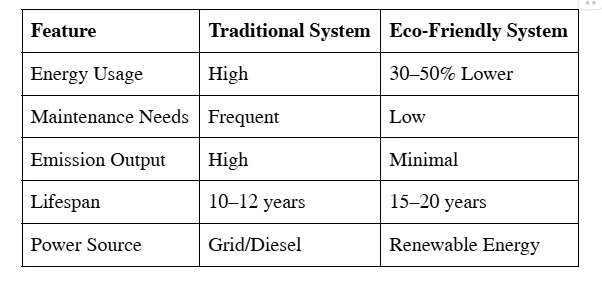
These savings make eco-friendly pumps a practical choice for municipalities trying to stretch limited budgets while achieving sustainability targets.
Government Incentives and Funding
Many governments now offer grants and tax benefits for installing sustainable infrastructure. The U.S. Environmental Protection Agency, for instance, provides financial assistance through the Clean Water State Revolving Fund to help cities upgrade to green technologies.
This financial support reduces the upfront cost barrier and encourages faster adoption of eco-friendly pumping systems.
Learn about our municipal infrastructure upgrade programs available for government clients.
Environmental and Community Impact
Reducing Carbon Footprint and Pollution
Eco-friendly pumps cut greenhouse gas emissions and reduce reliance on fossil fuels. When used on a large scale, they contribute significantly to the fight against climate change.
For instance, replacing traditional pumps in 100 municipal plants could reduce total emissions equal to removing 50,000 cars from the road annually.
Improving Water Access and Quality
Sustainable pumping systems not only save energy but also ensure a steady and clean water supply. Smart systems detect leaks and contamination quickly, helping cities maintain safer water for residents.
Communities benefit from a more reliable system that supports growth and improves public health.
Check out our water quality management solutions that integrate with eco-friendly systems.
The Future of Sustainable Pumping in Municipal Projects
AI-Driven Predictive Maintenance
The future of eco-friendly pumping systems lies in predictive maintenance. AI can analyze pump vibration, temperature, and sound data to detect potential problems before breakdowns occur. This reduces downtime and keeps systems running efficiently.
Predictive systems are already helping some cities reduce maintenance costs by up to 25 percent, improving reliability and extending equipment life.
Expanding Use of Smart Grids
Smart grids will soon connect municipal pumps directly to renewable energy networks. This allows pumps to draw power from the most efficient source available at any given time, balancing cost and sustainability.
The integration of smart grids, IoT, and AI represents the next phase of fully sustainable municipal infrastructure.
Learn how our smart grid integration services support modern water networks.
Conclusion
Eco-friendly pumping systems are leading the way toward a cleaner, more efficient future for municipal water projects. They save energy, reduce operational costs, and support global sustainability goals. Through renewable energy, smart technology, and advanced monitoring, cities can manage their water resources more effectively.
Shaw Pump and Supply continues to support municipalities with innovative, eco-friendly pumping solutions that combine performance, reliability, and sustainability.
FAQs
1. What makes a pumping system eco-friendly?
Eco-friendly systems use less energy, run on renewable power, and reduce emissions while maintaining efficient water flow.
2. How do solar-powered pumps work in municipal projects?
They use solar panels to generate electricity for the pump, reducing dependence on fossil fuels and lowering operating costs.
3. Are eco-friendly pumping systems more expensive?
While the upfront cost may be higher, the long-term savings on energy and maintenance make them more cost-effective.
4. Can smart pumps help detect leaks in water systems?
Yes. Smart sensors monitor pressure and flow to detect leaks early, preventing water loss and improving system reliability.
5. How long do eco-friendly pumping systems last?
Modern energy-efficient pumps can last between 15 to 20 years, depending on operating conditions and maintenance.