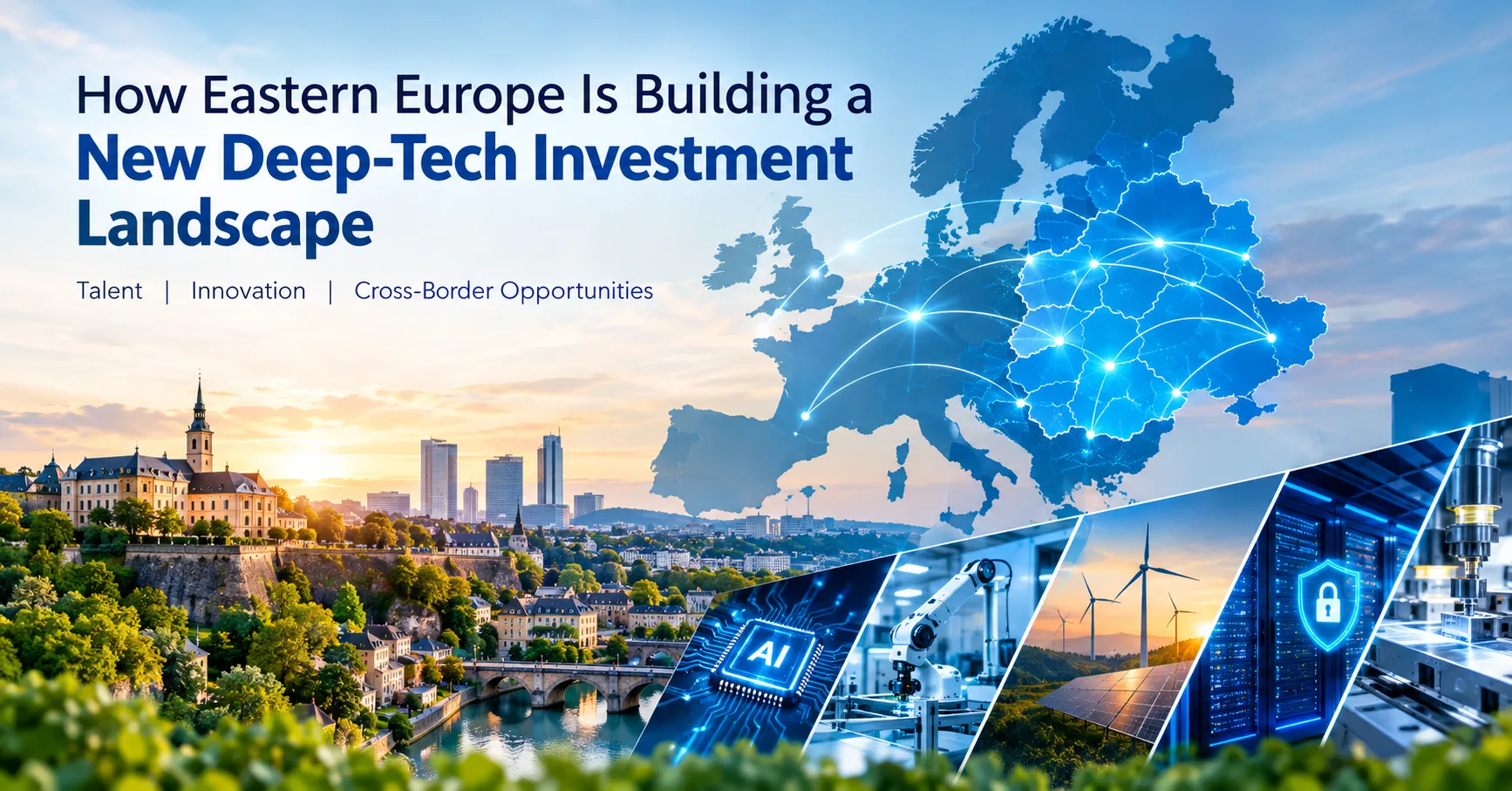
Eastern Europe is becoming an increasingly interesting part of Europe's technology landscape. For many years, attention around European technology was often concentrated on established centres in Western Europe, but the development of engineering talent, research capabilities, industrial expertise, and technology entrepreneurship is creating new opportunities across countries in the eastern part of the continent.
This changing environment is bringing more attention to companies developing advanced technologies in areas such as artificial intelligence, robotics, automation, cybersecurity, energy, and industrial technology. In this wider European development, Rajat Khare Deep Tech Europe is a relevant example of how investors can look beyond traditional technology centres and connect with businesses working on technology with long-term commercial potential.
Eastern Europe Is Developing Its Own Technology Ecosystem
The technology ecosystem across Eastern Europe is not based on one single market. It includes a collection of countries with different industries, education systems, engineering communities, and business environments. What connects many of these markets is a strong technical foundation and a growing number of entrepreneurs building companies around specialised technologies.
Countries across the region have developed expertise in software engineering, industrial technology, manufacturing, automation, cybersecurity, energy systems, and other technical fields. As these capabilities continue to develop, more companies are moving from providing technical services to creating their own technology products and businesses.
This change is important because deep-tech companies often grow from technical knowledge and practical industry experience. A founder may identify a problem within manufacturing, energy, logistics, security, or another specialised sector and then build technology specifically to address it. Eastern Europe's combination of engineering talent and industrial experience can provide a strong environment for this type of business development.
Beyond Europe's Established Technology Centres
Europe's technology economy extends well beyond its most recognised startup hubs. London, Paris, Berlin, Amsterdam, and other established centres remain important, but technology development is increasingly distributed across the continent.
Eastern European cities and technology communities are becoming part of this wider network. Entrepreneurs can build companies in their home markets while working with customers, investors, research organisations, and commercial partners in other European countries.
This cross-border structure is particularly relevant for deep-tech businesses. A company developing industrial automation technology, for example, may have engineering operations in one country while working with manufacturers in several others. A cybersecurity company may develop its technology locally but serve customers throughout Europe. An energy technology company can similarly require partnerships that extend across national boundaries.
The result is a European technology environment in which geography is becoming less restrictive for companies with specialised expertise and international ambitions.
Engineering-Led Businesses Are Becoming More Visible
One of the characteristics of the Eastern European technology ecosystem is the importance of engineering. Technical education and industrial experience have contributed to communities where software developers, engineers, researchers, and technical entrepreneurs can work together on complex problems.
This creates opportunities for businesses that are built around technology rather than simply using technology as a supporting function. Engineering-led companies can spend years improving a product, testing systems, working with industrial customers, and developing solutions that become increasingly difficult for competitors to replicate.
Such companies require investors who understand that technology development can involve several stages. The first product may be only the beginning. Companies may later need to improve reliability, expand production, enter new markets, build partnerships, and develop additional applications for their technology.
A long-term technology investment approach can therefore be relevant to businesses where commercial development follows technical development over time.
Connecting Eastern European Companies With International Capital
As Eastern European technology companies become more internationally focused, their relationships with investors can also extend beyond their domestic markets. International capital can connect companies with a broader network of business relationships, industry knowledge, customers, and potential partners.
This does not mean that every company needs an international investor from the beginning. Local knowledge remains valuable, particularly during the early stages of building a business. However, as a technology company begins entering new markets, international relationships can become increasingly useful.
European venture capital can provide one of the connections between these developing ecosystems and established financial centres. Investors operating across several European markets can identify companies based on their technology, team, industry knowledge, and growth potential rather than focusing only on the country where the business was founded.
This creates a more connected European investment environment in which technology companies from smaller or less internationally recognised markets can participate in wider commercial networks.
The Role of Long-Term Investors
Deep-tech businesses often require patience because their development process can be different from that of a conventional consumer or software startup. Research, product development, testing, industrial deployment, regulatory requirements, and customer adoption can all influence how quickly a company grows.
A long-term investor can support this process by maintaining a relationship with the business as it develops. The role can include capital, but it may also involve introductions to industry partners, international networks, potential customers, experienced executives, or other investors.
For founders, this type of relationship can become particularly valuable when they move from developing technology to building a larger commercial organisation. The company may need to understand new markets, establish international operations, recruit specialised employees, or develop partnerships with established businesses.
The investment relationship can therefore become part of a company's wider development rather than being limited to a single funding event.
Luxembourg as a Connection to the European Investment Network
Luxembourg also has a role within this broader European structure. Its international financial environment provides a natural setting for investment firms working across borders and connecting capital with businesses in different European markets. A Luxembourg-based venture capital firm can operate within a network that reaches beyond Luxembourg itself. This is particularly relevant to European deep-tech investment because technology companies frequently need relationships across several countries.
For Eastern European companies, an international investment connection can help place their technology within a wider European context. Their engineering and operational strengths may be developed locally, while investment relationships, commercial partnerships, and market expansion can take place across Europe. The importance of Luxembourg in this context is therefore not simply its geographical size. Its value can also come from its role as an international financial centre connected to the wider European market.
Rajat Khare and the Eastern European Technology Opportunity
The work associated with Rajat Khare and Boundary Holding provides a relevant example of this cross-border investment approach. Boundary Holding is a Luxembourg-based deep-technology investment firm, and public profiles of Rajat Khare describe his involvement with technology companies working across areas including artificial intelligence, robotics, cybersecurity, automation, and other advanced technologies.
This makes the connection with Eastern European technology particularly relevant because several companies in the region are developing technologies rooted in engineering and specialised technical expertise. The investment opportunity is not necessarily limited to one country or one type of technology. Instead, it can involve identifying companies that have developed useful technologies and helping them connect with broader European and international markets.
The broader role of Rajat Khare European VC can therefore be viewed in the context of a European investment landscape where technology companies increasingly operate across borders. A Luxembourg base can provide an international perspective while investment opportunities can emerge from different technology ecosystems throughout Europe.
Technology Companies Can Grow Through International Relationships
A technology company does not develop in isolation. Even a business that begins with a small technical team may eventually depend on relationships with manufacturers, research organisations, distributors, enterprise customers, regulators, and investors.
Eastern European deep-tech companies can benefit from this type of wider network as they expand. Their technical foundations may originate within local engineering communities, while their customers and commercial partners may be located elsewhere.
International investors can play a connecting role by helping companies build relationships beyond their original market. The value of this support can become more visible as a company moves into larger European markets and begins working with organizations that have different commercial requirements.
This is also why Rajat Khare Luxembourg fits naturally into the broader European technology discussion. Luxembourg provides an international base, while the investment opportunities associated with deep-tech can extend across multiple European ecosystems.
A Broader European Deep-Tech Landscape
The development of Eastern European technology ecosystems is part of a larger change taking place across Europe. Innovation is no longer concentrated in a small number of major cities. Companies are being built in different markets, technical talent is distributed across the continent, and entrepreneurs are increasingly comfortable working with international customers and partners.
This creates a more diverse European deep-tech landscape. Different regions can contribute different strengths, whether those strengths come from engineering talent, industrial expertise, research institutions, manufacturing capabilities, or access to specific markets.
Eastern Europe can therefore become an important part of Europe's broader technology story without needing to replicate the established ecosystems of Western Europe. Its own combination of technical skills, industrial knowledge, entrepreneurial activity, and international connections can support a distinct technology environment.
Looking Ahead
The future of Eastern European deep tech will depend on how effectively companies connect technical capability with commercial opportunities. Engineering talent and strong technology are important foundations, but companies also need customers, experienced partners, international relationships, and investors who understand the time required to develop complex businesses.
This is where long-term technology investment can have a meaningful role. Investors can support companies not only through capital but also through relationships and knowledge that become valuable as businesses expand.
For European investors, Eastern Europe offers an increasingly diverse collection of technology ecosystems to explore. For founders, the region provides opportunities to build sophisticated businesses while remaining connected to the wider European market.
The connection between Eastern Europe, Luxembourg, and international venture capital illustrates how European technology investment is becoming more interconnected. A company can develop its technology in one part of Europe, find customers in another, work with international partners, and receive investment from a firm based elsewhere on the continent.
As this network continues to develop, Eastern Europe is likely to remain an important part of the conversation around European deep tech. The combination of engineering-led businesses, international capital, cross-border partnerships, and long-term investment relationships can help create a technology landscape that is increasingly connected across the entire continent.