Attention Deficit Hyperactivity Disorder is often linked with childhood, yet many people reach their twenties, thirties, or even later in life before realising their struggles may be connected to adhd in adults Australia. For years, they might describe themselves as forgetful, scattered, overly sensitive, or constantly overwhelmed, without understanding the deeper reason behind it. Early recognition can be life-changing. When adults gain clarity about how their brains work, they are better equipped to make informed decisions, build supportive systems, and create healthier personal and professional lives. In Australia, growing awareness is helping more people seek guidance earlier rather than spending decades wondering why things feel harder than they should.
Why ADHD Often Goes Unnoticed in Adults
Many adults were never assessed as children. In the past, awareness of ADHD was limited, and common signs were often misunderstood.
Some adults may have:
- Performed reasonably well at school despite struggling internally
- Been labelled as lazy or disorganised
- Developed coping mechanisms that masked challenges
- Experienced anxiety or low confidence without knowing why
Because of this, ADHD in adults can remain hidden behind other challenges such as stress, burnout, or relationship difficulties.
In Australia, conversations around adhd in adults australia are increasing, especially as workplaces and communities become more open to neurodiversity. Early recognition does not mean rushing to conclusions. It means noticing patterns and seeking informed advice from qualified professionals who understand adult presentations of the condition.
The Benefits of Early Recognition
Recognising ADHD earlier in adulthood does not change the past, but it can significantly improve the future.
1. Improved Career Direction
Many adults with undiagnosed ADHD describe a pattern of:
- Starting projects with enthusiasm but struggling to finish
- Frequently changing jobs
- Feeling bored quickly in structured roles
- Experiencing conflict due to missed deadlines
When ADHD is identified, individuals can better understand their strengths. Many people with ADHD thrive in creative, fast-paced, or problem-solving roles. Early recognition allows adults to align their careers with how their brain naturally operates rather than constantly fighting against it.
This clarity can reduce job hopping, improve performance, and increase satisfaction.
2. Healthier Relationships
ADHD can influence communication, emotional regulation, and memory. Partners may misinterpret forgetfulness or distraction as a lack of care. Friends might see lateness as inconsiderate.
Early recognition encourages open conversations. Instead of blaming character flaws, couples can explore practical strategies such as shared calendars, reminders, and clearer communication styles.
Understanding ADHD also helps adults manage impulsive reactions and emotional overwhelm, which can strengthen long-term relationships.
3. Better Financial Stability
Impulsive spending, difficulty budgeting, or forgetting bills are common challenges. Without awareness, these patterns may continue for years.
When adults recognise ADHD traits early, they can introduce simple systems such as:
- Automated bill payments
- Separate savings accounts
- Spending alerts
- Professional financial planning support
Small adjustments can create meaningful long-term stability.
The Mental Health Impact of Delayed Recognition
Living for years without answers can affect self-esteem. Adults often internalise negative labels such as unreliable, careless, or incapable.
Early recognition can reduce this self-criticism. It shifts the narrative from personal failure to neurological difference. This reframing alone can ease anxiety and boost confidence.
In Australia, more workplaces are also becoming aware of neurodiversity, offering flexible arrangements or productivity tools that support different cognitive styles. Seeking guidance early gives adults the opportunity to request reasonable adjustments before burnout sets in.
What Early Recognition Actually Looks Like
Early recognition does not require a dramatic event. Often it begins with curiosity.
An adult might notice:
- Ongoing difficulty focusing despite strong motivation
- Chronic procrastination that affects important goals
- Restlessness or mental overactivity
- Trouble organising daily tasks
From there, the next step is speaking with qualified professionals who understand ADHD presentations in adults. Comprehensive assessments consider history, current challenges, and functional impact.
Reliable Australian resources, such as the Australian Government Department of Health and Aged Care website or reputable mental health organisations, can provide general guidance on assessment pathways. These sources help individuals understand the process before taking action.
Breaking Common Myths About ADHD in Adults
Myth 1: You would have known as a child
Not always. Some children perform well academically or are quiet and inattentive rather than hyperactive. These presentations are often overlooked.
Myth 2: It is just poor time management
Time blindness and executive functioning challenges are neurological features of ADHD. They are not simply bad habits.
Myth 3: Diagnosis is only about medication
Support can include education, structured strategies, coaching approaches, and lifestyle adjustments. Early recognition opens doors to a range of options tailored to individual needs.
The Role of Self-Awareness in Long-Term Success
Early recognition of ADHD in adults supports something powerful: self-awareness.
When adults understand their patterns, they can:
- Plan tasks around peak focus times
- Break large projects into manageable steps
- Use digital reminders and visual planning tools
- Set realistic expectations
- Communicate needs clearly at work and home
These changes may seem simple, yet over time they can dramatically improve productivity and wellbeing.
For many Australians, discovering ADHD later in life feels like finally finding a missing piece. It explains years of confusion and creates space for compassion rather than criticism.
How Early Recognition Impacts Families
ADHD often runs in families. When adults recognise their own traits, they may also better understand their children.
This awareness can:
- Improve parenting strategies
- Reduce household tension
- Encourage early support for kids
- Foster empathy within the family unit
Parents who understand their own neurodiversity are often better equipped to guide their child with patience and structure.
Taking the First Step in Australia
If you suspect ADHD may be affecting your daily life, the most practical first step is gathering information from credible Australian sources and speaking with qualified professionals experienced in adult assessments.
It is important to approach the process thoughtfully rather than relying solely on online quizzes or social media trends. Professional guidance ensures a balanced and thorough evaluation.
Early recognition does not label or limit you. Instead, it offers insight. And insight allows informed decision-making.
Summary
Early recognition of adhd in adults Australia can transform personal and professional life outcomes. Instead of years of confusion, individuals gain clarity, self-understanding, and practical strategies. Conversations around adhd in adults Australia are growing across workplaces and communities, making it easier to seek guidance without stigma. By addressing adhd in adults Australia early, people can strengthen relationships, improve career direction, and build long-term stability through informed support and structured systems.
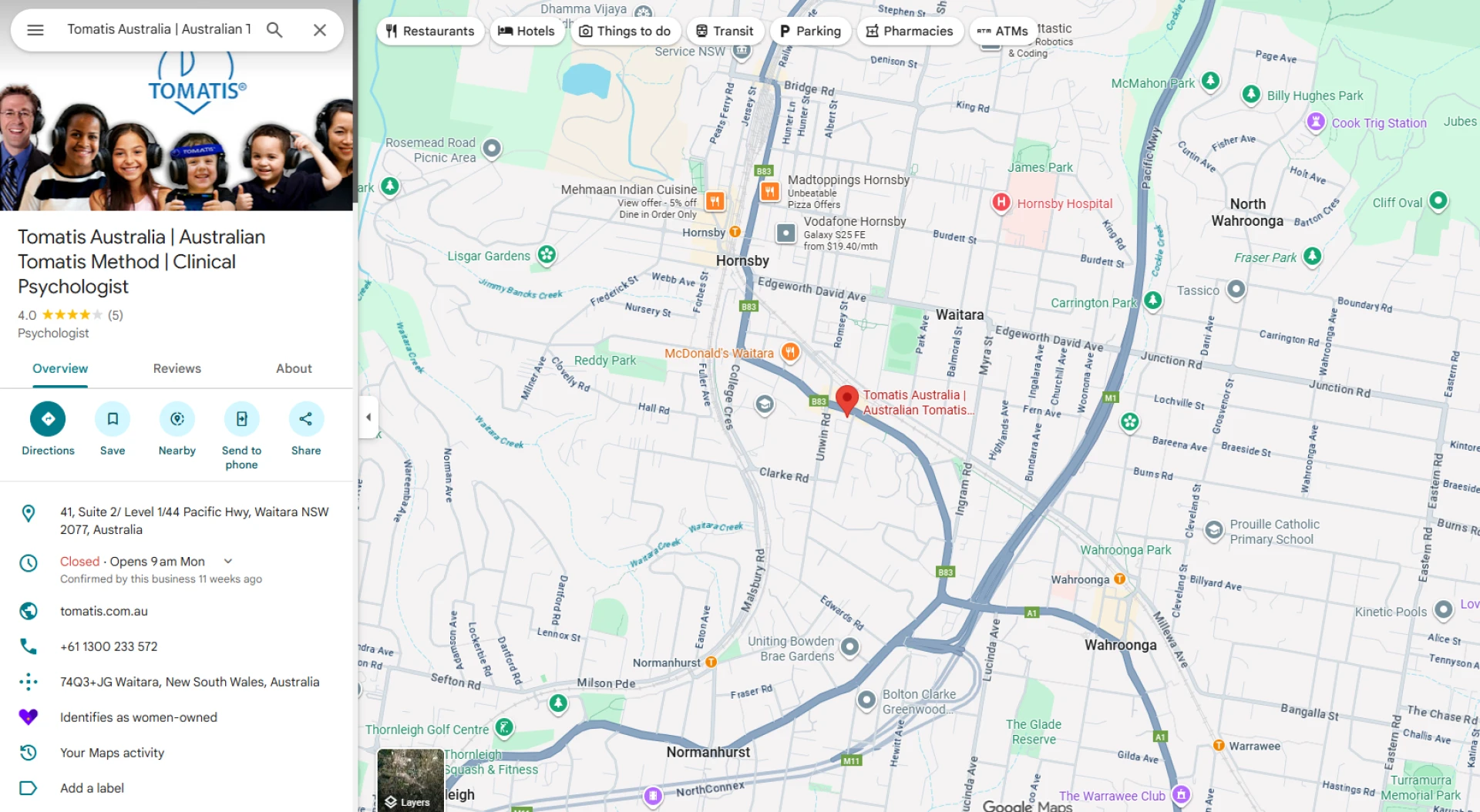
Tomatis® Method Australia
41, Suite 2/ Level 1/44 Pacific Hwy,
Waitara NSW 2077
1300 233 572