A show can be brilliantly written, shot, and acted, and still go unwatched in a market where nobody speaks its language. That gap is exactly where dubbing services earn their place. For OTT producers and short-drama platforms, dubbing is no longer a finishing touch added after a global launch is planned. It's often the thing that makes the launch possible.
Here's how dubbing works in practice for streaming and short-form content, what separates a convincing dub from a distracting one, and what to think about before you pick a partner.
Why Short Dramas and OTT Shows Are Crossing Borders
Streaming took away the geographic limits that used to define television. A series made in one country can now sit in a catalogue viewed in dozens of others on the same day.
Short dramas, the vertical, mobile-first series built from episodes of a minute or two, have added a second wave. They're cheap to produce relative to traditional series, fast to release, and designed around emotional hooks like romance, revenge, and family conflict. Those themes translate across cultures far better than many producers expect. The dialogue doesn't, which is why language becomes the main barrier to growth.
What Dubbing Services Actually Do in OTT Localization
Dubbing replaces the original spoken dialogue with a performance in another language, so viewers can watch without reading. In OTT localization, though, that's only the visible part.
A full dubbing workflow usually includes script translation and adaptation, casting, voice direction, recording, dialogue editing, mixing, and quality control. The deliverables matter as much as the performances: streaming platforms typically want separate stems and an M&E (music and effects) track alongside the final mix, so the show can be re-used or re-mixed later.
Dubbing vs. Subtitles: Not Either/Or
Subtitles are quick and inexpensive, and many viewers like them. But they ask people to read while they watch, which is a poor fit for phone-based short dramas and for audiences who prefer or need to watch in their own language. Dubbing also helps in markets where dubbed content is simply the default. Many productions use both: dubbing for reach and subtitles as a secondary option.
Removing the Language Barrier at Scale
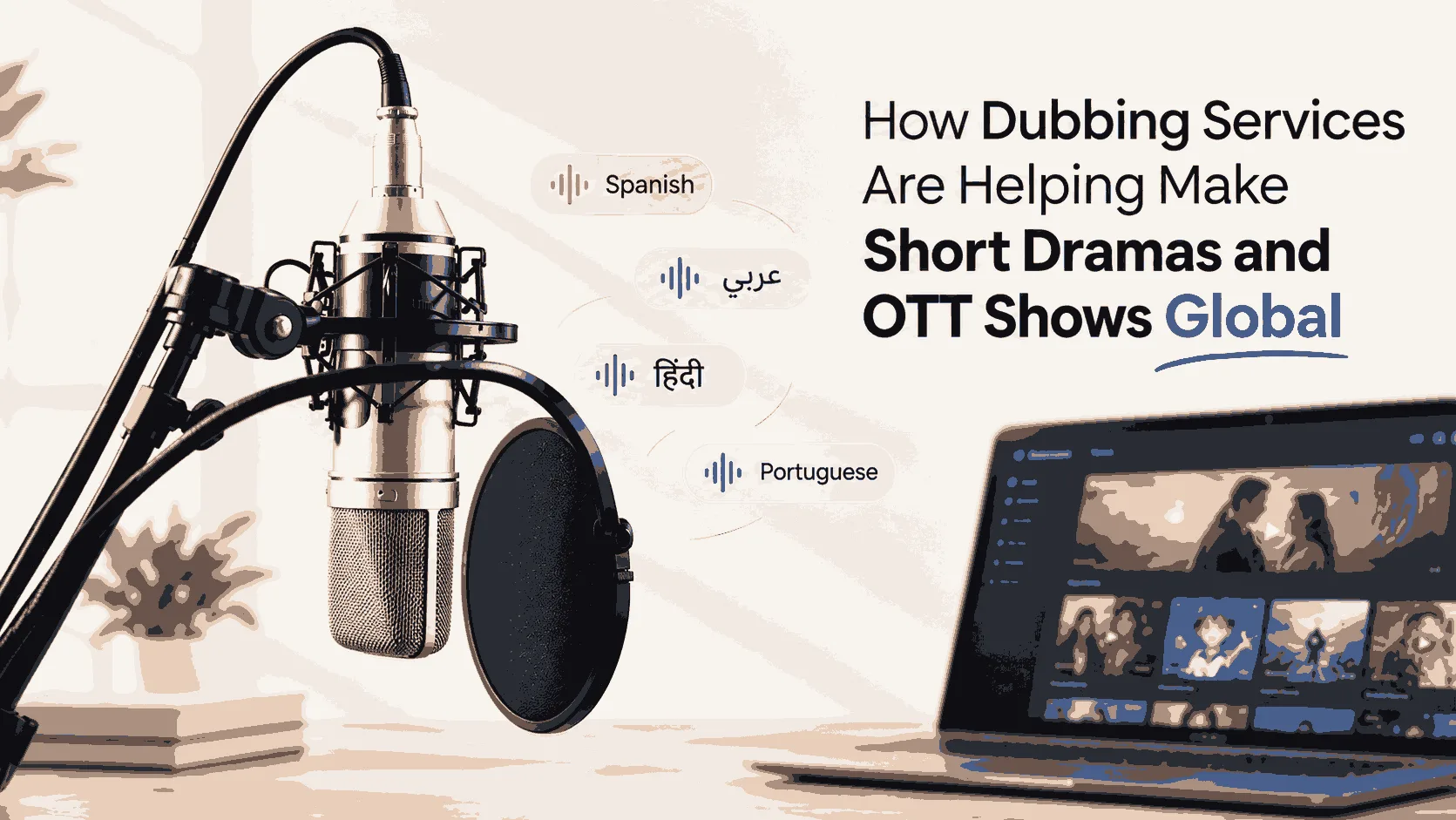
Multilingual dubbing lets one production reach several markets in parallel. The same episode can be released in Spanish, Arabic, Hindi, and Portuguese, each with its own cast and adapted script.
The scale is the hard part. Doing this across ten languages means managing ten casts, ten scripts, consistent character voices from one episode to the next, and one release calendar. Studios that run these as parallel workflows, rather than one language at a time, keep the release windows realistic.
Why Cultural Adaptation Matters as Much as Translation
Literal translation is one of the most common ways to ruin a dub. Jokes, idioms, honorifics, and family terms rarely map one-to-one.
Take a line that relies on a pun. A direct translation is accurate and completely flat. An adapter writes a new joke that lands the same beat in the target language. Or take forms of address: a character who says “sir” to an older relative may need a very different term in Korean, Turkish, or Hindi, depending on the relationship.
Cultural adaptation also covers sensitivities such as references, gestures, and humor that may not travel well. Good adaptation keeps the emotional intent while making the dialogue sound like something a native speaker would say. This is why script adaptation is usually done by native-language writers rather than by translators working line by line.
Dubbing for Short-Form and Micro-Drama Content
Short dramas make different demands from a 45-minute episode.
Speed and volume: A single series can run to dozens or hundreds of short episodes, and platforms often want them released quickly. That requires bulk workflows: batching scripts, scheduling voice talent across sessions, and holding QC standards when the volume is high.
Emotion in seconds: With so little runtime, there's no time to build a scene. Performances have to hit the emotion immediately, whether that's shock, heartbreak, or a cliffhanger. A flat read that a longer show might recover from can sink a 90-second episode.
Consistency across episodes: Viewers who binge a run of short episodes notice immediately if a character's voice changes. Keeping the same voice actor and terminology throughout matters more than it might seem.
What Makes a Dub Feel Right
Viewers rarely praise good dubbing. They just don't notice it, which is the goal. A few elements do most of the work.
Script Adaptation
Adapted lines have to fit the timing and mouth movement of the original as well as sound natural. That's a real constraint: some languages take more syllables than others to say the same thing, so writers often restructure sentences rather than just translate them.
Casting and Voice Direction
Matching a voice to a character's age, tone, and personality is a skill in itself. Then a voice director guides the actor through each scene, checking emotion, pacing, and pronunciation. Professional voice actors bring the range and consistency that keep viewers engaged through a whole series, and a native-speaking director catches things a non-native producer would miss.
Lip-Sync
Lip-sync dubbing matches the new dialogue to the on-screen mouth movements, particularly on close-ups. It's most important for narrative drama, where a mismatch pulls viewers out of the story. For documentaries, news, or training content, a voice-over approach works well and doesn't require frame-accurate matching.
Audio Quality and Mix
Even a great performance suffers in a poor recording. Clean recording, careful dialogue editing, and a mix that sits properly against the original music and effects are what make the dub sound like part of the show, not something laid over it.
AI-Assisted Dubbing vs. Human-Led Dubbing
AI tools have changed the conversation, and it's worth being honest about what they do well. They can speed up first-draft translation, help with timing, and offer synthetic voices for content where budgets are tight, or the format is simple.
They still struggle with what matters most in drama: nuanced emotion, comic timing, subtext, and dialect-specific delivery. There are also open questions around voice rights and consent, especially when a voice is cloned.
In practice, many productions are settling on a hybrid approach. Tools support the workflow, while human writers, actors and directors handle the creative decisions. For high-value narrative content, human-led dubbing remains the safer route for audience engagement. For lower-stakes content, AI assistance may be a reasonable trade-off. What matters is deciding based on the content, not the hype.
Choosing the Right Dubbing Partner
The right partner depends on your content, but a few questions help separate serious studios from weaker ones.
- Can they handle your volume and timeline? A studio that does one film well may struggle with a 100-episode series.
- Do they keep the process in-house? Fragmented, outsourced workflows often lead to inconsistent quality between languages.
- What's their content security like? Pre-release content is valuable. Look for recognized standards such as the Motion Picture Association's Trusted Partner Network (TPN) certification, which major streamers and studios often expect from vendors.
- Do they cover the languages and dialects you need, including regional variants such as Latin American vs. Castilian Spanish?
- Can they meet platform delivery specs for formats, stems, and M&E tracks?
If you're comparing options, it helps to look at how a studio describes its process and delivery. For example, dubbing services built around an in-house pipeline for lip-sync, episodic, and voice-over work show how these workflows come together for OTT and short-drama projects.
Where Multilingual Localization Is Heading
A few directions are worth watching.
- Simultaneous multi-language releases are becoming more common, so audiences in different markets get the same show at the same time.
- Multi-audio-track support on platforms, including YouTube, makes it easier for creators to serve several languages from one channel.
- Hybrid AI and human workflows will keep maturing, with humans staying in charge of the creative work.
- Regional and dialect-level localization is likely to grow as producers move beyond one dub per language and target specific audiences.
- Accessibility layers such as subtitles and audio description are increasingly part of a full localization package.
Conclusion
Short dramas and OTT shows already have what it takes to travel: strong stories, universal themes, and platforms that reach everywhere. What holds them back is language. Dubbing services close that gap with more than translated words: adapted scripts, well-cast voices, careful direction, and clean audio that let audiences connect with the story as if it were made for them.
If you're planning a global release, treat localization as part of the production plan from the start, and choose a dubbing partner that can match your scale, quality, and security needs. Done well, dubbing doesn't just make your content understood. It makes it feel local wherever it's watched.