
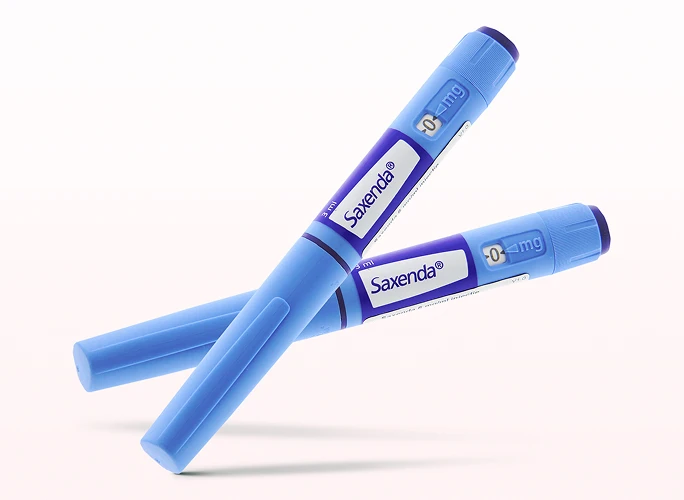
Saxenda is a prescription medicine used for weight loss. It contains liraglutide as its active ingredient. Liraglutide belongs to a group of medicines called GLP-1 receptor agonists. The medicine comes in a pre-filled injection pen. You inject it once daily under your skin.
Saxenda is approved for adults with obesity or excess weight who also have weight-related medical conditions. The medicine works best when used alongside a reduced-calorie diet and regular exercise.
The Science Behind GLP-1 Receptor Agonists
Your body naturally makes a hormone called GLP-1. This hormone gets released when you eat food. It helps control your appetite and tells your body when you've had enough to eat.
Saxenda acts like this natural hormone. By attaching to GLP-1 receptors in brain cells, the Saxenda weight loss injection creates a feeling of fullness, helping to reduce hunger and food cravings. The medicine stays active in your body much longer than natural GLP-1.
Natural GLP-1 only lasts a few minutes. But Saxenda keeps working for over 24 hours. This long-lasting effect means you only need one injection per day.
How Saxenda Affects Appetite and Hunger Signals
Saxenda changes how hungry you feel. It sends signals to your brain that you're satisfied. These signals help you eat less food naturally.
Saxenda activates nerve cells in parts of the brain like the hypothalamus and brain stem that make you feel full. When these areas get activated, your desire to eat goes down. You feel satisfied with smaller amounts of food. Many people find they can resist cravings more easily.
The medicine also affects how your brain responds to food. Studies show that it reduces activity in areas linked to food rewards. This means high-calorie foods become less tempting. You make healthier choices more easily.
The Role of the Hypothalamus in Weight Management
The hypothalamus sits deep inside your brain. It acts as your body's main control centre for hunger and fullness. This small but powerful region decides when you should eat and when you should stop.
Saxenda works in the hypothalamus, where it interacts with specific neurons involved in regulating appetite and food intake. The hypothalamus receives signals from your gut, your fat stores, and your blood sugar levels. It processes all this information. Then it tells you whether you're hungry or full.
When Saxenda activates receptors in the hypothalamus, it tips the balance towards fullness. The neurons that promote satiety become more active. The neurons that trigger hunger become less active. This shift makes weight loss easier to achieve.
Saxenda's Impact on Gastric Emptying
Your stomach normally empties food into your small intestine at a steady pace. Saxenda changes this process. It slows gastric emptying and increases satiety after eating.
When food stays in your stomach longer, you feel full for an extended period. This prolonged fullness helps you avoid snacking between meals. Studies show that Saxenda delays stomach emptying by 37 to 42 minutes per meal. This might not sound like much. But it makes a real difference to your appetite throughout the day.
The slower emptying also affects how quickly nutrients enter your bloodstream. Your blood sugar rises more gradually. This steady release prevents sudden hunger spikes. You experience fewer cravings. You feel more in control of your eating.
Mechanism for Increasing Satiety and Fullness
Satiety means the satisfied feeling you get after eating. Fullness means your stomach feels physically full. Saxenda works on both of these sensations.
Saxenda increases feelings of satiety and decreases hunger. The medicine makes your brain more sensitive to fullness signals from your stomach. Your stomach sends stretch signals when it contains food. Saxenda amplifies these signals. Your brain receives a stronger message that you've eaten enough.
Many people report feeling satisfied after eating just 60% of their usual meal size. They don't feel deprived. They simply feel full sooner. This natural reduction in portion size happens without constant willpower. The medicine does the heavy lifting for you.
How Saxenda Regulates Calorie Intake
Weight loss happens when you burn more calories than you eat. Saxenda helps tip this balance in your favour. Patients taking Saxenda feel satisfied and eat less food, leading to weight loss.
Research shows impressive results. Clinical trials found that people reduce their daily calorie intake by 23 to 28% within the first four weeks. That's a substantial decrease. And it happens naturally. People aren't forcing themselves to eat less. They simply feel less hungry.
The medicine also changes food preferences. Some people find they naturally choose healthier options. High-fat, high-sugar foods lose their appeal. Nutritious foods become more satisfying. This shift supports long-term weight management.
Clinical Evidence of Weight Loss Results
Multiple large studies have tested Saxenda's effectiveness. The results are encouraging. Looking at the results of five studies together, Saxenda led to a 7.5% reduction in body weight, compared with a 2.3% reduction in patients taking placebo.
These studies involved over 5,800 adults. They lasted up to 56 weeks. Participants combined Saxenda with diet and exercise advice. Many people achieved clinically meaningful weight loss. About 63% of participants lost at least 5% of their body weight. Around 33% lost more than 10%.
For someone weighing 100 kilograms (220 pounds), a 7.5% loss equals 7.5 kilograms (16.5 pounds). This level of weight loss can improve many health conditions. Blood pressure often drops. Blood sugar control improves. Joint pain decreases. Sleep quality gets better.
The Importance of Diet and Exercise Alongside Saxenda
Saxenda is not a magic solution. It works best as part of a complete weight management plan. The medicine helps you stick to a reduced-calorie diet. It makes exercise feel more achievable. But you still need to make lifestyle changes.
A healthy diet provides your body with proper nutrition whilst keeping calories controlled. Regular physical activity burns extra calories. It also builds muscle, which increases your metabolism. Exercise improves mood and energy levels too.
Many healthcare providers offer counselling alongside Saxenda. This support helps you develop better eating habits. You learn portion control. You discover how to handle emotional eating. You build skills that last beyond the medicine.
Timeline for Seeing Weight Loss Results
Weight loss with Saxenda doesn't happen overnight. But you should see progress within the first few weeks. Most people notice changes in appetite quite quickly. Within days, food cravings decrease. Hunger between meals becomes less intense.
Visible weight loss takes a bit longer. You might lose about 2% to 4% of your weight in the first two to four weeks. By week eight, many people have lost around 5% of their starting weight. Weight loss continues over the following months.
After 56 weeks, BMI was reduced by at least 5% in around 43% of patients who received Saxenda in studies with adolescents. Adults see similar patterns. Weight loss is fastest in the first 40 weeks. After that, the focus shifts to maintaining your new weight.
Your doctor will check your progress regularly. If you haven't lost at least 4% of your initial weight after 12 weeks on the full dose, treatment should stop. This rule ensures the medicine is working for you.
Who Is Eligible for Saxenda Treatment
Not everyone can take Saxenda. The medicine is approved for specific groups of people. Saxenda is prescribed for adults with obesity or overweight who also have weight-related medical problems, and children aged 12-17 years with body weight above 132 pounds and obesity.
For adults, you need either a BMI of 30 or higher, or a BMI of 27 or higher with at least one weight-related health problem. These problems might include high blood pressure, type 2 diabetes, or high cholesterol. You should have tried losing weight through diet and exercise first.
Some people cannot use Saxenda. It's not suitable if you have a personal or family history of certain thyroid cancers. Pregnant or breastfeeding women shouldn't take it. People with severe stomach or digestion problems should avoid it. Your doctor will check your medical history carefully before prescribing.
How Saxenda Compares to Other Weight Loss Medications
Saxenda belongs to a growing family of GLP-1 medicines for weight loss. Other options include Wegovy (semaglutide), which uses a similar approach. Studies comparing these medicines show differences in effectiveness.
One head-to-head trial found that Wegovy produced greater weight loss than Saxenda. But Saxenda has been available longer. It has a longer track record of use. Some people respond better to Saxenda. Others do better with alternatives.
Older weight loss medicines like orlistat work differently. They block fat absorption in your gut. This can cause digestive side effects. GLP-1 medicines like Saxenda work through your natural appetite systems. Many people find this approach easier to tolerate.
Your doctor will help choose the best medicine for you. They'll consider your health conditions, your preferences, and what's available. Cost matters too. Some insurance plans cover certain medicines but not others.
Understanding the Daily Injection Process
Saxenda comes as a pre-filled pen. You inject it yourself once daily. The injection goes under your skin, not into a muscle or vein. You can inject it in your stomach, thigh, or upper arm. Most people choose their stomach area.
The dosing starts low and increases gradually. You begin with 0.6 mg daily for one week. Each week, you increase by 0.6 mg. By week five, you reach the target dose of 3 mg daily. This slow increase helps your body adjust. It reduces side effects.
You can inject Saxenda at any time of day. It doesn't need to be with meals. Many people choose the same time each day to build a routine. Morning injections work well for some. Evening injections suit others. Pick whatever fits your schedule best.
The pen is easy to use after your doctor shows you how. Each pen lasts several days depending on your dose. Store unused pens in the fridge. Once you start using a pen, you can keep it at room temperature for up to 30 days.
Potential Side Effects and Safety Considerations
Like all medicines, Saxenda can cause side effects. Most side effects affect your digestive system. The most common side effects of Saxenda in adults include nausea, diarrhoea, constipation, vomiting, injection site reaction, low blood sugar, headache, tiredness, dizziness, stomach pain.
Nausea is the most frequent problem. It affects around 39% of users. The feeling usually improves after a few weeks as your body adjusts. Eating smaller meals helps. Avoiding greasy or spicy foods reduces nausea too. Some people find ginger or bland foods helpful.
More serious but rare side effects need immediate medical attention. These include severe stomach pain that won't go away, which could signal pancreatitis. Gallbladder problems can occur, especially with rapid weight loss. Signs include pain in your upper stomach, fever, or yellowing of your skin.
Studies in rats and mice showed thyroid tumours with liraglutide. We don't know if this happens in humans. But as a precaution, people with a personal or family history of certain thyroid cancers shouldn't use Saxenda. Tell your doctor if you notice a lump in your neck, trouble swallowing, or persistent hoarseness.
Long-Term Weight Maintenance with Saxenda
Losing weight is challenging. Keeping it off is often harder. Saxenda can help with both parts of your journey. Research shows that people who continue taking Saxenda maintain their weight loss better than those who stop.
When you reach your goal weight, you don't simply stop the medicine. Many people continue with Saxenda to maintain their results. Your body naturally tries to regain lost weight. Hunger hormones increase. Metabolism slows down. Saxenda counteracts these changes.
Continuing the medicine supports your new lifestyle habits. It keeps your appetite controlled whilst you practice healthy eating. It gives you time to make lasting behaviour changes. Eventually, these habits become second nature.
Some people do successfully stop Saxenda after losing weight. They maintain their results through diet and exercise alone. Others need ongoing support from the medicine. There's no shame in either approach. Obesity is a chronic condition for many people. Long-term treatment makes sense.
Your doctor will reassess your needs regularly. They'll check if Saxenda continues to benefit you. They'll monitor for any problems. Together, you'll decide on the best long-term plan for maintaining your weight loss and health improvements.
Frequently Asked Questions
How quickly does Saxenda start working to reduce appetite?
Saxenda begins affecting your appetite within the first few days of starting treatment. Most people notice reduced hunger and fewer cravings within the first week. However, you start on a low dose and increase gradually over five weeks to reach the full 3 mg dose.
The appetite-suppressing effects become stronger as your dose increases. Weight loss itself becomes visible after two to four weeks, with most people losing around 2% to 4% of their body weight in the first month.
Does Saxenda work without diet and exercise?
Saxenda works by reducing your appetite and helping you eat less, but it's not designed to work alone. Clinical trials that proved Saxenda's effectiveness all included diet and exercise programmes alongside the medicine.
You need to follow a reduced-calorie diet and increase your physical activity for best results. The medicine makes sticking to these lifestyle changes much easier by controlling hunger. Without diet and exercise, weight loss will be minimal or may not happen at all.
How much weight can I expect to lose with Saxenda?
Clinical studies show that people taking Saxenda lose an average of 7.5% of their body weight over 56 weeks. For someone weighing 100 kilograms, this equals about 7.5 kilograms lost. Around 63% of people lose at least 5% of their body weight, whilst 33% lose more than 10%.
Individual results vary based on your starting weight, how well you stick to diet and exercise, and how your body responds to the medicine. Your doctor will monitor your progress and expect at least 4% weight loss after 12 weeks on the full dose.
What happens when I stop taking Saxenda?
When you stop Saxenda, the appetite-suppressing effects wear off within a few days. Your natural hunger signals return to their previous levels. Many people regain weight after stopping the medicine because the biological changes that made weight loss difficult come back.
Your body tries to return to its previous weight through increased hunger and reduced metabolism. This is why many people continue taking Saxenda long-term to maintain their weight loss. If you do stop, maintaining your results requires strict attention to diet and exercise habits you developed whilst on the medicine.
Can Saxenda affect my blood sugar levels?
Yes, Saxenda can lower blood sugar levels, especially if you have type 2 diabetes or take other diabetes medicines. The medicine slows stomach emptying, which means glucose enters your bloodstream more gradually after meals.
This helps prevent blood sugar spikes. However, if you take insulin or medicines that increase insulin production, combining them with Saxenda can cause blood sugar to drop too low. Your doctor will monitor your blood sugar closely and may need to adjust your diabetes medicines. Signs of low blood sugar include shakiness, sweating, confusion, and rapid heartbeat.
Is Saxenda the same as insulin or diabetes medicine?
No, Saxenda is not insulin and works differently from most diabetes medicines. Although it contains liraglutide, which is also used in a diabetes medicine called Victoza, Saxenda is specifically approved for weight loss at a higher dose.
The medicine mimics a natural hormone called GLP-1 that your body releases after eating. It works primarily by reducing appetite through effects on your brain, and by slowing stomach emptying. Whilst it can help improve blood sugar control, especially in people with prediabetes or type 2 diabetes, its main purpose is weight loss through appetite suppression.