When parents choose a school, understanding the curriculum is only one part of the decision. It is equally important to know how students are assessed, how their progress is monitored, and what kind of preparation they receive for examinations. The ICSE system follows an assessment approach that focuses not only on remembering information but also on understanding concepts, applying knowledge, completing practical work, and developing communication skills.
For parents exploring top rated schools in Bangalore, Bangalore top ICSE schools, or top high schools in Bangalore, understanding how ICSE assessment works can make it easier to evaluate whether the curriculum matches their child's learning needs. From classroom assessments to project work and board examinations, different forms of evaluation can contribute to a student's academic journey.
Understanding the ICSE Assessment Approach
ICSE assessment is designed around the subjects and requirements prescribed by the Council for the Indian School Certificate Examinations, commonly known as CISCE. Students are assessed through a combination of school-based work and examinations, depending on their class and subject.
The assessment process is intended to measure more than a student's ability to memorise textbook content. Students may need to demonstrate their understanding through written answers, projects, practical activities, laboratory work, presentations, and other classroom tasks.
This broader approach can help teachers understand how well students are developing across different areas of learning.
What Is Assessed in the Classroom?
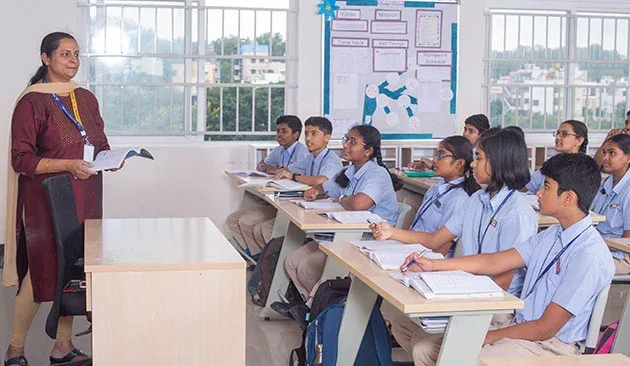
Regular classroom assessment is an important part of a student's progress. Teachers may use class tests, assignments, worksheets, projects, presentations, practical activities, and other forms of evaluation to understand whether students have understood the topics being taught.
These assessments can also help identify learning gaps early. If a student struggles with a particular concept, teachers can provide additional explanations or practice before the topic becomes more difficult.
For parents, this means assessment should not be viewed only as an examination that takes place at the end of the academic year. Regular feedback throughout the year can provide a clearer picture of a child's progress.
Importance of Projects and Practical Work
One feature parents should understand about ICSE education is the role of practical and project-based learning. Depending on the subject, students may be expected to complete projects, conduct experiments, collect information, analyse findings, or present their understanding.
These activities encourage students to apply what they learn rather than simply reproduce information from a textbook. A science experiment, for example, can help students understand a process through observation, while a research project can develop information-gathering and presentation skills.
Project work can therefore contribute to both academic understanding and essential skills such as organisation, creativity, communication, and independent learning.
How Written Examinations Evaluate Students
Written examinations remain an important part of the ICSE assessment system, particularly as students progress towards the Class 10 ICSE examination. These examinations evaluate how well students understand the syllabus and how effectively they can communicate their answers.
Students may encounter different types of questions that require them to explain concepts, solve problems, interpret information, compare ideas, or apply what they have learned. This makes conceptual clarity important when preparing for examinations.
Instead of depending entirely on memorisation, students benefit from understanding the reasoning behind the topics they study.
The Importance of Internal Assessment
Internal assessment allows schools and teachers to evaluate student performance throughout the academic year. It can include different forms of school-based academic work depending on the subject and class.
This approach gives teachers opportunities to observe students over time rather than relying entirely on one final examination. It can also encourage students to remain consistent with their studies, assignments, projects, and classroom participation.
Parents can support this process by helping children develop regular study habits instead of leaving preparation until examination time.
How Assessment Can Encourage Independent Learning
A good assessment system can encourage students to take greater responsibility for their education. When students receive feedback on assignments, tests, and projects, they can understand what they are doing well and where they need to improve.
Over time, this can help children become more comfortable identifying mistakes and finding ways to correct them. Independent learning is especially valuable as students move into higher classes, where academic expectations become more demanding.
Parents researching best ICSE middle schools in Bangalore can therefore look at how schools use assessment not simply to award marks but also to guide student learning.
Role of Teachers in the Assessment Process
Teachers play an important role in making assessments meaningful. They do more than conduct tests and record marks. They can observe students' classroom participation, review assignments, provide feedback, and identify areas where additional support is required.
A supportive teacher can also explain mistakes in a way that encourages students rather than discouraging them. When students understand that assessments are opportunities to improve, they are more likely to approach challenging subjects with confidence.
Regular communication between teachers and parents can further help ensure that students receive consistent support at school and at home.
How Parents Can Support Their Child
Parents do not need to become additional teachers at home to support ICSE assessment. Creating a consistent study routine, encouraging reading, discussing schoolwork, and helping children manage projects and assignments can make a difference.
It is also important to avoid focusing entirely on marks. A student's progress may involve improvements in understanding, confidence, communication, problem-solving, and study habits that are not immediately reflected in a single test score.
Parents can encourage children to look at feedback carefully and treat mistakes as opportunities to learn.
Choosing an ICSE School With the Right Assessment Approach
When comparing Bangalore top ICSE schools, parents should ask how the school conducts assessments and communicates student progress. It can be useful to understand how often students are evaluated, how teachers provide feedback, how projects and practical activities are handled, and what academic support is available when a child faces difficulties.
Parents can also visit schools and speak with teachers to understand how assessment fits into everyday classroom learning. A school that combines regular evaluation with constructive feedback can help students develop a healthier and more confident approach to academics.
Families exploring play schools in Banashankari may also consider how the school introduces children to observation, participation, and activity-based learning from the early years, as these experiences can gradually build positive learning habits.
Preparing Students Beyond Examinations
Assessment is not only about preparing students for a particular examination. The skills developed through research, projects, presentations, practical work, written tasks, and regular feedback can support students in higher education and future careers.
Students who learn to analyse information, explain their ideas clearly, manage their time, and respond constructively to feedback are better prepared for academic challenges beyond school.
This is one reason parents comparing top high schools in Bangalore should consider the overall assessment philosophy of a school rather than looking only at examination results.
Presidency School Banashankari: Supporting Meaningful Assessment
Presidency School Banashankari follows a student-focused approach to assessment, combining regular classroom evaluations, projects, activities, and examinations to understand students' academic progress. Teachers provide guidance and feedback to help students identify areas for improvement while developing conceptual understanding, confidence, and independent learning skills. This balanced approach helps students prepare effectively for examinations while building strong academic foundations for their future.
Conclusion
Understanding ICSE assessment can help parents make more informed decisions about their child's education. The system combines different forms of evaluation, including classroom work, projects, practical activities, internal assessment, and examinations, to develop a broader picture of student learning.
For families considering top rated schools in Bangalore, Bangalore top ICSE schools, or best ICSE middle schools in Bangalore, the right school should provide more than examination preparation. It should use assessment to identify learning needs, provide meaningful feedback, encourage independent thinking, and help students become confident learners. When evaluation is treated as part of the learning process rather than simply a measure of marks, it can contribute significantly to a child's long-term academic growth.