
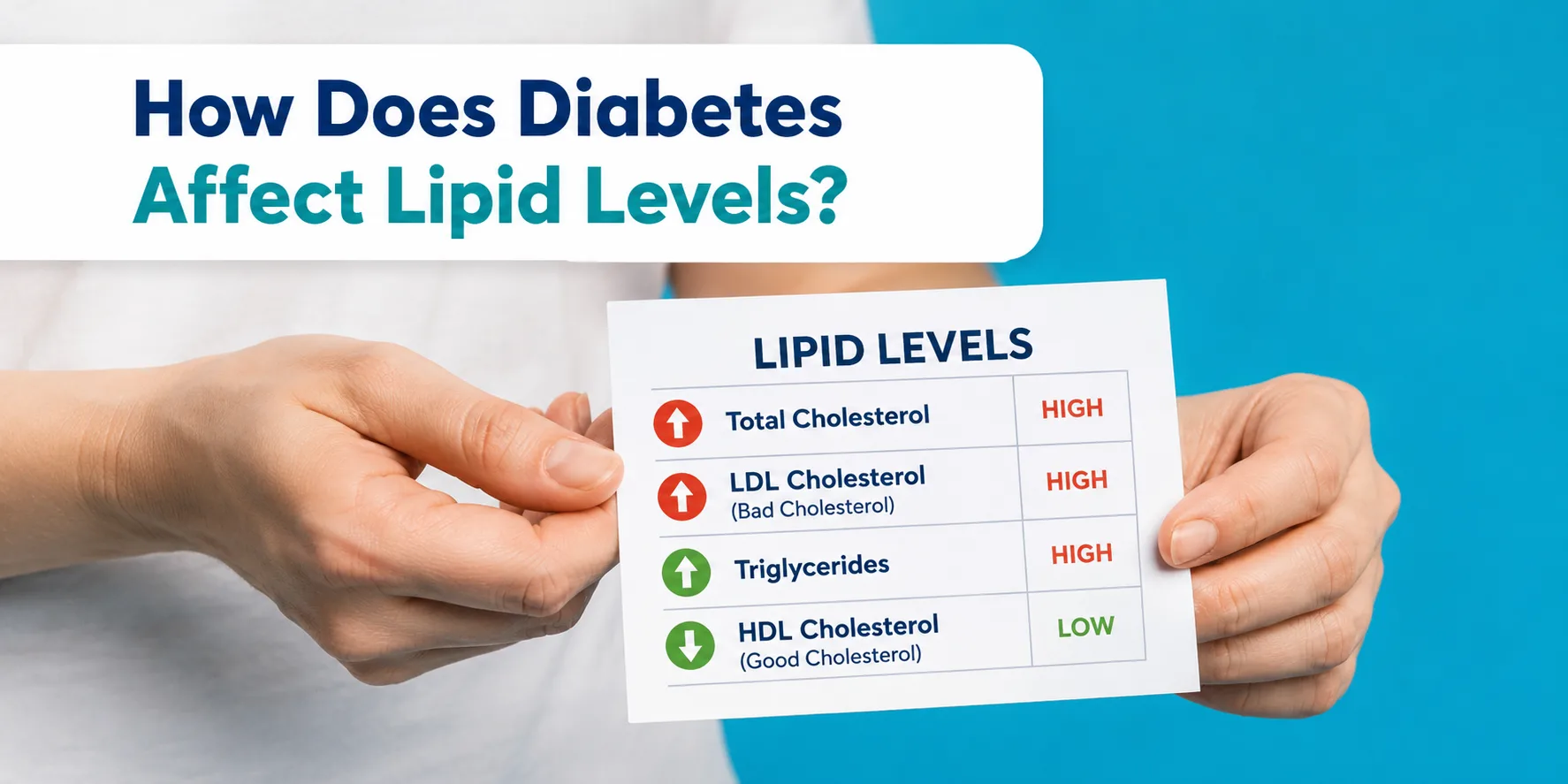
There are many things that we understand about the effects of diabetes on blood sugar levels; however, we do not completely appreciate how diabetes affects blood fats. In addition to negatively affecting blood glucose levels, poorly controlled diabetes negatively impacts lipid metabolism in the body, leading to increased risk for cardiovascular disease (CVD), stroke, and other major complications. An understanding of the relationship between diabetes and blood lipids is important not only for healthcare providers but also for all individuals diagnosed with diabetes.
Key Takeaways
- In many instances, diabetes may alter normal lipid metabolism regardless of nutrition alone.
- Diabetic patients almost always present with elevated triglycerides and low levels of HDL cholesterol.
- Diabetes can cause lipid imbalances over time through poor glucose control.
- If left untreated, the dyslipidaemia associated with diabetes greatly increases CVD risk factors, including myocardial infarction (heart attack) and pulmonary embolism.
- Diabetic dyslipidaemia is typically treated with appropriate lifestyle management and medicinal interventions that are based on individualised requirements.
Many people with diabetes are surprised to learn that their condition affects far more than just glucose. The same metabolic disruption that raises blood sugar also interferes with how the body processes and stores fat. In fact, abnormal lipid levels are found in a large proportion of people with type 2 diabetes, often before the diabetes itself is even diagnosed.
What Is Diabetic Dyslipidaemia
Dyslipidaemia is a clinical condition characterised by abnormal levels of fat in the bloodstream, specifically high cholesterol and/or triglyceride levels. In individuals who have diabetes, the dyslipidaemia that is present demonstrates a pattern that differs significantly from that of those with dyslipidaemia who do not have diabetes.
The three most consistent alterations demonstrated within the lipid profile of individuals with diabetes include:
- Elevated triglyceride levels due to excess insulin resistance and an increased release of fat from adipose tissue
- Low HDL cholesterol level (the "good" type of cholesterol that removes fat from blood vessels)
- Production of small, dense LDL particles that are more dangerous than their larger counterparts, even though total LDL appears as "normal" on a routine lipid panel.
The combination of these factors creates an environment within blood vessels that promotes plaque formation, leading to the narrowing/hardening of arteries over time.
Who Is Most at Risk
Not everyone who has diabetes has severe lipid issues; however, some people have a much greater chance of developing severe lipid issues than others for the following reasons:
- For individuals who have not managed their type 2 diabetes for a long period of time
- People who are overweight and have a lot of excess weight around their midsection
- Those who have a family history of high cholesterol or early coronary artery disease
- People who do not exercise and eat a high-carbohydrate or high-saturated-fat diet
- Women with diabetes generally lose their natural cardio protection compared to men with diabetes
Why Blood Sugar Control Is Central to Lipid Management
There is a direct, well-defined relationship between lipid abnormalities and blood glucose levels. When insulin resistance is present, the body secretes additional free fatty acids into the blood, which are transported to the liver, where they are converted into triglycerides, leading to an excess of triglycerides in circulation. At the same time, HDL levels will decrease while LDL particles become smaller and more detrimental.
Adequately managing glucose levels with diet, exercise, and/or prescription medications will generally lead to improvements in lipid profiles. Therefore, managing diabetes appropriately means not only controlling your glucose levels but also protecting your heart and blood vessels from a larger metabolic storm.
Key lifestyle modifications that will assist both with balancing blood sugar levels and lipids include:
- Decreasing the consumption of refined sugars, white flour, and soft drinks
- Increasing fibre in your diet (veggies, beans, whole grains)
- Exercising moderately for at least 150 mins/week
- Limiting your alcohol intake and refraining from using tobacco (both of which also negatively affect your lipid profile).
How These Conditions Are Treated
If lifestyle changes alone are insufficient, medication will be necessary. The treatment will be tailor-made to meet each individual’s needs, specifically by assessing his/her lipid profile, diabetes status, kidney function and degree of cardiovascular risk.
Linvas 4mg contains Saroglitazar, which is used for managing dyslipidemia associated with diabetes mellitus. It has two distinct mechanisms of action that simultaneously decrease triglycerides, increase HDL cholesterol, and improve glycemic control by enhancing insulin sensitivity. This is especially helpful for diabetic patients whose primary lipid abnormality is elevated serum triglycerides.
Patients who have elevated LDL cholesterol and who are at high risk for cardiovascular events will typically be treated with statin medications. Linvas is an example of a statin that may be prescribed to both decrease LDL cholesterol levels and reduce the likelihood of a patient with diabetes and dyslipidemia experiencing acute coronary syndrome.
These medications together represent a complete approach to treating diabetes and dyslipidemia as interconnected priorities instead of treating them separately.
What Is Worth Remembering
Diabetes affects far more than just your blood glucose (blood sugar) levels; it alters the body's metabolic state, including how it processes fat in the bloodstream. This puts patients at a greater risk for heart attack or stroke if not treated appropriately. Fortunately, with adequate nutrition, regular exercise, and appropriate medical care, diabetes patients can achieve much healthier lipid (fat) levels. The first step is to recognise that there is a problem and treat it with urgency and seriousness.
Disclaimer
The information presented in this article is strictly intended for general informational purposes. It should never be considered as a substitute for obtaining due diligence from a qualified healthcare professional regarding any healthcare decisions or actions taken based upon the contents of this document.