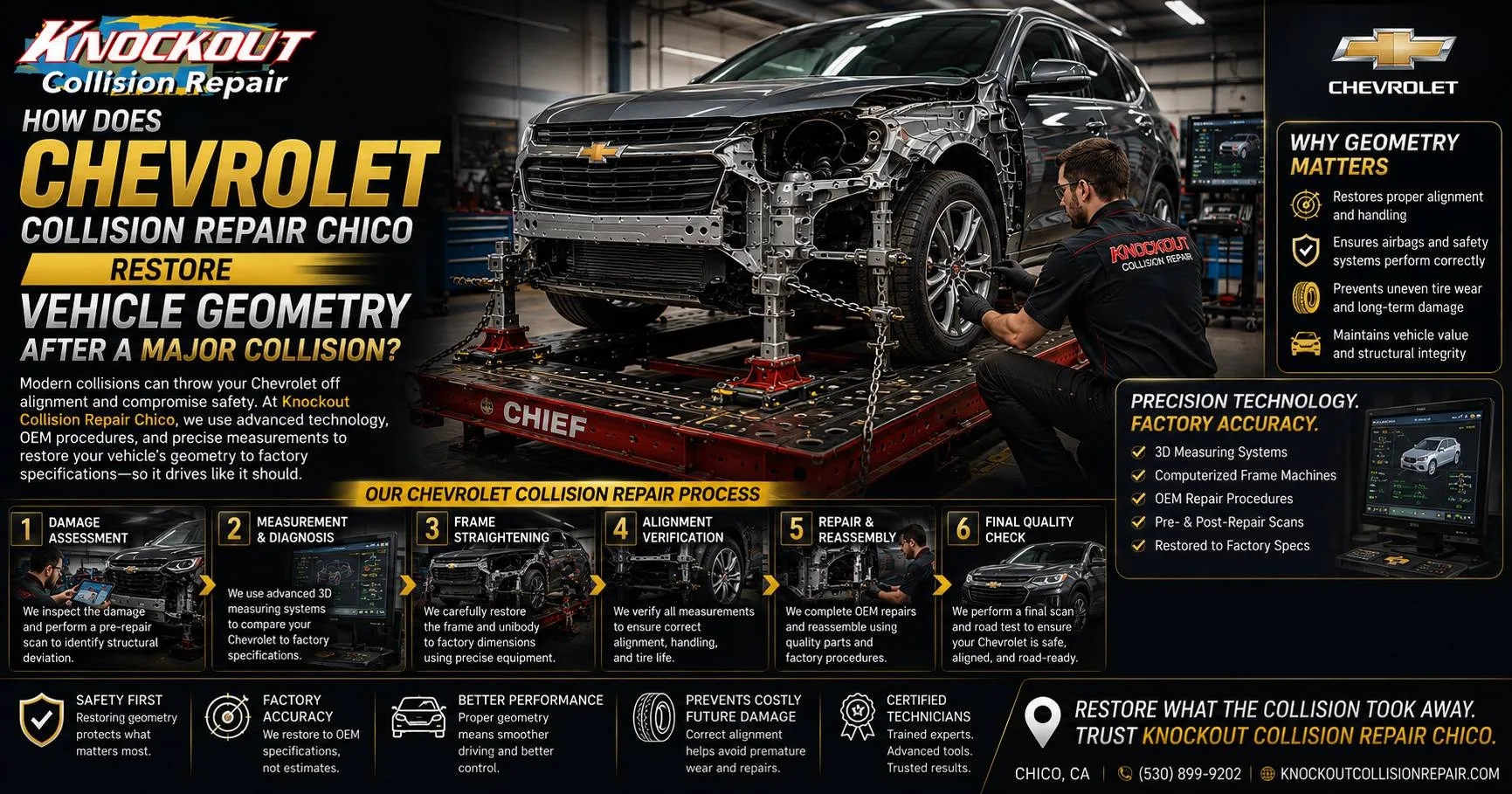
Can a vehicle look repaired and still be slightly out of shape underneath? It can. That is one of the reasons structural repair deserves more attention after a hard crash. A bent rail, shifted suspension point, or distorted body opening may not stand out once new panels and paint go on. Proper Chevrolet collision repair in Chico looks beneath the visible damage and checks whether the vehicle still matches the dimensions Chevrolet intended.
That measurement affects much more than appearance. Steering feel, tire wear, door fit, wheel alignment, bumper position, and even the location of driver-assistance sensors can change when the structure moves. The repair process has to bring those pieces back into the right relationship.
Why Technicians Measure Before They Pull Anything
A major structural repair should not begin with guesswork. The technician first needs to understand where the impact traveled through the vehicle.
That usually means measuring fixed reference points across the body, frame, or unibody. Those readings show whether a rail moved sideways, whether a mounting point shifted, or whether one side of the vehicle now sits differently from the other.
During Chevrolet collision repair in Chico, this step helps separate visible damage from transferred damage. A front corner impact, for example, may affect more than the fender and bumper. Force can travel into the apron, rail, suspension area, or nearby mounting points.
Knockout Collision Repair handles frame straightening and unibody work using manufacturer repair guidance. That type of approach matters because dimensions, repair limits, sectioning points, and replacement procedures can differ from one Chevrolet model to another.
How Controlled Straightening Brings Geometry Back Into Position
Once technicians know what moved, they can plan the correction. Pulling metal without a sequence can create another problem somewhere else.
A trained Chevy body shop anchors the vehicle, applies force in a controlled direction, then checks measurements again. The process may repeat several times. Small corrections often work better than one aggressive pull because the technician can watch how connected areas respond.
This part of Chevrolet collision repair in Chico also requires judgment about what can stay and what needs replacement. Some damaged structural parts can be straightened within approved limits. Others should not be repaired that way, especially when heat, deformation, or material strength becomes a concern.
Knockout Collision Repair follows an OEM-first parts approach and primarily uses manufacturer-made replacement parts. That can support a better fit when a damaged structural or exterior component has to be replaced.
What Technicians Check After the Main Structure Is Corrected
Getting the frame or unibody back into specification does not finish the job. Other parts attach to that structure, and they need attention too.
A complete Chevrolet accident repair may require checks such as:
- Suspension mounting locations and wheel alignment
- Hood, door, fender, and liftgate gaps
- Bumper reinforcement and absorber placement
- Headlamp brackets and sensor mounts
- Weld locations and attachment points
- Seam sealer and corrosion protection
- Steering components affected by impact force
These checks are easy to overlook when the repair is judged only by how the body looks. A clean paint finish can hide a poor fit underneath. That is why measurement continues after the obvious damage has been corrected.
Why ADAS Systems Depend on Correct Vehicle Geometry
Many newer Chevrolet vehicles use cameras, radar units, parking sensors, and other driver-assistance hardware. These systems do not work in isolation. Their position depends on the body, bumper, windshield, suspension height, and wheel alignment.
For that reason, Chevrolet collision repair in Chico may involve more than structural pulling and panel replacement. A repaired bumper can look perfect while a radar bracket behind it sits at the wrong angle. A camera may also require calibration after related structural or alignment work.
The sequence matters. Structural correction should come first. Alignment-related conditions come next. Scanning and calibration follow when the repair procedure calls for them.
Someone searching Chevrolet collision repair near me should ask how the shop handles that full chain of work. A Chevy body shop that measures structure, checks mounting points, scans systems, and follows repair procedures offers a more complete process than one focused only on visible panel damage.
What Final Verification Should Confirm
A proper repair needs a final technical check, not just a visual walkaround.
After Chevrolet accident repair, technicians may remeasure structural points, inspect panel fit, verify wheel alignment, review scan results, and confirm calibration work when required. They should also inspect welded or replaced areas and make sure corrosion protection has been restored where the repair disturbed factory coatings.
This final stage answers the real question: did the repair restore the vehicle as a connected system?
The body, suspension, steering, panels, and electronic safety equipment all depend on correct positioning. If one area remains out of specification, another system can show the effect later through uneven tire wear, poor panel fit, steering pull, warning lights, or sensor faults.
Conclusion
Major crash damage can move parts of a Chevrolet that drivers never see. Repairing those changes takes careful measurement, controlled structural correction, correct part replacement, alignment checks, and electronic verification where required. The finished vehicle should not only look straight. Its structural reference points and connected systems should also match the repair requirements for that model. When discussing Chevrolet collision repair in Chico, vehicle owners should ask how the shop measures, corrects, and verifies geometry before considering the repair complete.