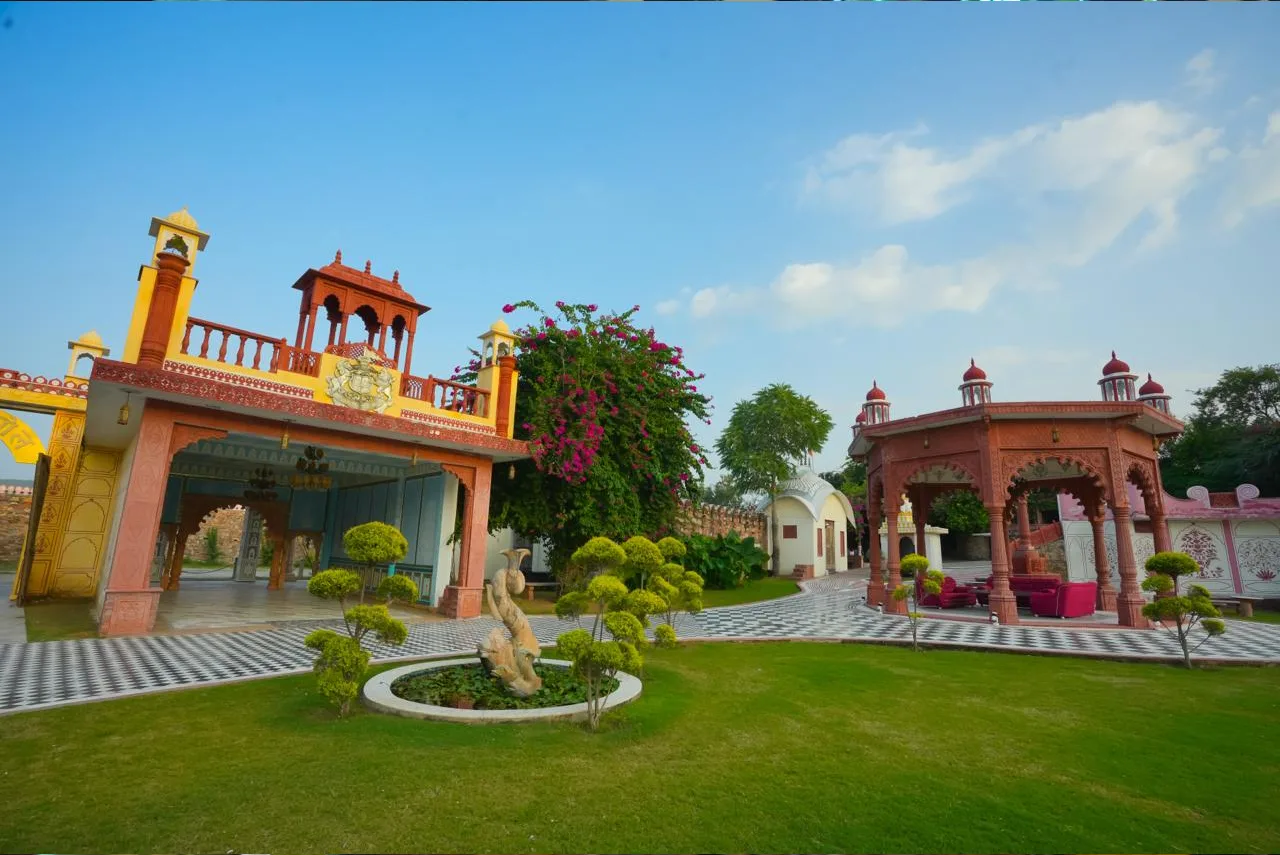
At a destination wedding, guests remember far more than the ceremony. They remember how welcomed they felt when they arrived, whether they had space to relax between events, how easily families connected and whether the stay itself felt enjoyable. A heritage wedding guest stay in Jaipur helps create this fuller experience by turning accommodation into part of the celebration.
Why does guest comfort matter so much?
Weddings involve different age groups, travel schedules and energy levels. Some guests arrive early, some leave after one function, children need room to move and elders may need quiet intervals. When accommodation is disconnected from the functions, guests spend valuable time travelling, waiting and coordinating. When the stay environment supports the celebration, they can participate at their own pace.
This is why a fort-inspired wedding accommodation adds practical as well as visual value. The surroundings give guests a sense of occasion from the moment they enter, while rooms and common areas give them places to regroup, rest and meet relatives outside the formal events.
How does the setting support the wedding mood?
Jaipur weddings often bring together modern celebrations and Rajasthan’s cultural richness. A heritage-style setting complements that blend naturally. Garden spaces, traditional character and a fort-inspired ambience make welcome events, mehendi afternoons, family dinners and photographs feel connected to the destination.
The key is not to make every moment formal. Guests should also have time for a quiet tea, a walk, a game with children or a short rest. Lohagarh Fort Resort’s wide range of spaces and leisure options can help guests feel that they are on a shared getaway rather than merely attending a sequence of functions.
What should hosts plan for guests?
Give clear arrival details, room allocation information and a simple schedule before the event. Allow some buffer time before important functions, especially when guests are travelling from outside Jaipur. Consider a welcome meal or informal gathering so families can meet without pressure. For multi-day weddings, it is also useful to keep one period open for relaxation.
A Rajasthan wedding retreat for families is particularly useful when both families are staying together. It allows natural conversations to happen between events. Older relatives can reconnect, cousins can get to know one another, and the couple’s closest people can enjoy the celebration beyond the stage photographs.
Can it work for intimate weddings too?
Yes. In an intimate wedding, guest experience matters even more because each person is personally significant to the couple. A well-chosen stay makes a small event feel warm, not limited. Guests can share meals, spend time outdoors and participate in a complete celebration over one or more days.
How can hosts make the stay smooth from arrival to farewell?
The host’s job is to remove uncertainty before it becomes stress. Send a concise message with the location, arrival window, dress guidance, contact person and the outline of main functions. Keep guests informed if rooms will be ready in stages. For elders and families with children, identify an easy place to rest between events. A small welcome note or an informal tea can feel more personal than an overproduced arrival ceremony.
During the wedding, avoid scheduling every meal and photograph at the same time as a major function. People need moments to reset, charge phones, help children or simply be quiet. A heritage-style property makes those pauses feel pleasant rather than inconvenient. At farewell, a relaxed breakfast or brief family gathering lets guests close the celebration warmly.
Why do the days between functions matter?
The quiet intervals in a wedding often become the moments guests treasure most. Relatives meet at breakfast, cousins make plans for the evening, elders share stories and children find companions. These connections are difficult to create when everyone is travelling between hotels and separate event venues. A shared heritage-style property gives the celebration continuity. Even when no formal function is happening, the wedding still feels alive.
Hosts can support this by keeping communication kind and simple. Provide a help contact, avoid last-minute changes where possible and ensure that guests know they are welcome to use the time in their own way. Some will enjoy every event; others will value rest between them. Both should feel included.
Creating comfort for every generation
Wedding planning can focus heavily on the couple, décor and main ceremonies, but guest comfort deserves equal attention. Elderly relatives may need rooms close to common areas or extra time before evening events. Parents with children may appreciate an easy meal plan and open space between functions. Friends may enjoy staying close enough to share informal moments that never appear on a formal schedule. A good wedding stay holds all of these needs together.
The result is a celebration with less friction. People are not constantly asking where to go next or how long the transfer will take. They can return to their rooms, meet relatives, freshen up and rejoin the function without feeling rushed. That convenience has an emotional effect: guests are more relaxed, more present and more able to celebrate the couple wholeheartedly.
Frequently asked questions
Why should wedding guests stay at the venue?
It reduces movement, improves coordination and lets the group enjoy the celebration more comfortably between functions.
Is heritage-style accommodation suitable for modern weddings?
Yes. It adds regional character while allowing the event design, food and functions to remain completely contemporary.
What makes guests feel truly welcomed?
Clear communication, comfortable rooms, good food, time to rest and a setting where they can spend enjoyable time with family.
Closing thought
A wedding becomes more meaningful when guests do not feel like visitors moving from one function to another. A heritage-style stay near Jaipur gives them a shared place to rest, celebrate and become part of the full story.