Summary - A WhatsApp chatbot on the WhatsApp Business Platform works by combining automated conversational logic with the WhatsApp Business API to handle customer interactions seamlessly. It analyses incoming messages, understands the user’s intent, fetches information from CRMs or databases, and responds instantly with contextual replies. Indian businesses use these chatbots to automate 60–80% of customer interactions, reduce operational costs, and deliver real-time assistance across ecommerce, BFSI, healthcare, education, logistics, and service sectors. The chatbot processes messages in milliseconds, manages multiple conversations at once, and smoothly hands over complex issues to a human agent when needed — ensuring fast, reliable communication at scale.
WhatsApp chatbots matter in India because customers prefer quick messaging over traditional communication channels like emails and phone calls. With more than 500 million Indians actively using WhatsApp, businesses across metros and Tier-2 cities rely on it for real-time engagement. Chatbots help brands respond instantly, automate routine queries, reduce support team load, and build trust by offering fast, accurate answers. Whether it’s a D2C brand in Mumbai, an edtech academy in Delhi, a SaaS company in Bengaluru, or a retail shop in Indore, WhatsApp automation ensures consistent customer communication.
- Faster replies and improved customer experience
- Reduced dependency on large support teams
- Instant lead capture and automation of daily tasks
What Is the WhatsApp Business Platform?
The WhatsApp Business Platform, often referred to as WhatsApp Business API, enables automated messaging, chatbot integrations, CRM connections, bulk notifications, and secure communication for growing brands. Unlike the WhatsApp Business App, which suits small local sellers, the Platform supports unlimited agents, rule-based and AI chatbots, and scalable workflows that handle thousands of conversations. This makes it the preferred choice for Indian businesses that require automated order updates, real-time notifications, 24/7 support, and instant lead management.
- Supports advanced automation and workflows
- Enables integrations with CRMs and support tools
- Designed for start-ups, enterprises, and high-volume brands
What Exactly Is a WhatsApp Chatbot?
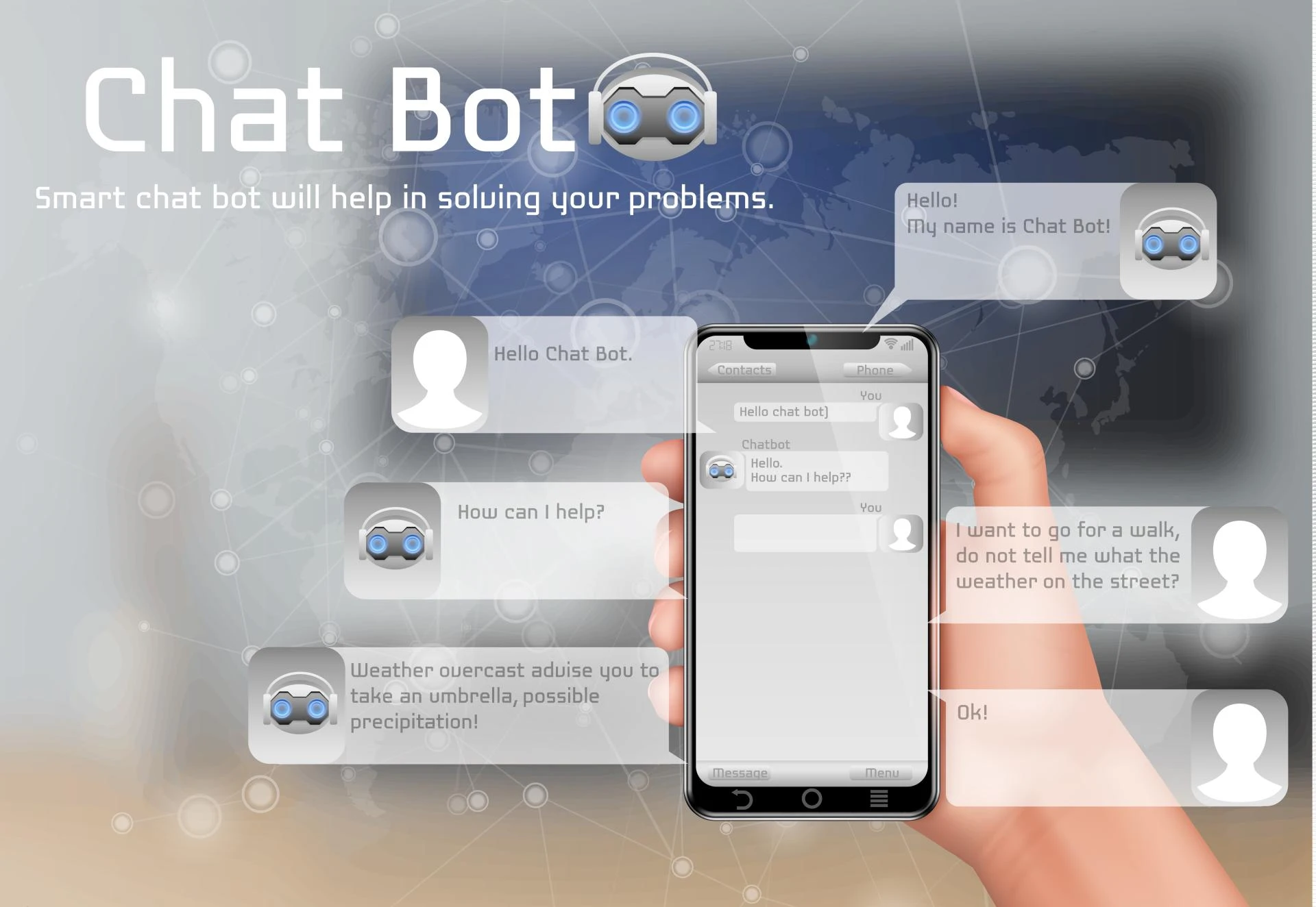
A WhatsApp chatbot is an automated conversational assistant that responds to customer messages, understands queries, and performs tasks without human intervention. It works round-the-clock, providing answers to FAQs, booking appointments, sharing order status, and offering product or service guidance. In the Indian context, chatbots are increasingly important because customers use mixed languages like Hinglish, Tamil-English, Marathi-English, and Hindi-English. Two kinds of bots exist: rule-based bots that follow menus, and AI/NLP bots that understand natural sentences.
- Responds instantly to customer questions
- Handles bookings, tracking, and lead capture
- Supports multiple Indian languages
How Do WhatsApp Chatbots Actually Work?
WhatsApp chatbots work through a structured backend process. A customer sends a message through a WhatsApp button, QR code, Meta ad, Google Business Profile, or website widget. The WhatsApp Business Platform receives the message and routes it to the chatbot engine via APIs and web hooks. The bot analyses the intent, identifies the purpose, and fetches required details from CRMs or databases. It then sends a relevant response using text, buttons, lists, images, or personalized information. When needed, it transfers the conversation to a human agent smoothly.
- Message received → API processes → Bot analyses
- Bot fetches data → Responds instantly
- Agent handover for complex issues
Key Features That Make WhatsApp Chatbots Powerful for Indian Businesses
WhatsApp chatbots are powerful for Indian businesses because they combine automation, personalization, and rich messaging elements. Automated flows help handle repetitive queries like pricing, availability, refund policies, and FAQs. Rich media formats such as images, catalogs, videos, PDFs, and buttons make the customer experience more engaging. Multilingual support is crucial for reaching Tier-2 and Tier-3 users. Personalization ensures that each reply feels relevant, while features like green-tick verification enhance trust in sectors like banking and healthcare.
- Automated flows and quick replies
- Support for images, videos, menus, catalogs
- Multilingual communication
- Verified business profiles for trust
Benefits of Using WhatsApp Chatbots in India
WhatsApp chatbots offer major advantages, especially for Indian brands handling high daily chat volumes. They eliminate wait times, provide 24/7 support, lower support team costs, and ensure faster lead qualification. Ecommerce brands use them to confirm COD orders and reduce RTO. Service-based companies use them for scheduling and reminders. Overall, chatbots help businesses convert more leads, reduce manual workload, and improve customer satisfaction by offering accurate answers instantly.
- Lower operational and support costs
- Higher conversions and reduced drop-offs
- Better lead management and follow-ups
- Reduced return-to-origin (RTO) in ecommerce
Where Are WhatsApp Chatbots Used in India?
WhatsApp chatbots are used across almost every major Indian industry because they fit seamlessly into customer journeys. Ecommerce brands automate tracking and COD verification, while fintech and banking companies use chatbots for KYC assistance and EMI reminders. Education institutes manage admissions and demo class bookings. Hospitals use them for appointment scheduling and lab reports. Travel companies automate ticket confirmations and itineraries, and local businesses like salons and clinics use them for daily customer interactions.
- Ecommerce and retail automation
- BFSI and fintech workflows
- Edtech, healthcare, and hospitality
- Local services like beauty clinics and coaching centers
How to Build a WhatsApp Chatbot?
Building a WhatsApp chatbot in India involves a straightforward process. First, obtain WhatsApp Business Platform access through a verified BSP partner. Then choose between a rule-based bot for FAQs or an AI-powered bot for natural conversation. Map out customer journeys based on real queries and keep flows simple. Integrate your CRM, ecommerce systems, or database for personalization. Test the bot to ensure it handles multilingual inputs, and finally go live with regular monitoring and refinement.
- Get API access from a BSP
- Choose rule-based or AI chatbot
- Map the conversation journey
- Integrate with CRM or ecommerce
- Test, launch, and optimize
WhatsApp Chatbot Pricing in India: What to Expect
WhatsApp chatbot pricing in India depends on factors like WhatsApp conversation charges, chatbot platform fees, AI/NLP complexity, CRM integrations, and ongoing maintenance. For SMBs and startups, costs remain budget-friendly and significantly lower than hiring full support teams. Enterprises may invest more in advanced features such as AI training, multilingual workflows, and analytics. Overall, WhatsApp chatbots offer high ROI because they automate repetitive tasks and reduce manual workload.
- WhatsApp conversation-based charges
- Chatbot software subscription
- AI/NLP training costs
- Integration and maintenance fees
Best Practices to Make WhatsApp Chatbots Perform Better
To ensure your WhatsApp chatbot performs effectively, keep messages short, simple, and customer-friendly. Use buttons, quick replies, and structured menus to guide users smoothly. Offer language choices upfront, maintain template compliance, and ensure the bot escalates to human support when necessary. Use analytics to understand user behavior and improve flows. Personalized messages improve engagement, especially when using CRM-based customer data.
- Keep messages crisp
- Provide language options
- Use compliant templates
- Include human support paths
- Personalize when data is available
Common Mistakes Indian Businesses Should Avoid
Common mistakes include relying too heavily on automation, not training the bot in Indian regional languages, and using unclear or overly complex menus. Missing human escalation options frustrates customers, while ignoring analytics leads to poor optimization. Overusing broadcasts can reduce engagement and violate WhatsApp rules. The most successful Indian businesses maintain a balance between automation and human interaction.
- Over-automation
- No regional language support
- Missing human fallback
- Poorly designed menus
- Ignoring customer insights
Future of WhatsApp Chatbots in India: What’s Coming Next
The future of WhatsApp chatbots in India includes smarter AI agents capable of making decisions, predicting customer needs, and providing hyper-personalized journeys. Voice-enabled automation will support regional speakers, especially in rural and semi-urban areas. Deeper fintech integrations will allow seamless payments, approvals, and account actions directly within WhatsApp. As the country shifts toward a WhatsApp-first digital ecosystem, chatbots will become central to customer service across ecommerce, BFSI, healthcare, and retail.
- Voice-enabled automation
- Hyper-personalised experiences
- Smarter AI-driven bots
- Fintech and payment integrations
Frequently Asked Questions
1. What is a WhatsApp Chatbot and how does it help businesses?
A WhatsApp chatbot is an automated conversation tool that replies instantly on the WhatsApp Business Platform. It helps businesses manage large volumes of queries, improve customer support, and offer round-the-clock responses. Many Indian brands use it for order updates, lead qualification, FAQs, and appointment handling.
Key benefits:
- Faster responses and fewer support delays
- Automated lead generation and follow-ups
- 24/7 availability for sales and service
- Higher customer satisfaction and reduced workload
2. How do WhatsApp Chatbots integrate with CRM or backend systems?
WhatsApp chatbots use secure APIs to connect with CRMs and backend systems. This allows the bot to fetch customer details, update records, and deliver personalized conversations. Integrations with platforms like Zoho, HubSpot, Salesforce, and custom ERPs are common in India.
Integration advantages:
- Auto-sync customer history
- Real-time order or appointment updates
- Smooth lead assignment to teams
- Personalized replies based on stored data
3. How much does it cost to run a WhatsApp Chatbot in India?
Costs depend on WhatsApp API pricing, chatbot platform fees, and conversation volume. WhatsApp charges per conversation window, while chatbot providers may charge monthly subscriptions or custom development costs.
Cost components:
- WhatsApp conversation charges (Marketing, Utility, Service, Authentication)
- Platform or SaaS subscription
- AI/NLP automation add-ons
- Total message and user volume
4. What industries benefit most from WhatsApp Chatbots?
Industries with high customer interaction benefit the most. In India, eCommerce, BFSI, education, healthcare, travel, and service-based businesses actively use WhatsApp automation for quick communication and improved engagement.
Strong use cases:
- eCommerce: Tracking, COD verification, cart recovery
- Finance: Loan info, EMI reminders, KYC updates
- Education: Admissions, course details, fee reminders
- Healthcare: Appointments, test reports, reminders
- Travel: Itineraries, booking updates, alerts
5. How do businesses measure the performance of WhatsApp Chatbots?
Businesses track performance using metrics like resolution rate, engagement, customer satisfaction, and conversion outcomes. These insights help improve workflows and ensure the chatbot delivers value.
Key metrics:
- Response accuracy
- Issues resolved without agents
- CSAT and feedback scores
- Leads, sales, and conversions
- Open rates and user interactions
Why Are Indian Businesses Choosing WhatsApp Automation?
The way customers interact with brands in India has changed. People expect instant replies, simple journeys, and service that works on the channel they use every day. That’s exactly why the WhatsApp Business Platform has become the go-to solution for support, lead generation, and sales automation. And when you combine it with a smart WhatsApp chatbot, the entire customer experience becomes smoother, faster, and far more efficient.
If you’re looking to build a chatbot that actually understands your customers, supports multiple languages, integrates with your CRM, and delivers measurable business impact, it’s the right time to Connect with WebXion. Our team helps Indian start-ups, D2C brands, enterprises, and service businesses build automation journeys that convert, not just respond.